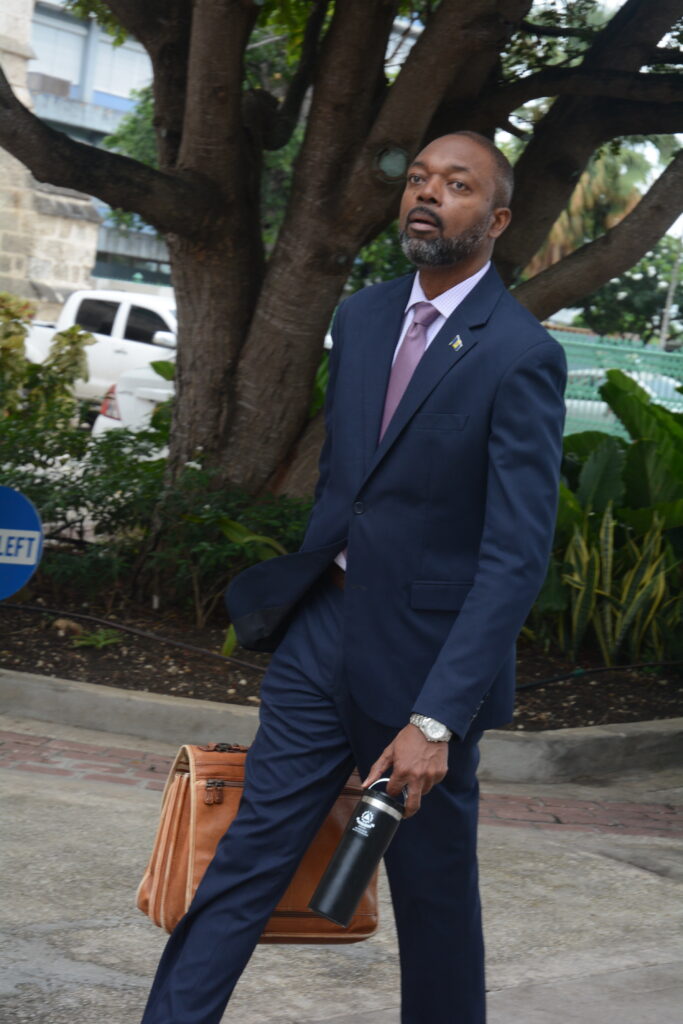
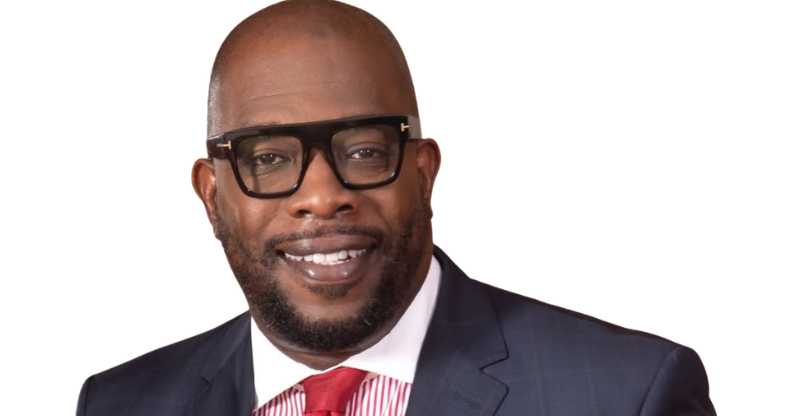
Home Affairs Minister Gregory Nicholls has defended legislation that would require accused people who choose to give evidence in criminal trials to do so under oath or affirmation, saying the change would make the justice system fairer.
The attorney-at-law told the House of Assembly on Tuesday that he wholeheartedly supported the Administration of Justice (Miscellaneous Provisions) Bill, which amends the Evidence Act and the Criminal Procedure Act.
“It is trying to equip our courts with a system that is fair, efficient and consistent with modern legal principles,” Nicholls said. “A just outcome based on reliable evidence. That is how this bill has to be measured.”
Under the bill, an accused who wishes to give evidence must do so under oath or affirmation, subject to limited exceptions, including statements required by law and pleas in mitigation before sentencing.
Nicholls noted the right to make an unsworn statement from the dock was not always part of a criminal trial.
Before 1876 in English law, he said, a person charged with a criminal offence was not considered a competent witness for the defence and could not give evidence in the case against them.
The unsworn statement later emerged to address that unfairness because the State alone carried the burden of putting evidence before the court.
But Nicholls said the system also created problems because statements from the dock could not be tested through cross-examination.
He said judges routinely warned juries that they could disregard such statements because they had not been made under oath or tested through cross-examination: “It disadvantaged innocent people and it created an advantage to some guilty people.”
Nicholls said the unsworn statement had been described in several cases as “an anomalous privilege and an ancient procedural luxury”.
He stressed that the right to silence would remain.
“You have the right to remain silent. You have the right not to say anything in a criminal case,” he said, noting that the prosecution must still prove guilt beyond reasonable doubt.
Nicholls outlined three arguments against the amendment: that it undermined the presumption of innocence, imposed a burden of proof on an accused where none previously existed, and compelled an accused to give evidence at trial.
“This is not to say that this law can’t be challenged. But I assure the public that the government has given proper thought to this amendment.”
Responding to critics he added: “When you hear some critics speak, you would think that we are abolishing the Magna Carta.”
He argued the change would not remove a fundamental right because an accused person could still remain silent or choose to give evidence under oath.
“If you want to give a statement, all the evidence before the court, all the evidence that the jury takes into the jury room, is evidence that has been given under oath.”
The bill also introduces new procedures for dealing with hostile witnesses.
Where a witness gives evidence that is unfavourable to the party who called them, Nicholls said the court may allow that party to treat the witness as adverse and ask leading questions.
The lawyer must first apply to the trial judge, who will decide whether the questioning is permitted.
“You had to take your licks like a man, when your witness went against you and sit down,” Nicholls said of the previous position.
He described the change as an important practical reform because it would allow lawyers to challenge witnesses who depart from previous statements, become evasive or give unexpected evidence.
Another provision allows transcripts of electronically recorded evidence to be used in court proceedings.
The Home Affairs Minister said too many cases were still being heard while courts manually recorded evidence, creating delays and giving witnesses time to anticipate questions during cross-examination.
Electronic transcripts would help appellate courts assess the totality of proceedings, reduce delays and provide a more accurate record, including in the Magistrates’ Courts, he added.
Nicholls also raised concerns about the lack of procedural rules for the Magistrates’ Courts, noting that since the Magistrates Court Act was passed in 2000, no rules had been put in place to govern proceedings there.
“That is an oversight that can no longer be reasonably tolerated,” he said, arguing that people using the Magistrates’ Courts deserved an orderly set of rules to guide proceedings.
The bill also amends the Criminal Procedure Act by deleting sections 6A and 7A, which deal with an accused person’s fitness to plead and the defences of diminished responsibility and insanity.
Nicholls said those changes formed part of the government’s effort to modernise criminal procedure and establish clearer standards for how the defences are applied.
He also stressed that transitional provisions would prevent the new rules from applying to proceedings that had already started.
“I want to give the public the assurance that we’re not changing the rules in the middle of the game.”
Nicholls said the legislation was not revolutionary or landmark legislation, but was intended to remove obsolete practices, strengthen fairness and efficiency, embrace technological advances and support fair trials.
(LG)
The post Home affairs minister backs removal of unsworn statements from criminal trials appeared first on Barbados Today.