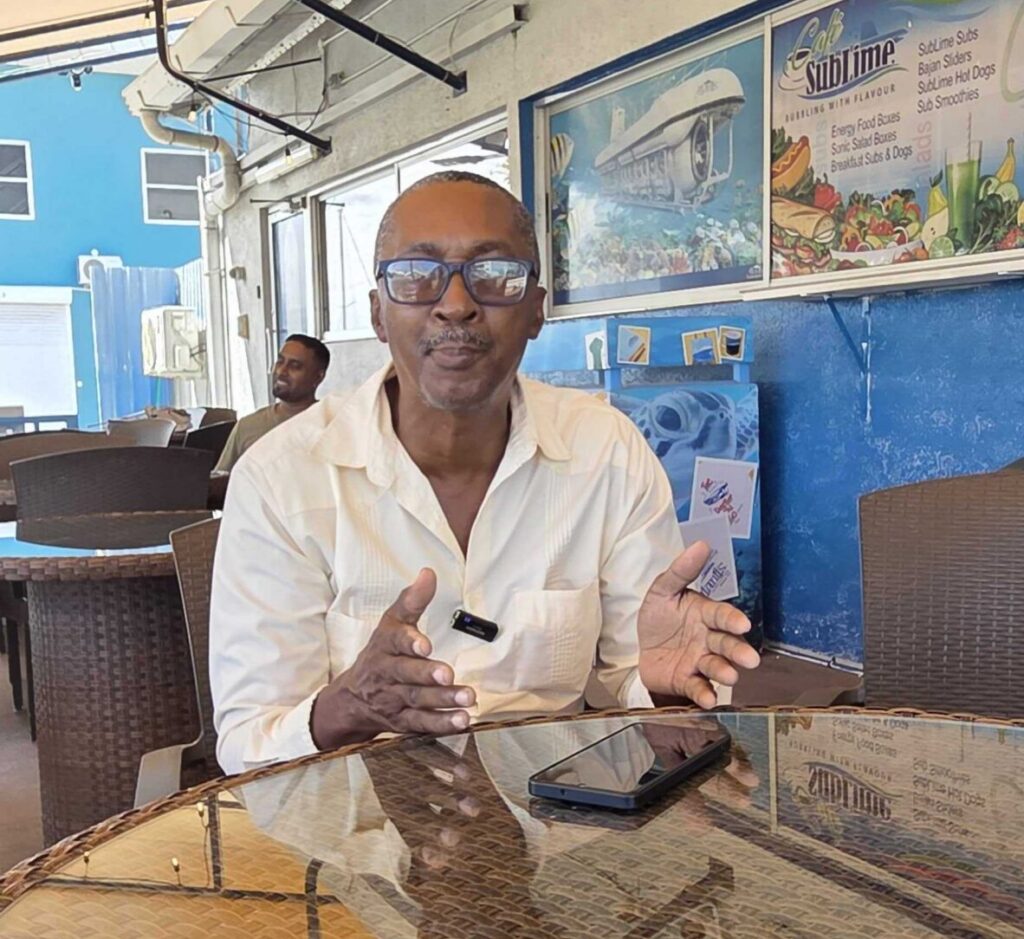

Opposition Senator Karina Goodridge pledged her full support for the Human Tissue Transplant Bill in a rare outbreak of bipartisanship in the Senate, framing the legislation as a long-overdue response to the lived realities of Barbadians suffering from organ failure.
Characterising the legislation as a “landmark” and “groundbreaking” development for healthcare in Barbados, Senator Goodridge, leader of the Friends of Democracy, emphasised that the human reality of organ failure must remain the driving force behind parliamentary action.
The legislation was long overdue for vulnerable Barbadians, she declared:
“This bill is one that I can say outright that I 100 per cent support. If it was at 99 per cent for anything, it would be in scrutinising the legislation and recognising anything that should be fixed before it is passed. That is still my job and I enjoy it.”
The opposition lawmaker anchored her debate in the gruelling daily experiences of Barbadians suffering from chronic kidney conditions. Acknowledging the presence of representatives of the Law Reform Commission, the Barbados Kidney Association and the Queen Elizabeth Hospital (QEH) transplant programme in the chamber, she spoke passionately about the heavy toll exacted by standard dialysis treatments.
“A bill such as this is important to me because I have friends who have been through dialysis, who have sat for hours at the QEH. I know the pains, I know the frustrations,” she said, noting that patients frequently face three to four sessions a week, which are occasionally cut short by hospital constraints.
Beyond the immediate physical toll, Senator Goodridge outlined the severe economic and academic disruptions caused by prolonged illness. She noted that university students regularly miss lectures and fall behind, while business owners and family breadwinners face diminished earnings due to the hours spent confined to hospital wards.
The physical exhaustion and emotional scarring left by continuous surgical procedures further compound the crisis.
“The human reality is the real driving force for the implementation of a bill of this nature,” the Senator declared. “The bill is about saving lives and helping people to have a better life. Persons who had to go through the delay process and just rely on family and loved ones, now you can have deceased donors here taking part in such a modern movement.”
While noting that regional neighbours such as Guyana, Jamaica, and Trinidad and Tobago have already established modern transplant frameworks, Senator Goodridge welcomed Barbados “falling in line” to restore normality and dignity to patients.
The senator commended the structural safeguards embedded within the text, particularly the establishment of a National Transplant Council to govern policy, oversee ethical standards and regulate approved health institutions.
She also highlighted the critical financial relief the bill promises for the national purse, referencing data from the QEH transplant programme regarding the immense fiscal burden currently borne by taxpayers to fund chronic care and non-communicable diseases.
But Senator Goodridge stressed that public confidence hinges on robust safeguards, urging the government to execute rigorous public education campaigns to overcome cultural and religious hesitations.
Drawing from World Health Organisation guidelines, she offered recommendations to strengthen the legislative framework, including the inclusion of explicit donor consent forms within the statutory schedules, contrasting the draft with Guyana’s model.
She also issued a blunt warning to hospital administrators regarding record-keeping, noting that missing paperwork frequently exposes local institutions to costly litigation when families challenge the validity of a donation.
Looking towards international standards, Senator Goodridge proposed a strict protocol for the international trade of biomaterials.
“If we are importing tissue, then we need to maintain a blacklist of nations from which we will not import tissue until it is objectively verified that they no longer engage in the offensive practice of forced harvesting of organs,” she recommended, laying a 2024 report by Doctors Against Forced Organ Harvesting before the Senate.
As she wrapped up her speech, Senator Goodridge reiterated that the legislative objective transcended partisan politics.
“I support every individual who has been going through issues with dialysis. I support every person who needs a liver transplant, bone marrow,” she said. “Putting myself in their shoes, I know it is not a good feeling when you want to feel better, and you are waiting on Parliament to just pass the legislation to help you to make your life better.”
(RR)
The post Human tissue transplant bill wins rare bipartisan support in Senate appeared first on Barbados Today.