A $6 million recovery and resilience initiative supported by Japan has brought boatbuilders, fisherfolk and development partners together to examine how the island can rebuild a stronger, more disaster-resilient fishing fleet after the destruction caused by Hurricane Beryl in 2024.
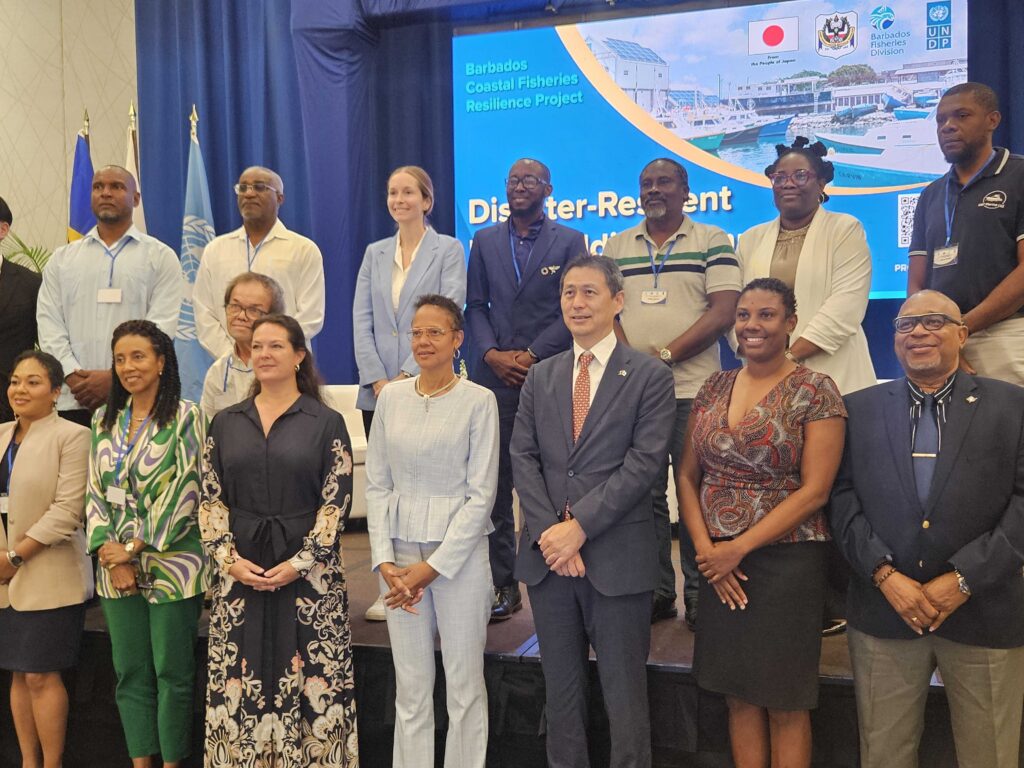
The two-day Disaster Resilient Boatbuilding Symposium opened on Tuesday at the Hilton Barbados Resort, to exchange knowledge and explore new approaches to strengthening the industry.
The event was organised by the Fisheries Division in collaboration with the United Nations Development Programme (UNDP), the Government of Japan and the Samuel Jackman Prescod Institute of Technology.
UNDP Deputy Resident Representative for Barbados and the Eastern Caribbean, Stephanie Zibell, said the initiative forms part of the Barbados Coastal Fisheries Resilience Project, which seeks to restore key infrastructure and improve disaster preparedness across the industry.
The project responds directly to the damage caused by Hurricane Beryl, which left significant losses within the fishing industry, Zibell said.
The programme also places strong emphasis on building the skills and capacity of fisherfolk through targeted training, she added.
“This support includes building the capacity of fisherfolk, which we have been doing through strategic interventions with the Barbados National Union of Fisherfolk Organisations, and supporting training such as a Level Three National Vocational Qualification course in fishing vessel operations, which is currently underway.”
Training delivered last year also covered areas such as navigation, vessel maintenance, safety at sea, and national insurance and social security benefits.
Zibell stressed that rebuilding the fisheries sector required more than simply replacing damaged vessels.
“Boatbuilding is an important tradition and craft in Barbadian culture and history, but the industry currently faces many challenges, including disastrous weather events, like in the case of Hurricane Beryl, which caused severe damage to some 200 boats at the Bridgetown Fisheries Complex and at other fishing sites.”
The symposium will also take participants to several locations, including marine business BNF Marine Limited, boatyards at Bridgetown and Oistins, and the Samuel Jackman Prescod Institute of Technology, where students and experienced boatbuilders will exchange skills and explore the potential use of emerging technologies such as 3D printing.
Zibell said: “A key question we seek to answer at the end of this symposium is how boatbuilders marry traditional techniques with innovative practices to improve the sector’s resilience and increase interest among the youth so that the industry can continue to support native Barbadian culture, legacy and economy.”
Deputy Prime Minister and Minister of Environment, National Beautification and Fisheries, Santia Bradshaw, said boatbuilding has played a long-standing role in Barbados’ fishing industry, describing it as a tradition rooted in generations of craftsmanship that supported fisherfolk and coastal communities across the island.
She noted that long before modern materials and technologies, Barbadian shipwrights built vessels that enabled fishermen to earn a livelihood from the sea. Veteran builders in communities such as Oistins, Silver Sands and Bath helped shape the island’s fishing fleet, providing affordable vessels and forming the backbone of the industry for decades.
Bradshaw added that while today’s vessels often incorporate fibreglass construction and modern engines, the sector continues to rely heavily on local expertise. By the end of 2025, Barbados’ registered fishing fleet stood at more than 1 100 vessels, with about 90 per cent built locally.
Second Secretary at the Embassy of Japan, Hideichiro Nakamura, said Japan’s support reflects the shared vulnerability of island nations to natural disasters.
“Japan is proud to support the Barbados Coastal Fisheries Resilience Project, a timely and well-working initiative that speaks directly to the shared challenges faced by island nations,” he said.
Nakamura said severe hurricane damage to fishing fleets demonstrates the wider consequences for livelihoods and food systems.
“The destruction caused by Hurricane Mary in 2024, when over 2 000 fishing boats were severely damaged, was not only a loss of vessels, but a profound disruption to livelihoods, food security and community well-being,” he said.
He added that Japan intends to continue supporting efforts to strengthen resilience within the region’s fisheries sector.
He also pointed to growing collaboration between Japan and Caribbean states in disaster risk reduction and technological innovation.
“In this regard, the Embassy of Japan recently welcomed 15 Japanese companies to Barbados that possess cutting-edge technologies in water management and disaster risk reduction, and hosted a business forum to facilitate dialogue.”
Nakamura noted that the symposium carries added significance as 2026 marks ten years since Japan established its embassy in Barbados.
Later in the day, participants visited a workshop in Edgecumbe, St Philip, where they observed boatbuilding at various stages. Managing Director of B&F Marine Limited, Shawn Knight, said students will have the opportunity to learn about materials and innovations aimed at making boat construction more sustainable during the exercise.
Knight acknowledged that attracting workers to the trade can be challenging, particularly in traditional wooden boatbuilding, though he noted that younger workers have begun showing interest through ongoing training efforts.
He explained that the company builds fully fibreglass vessels using techniques such as vacuum bagging and specialised core materials, producing lighter, stronger boats designed to last between 50 and 100 years with minimal degradation.
The post Japan-backed project focuses on building disaster-resilient fishing fleet appeared first on Barbados Today.