
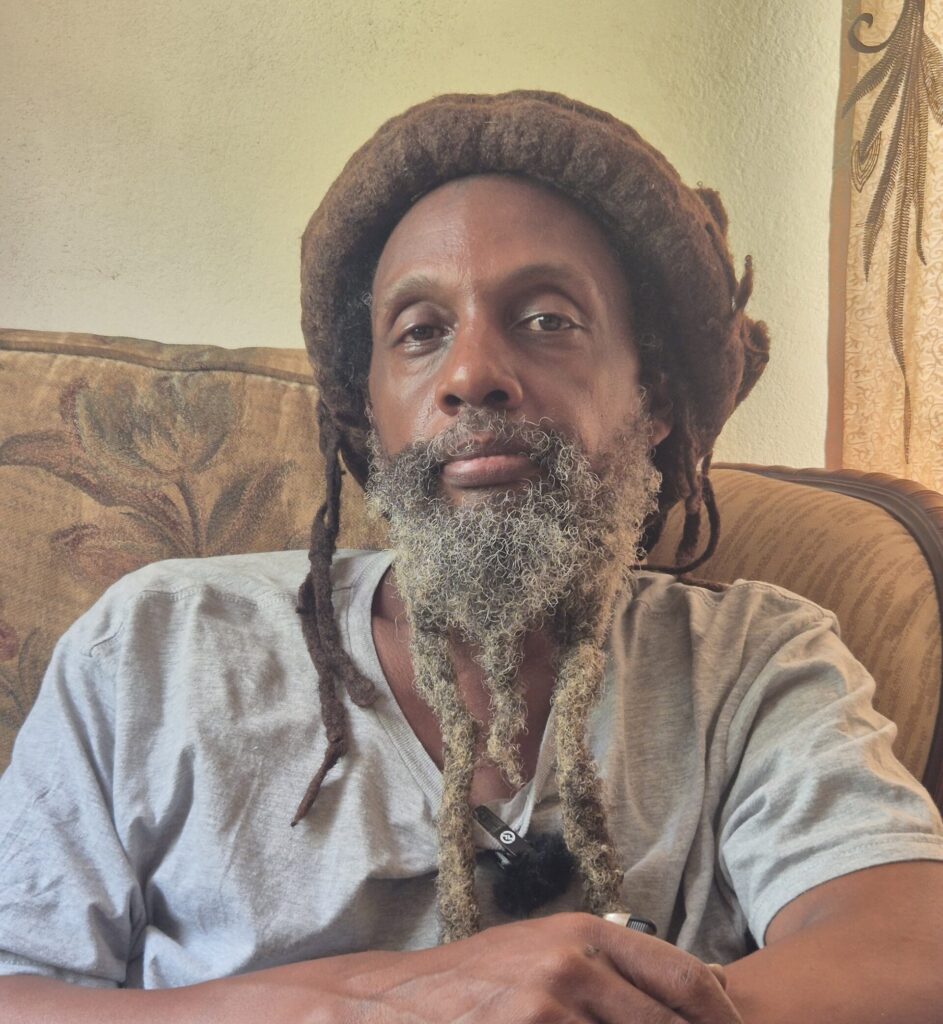
A High Court judge has ruled that existing restrictions on cannabis use are constitutional and justified on public health and safety grounds, dismissing a challenge brought by a Rastafarian claimant seeking broader rights for sacramental use at home.
Paul Ras Simba Rock, through his attorney Lalu Hanuman, challenged certain sections of the Drug Abuse Prevention and Control Act (DAPCA) as discriminatory and argued that the Sacramental Cannabis Act’s (SCA) restrictions on where Rastafarians may use cannabis unlawfully limited their religious freedom.
In her ruling, Justice Michelle Weekes said the discrimination claim regarding the DAPCA had not been made out, noting that the law applied generally and that the SCA drew a distinction in favour of Rastafarians rather than against them.
She said: “The claimant has established that Sections six, eight and 11 of the Drug Abuse Prevention and Control Act, prima facie interfere with the constitutional interest protected by Sections 11 and 19 of the Constitution, including the privacy of the home and the freedom of conscience, and that they bear with particular force upon Rastafarians because cannabis has sacramental significance within that faith.
“That prima facie interference does not, however, render the impugned provisions unconstitutional. On the evidence before the court, the defendant has shown, and the court finds, that the restrictions imposed by the DAPCA are reasonably required in the interest of public health, public order, public safety, and the prevention of crime. The claimant has not displaced that justification or shown that the provisions are not reasonably justifiable in a democratic society.”
The judgment also outlined that the SCA has created “a limited statutory exception for Rastafarian sacramental use of cannabis in approved places of worship”.
She continued: “The exceptions not extending as far as the claimant would wish, including to private home use or cultivation, does not of itself make the legislation unconstitutional. As stated earlier, it is not this court’s function to create statutory provisions where none exist or rewrite those that do. That role lies with Parliament.”
In his motion, Rock alleged violations of his constitutional rights, including the right to personal liberty; the right to privacy; the right to protection of the law; the right to freedom of conscience, expression, assembly and association under Article 11 of the Constitution; the right to freedom of religion under Article 19; and the right not to be discriminated against on the basis of “creed” under Article 23 of the Constitution and Article 18 of the International Covenant on Civil and Political Rights 1966.
The court stated that several sections of the DAPCA fell under Article 11 of the Constitution in prohibiting possession, misuse and cultivation of cannabis. It noted that cannabis has sacramental significance for Rastafarians and is used in worship, meditation, healing and spiritual observance, and that the law also engaged the privacy of the home because the prohibition applies even where the use or possession is set to occur privately.
In addition, the court pointed to evidence presented by witnesses for the defendant, including Deputy Police Commissioner Erwin Boyce, Senior Consultant Psychiatrist Brian MacLachlan and Senior Lecturer in Psychiatry Dr Maisha Emmanuel, regarding the importance of cannabis regulation to public health and crime prevention.
Justice Weekes said: “The Court is therefore satisfied that Sections six, eight and 11 of the DAPCA are reasonably required in the public interest and so finds. The claimant has not shown that these prohibitions, viewed considering the evidence and the deference showed to Parliament in matters of public health and criminal regulation, are not reasonably justifiable in a democratic society. The Section 11 challenge to the DAPCA therefore fails. The Court accordingly finds that Sections six, eight and 11 of the DAPCA are constitutionally justified and reasonably required.
“The SCA does not prohibit cannabis use, possession or cultivation in the home; Those prohibitions arise from the DAPCA. The SCA instead relaxes the general prohibition by permitting sacramental use, cultivation, possession, preparation, storage and disposal of cannabis within the statutory permit regime. That means the question is not whether the SCA itself criminalizes the Claimant’s preferred religious practices, but whether the accommodation it creates is so narrow or burdensome as to be an unconstitutional interference with Section 11.
“The court is not satisfied that it is. That the SCA does not extend to private home use or private home cultivation may leave the claimant dissatisfied, but it does not transform an accommodation into a prohibition. Nor does Section 11 require the Court to rewrite the statute to create a wider exemption than Parliament enacted.”
Under Article 19, the judge stated that while the DAPCA made no allowance for the sacramental use of cannabis for Rastafarians, the defendant had justified that limitation by showing that prohibitions were reasonably required in the interests of public health, public safety and crime prevention.
She said that the claimant had not shown that the limitation was not reasonably justifiable in a democratic society.
In the ruling, the judge added that the claimant’s issue with the SCA was that it was “too narrow” regarding where Rastafarians could use cannabis, but ruled that this did not establish a breach of the constitution.
She said: “A permit requirement for the lawful religious use of a controlled drug is not state control over the religion itself….The Claimant remains free to practice Rastafarianism. It is the use and cultivation of cannabis outside the SCA that remains regulated. In addition, the Claimant has brought no evidence that the exception is constitutionally inadequate.
“The evidence does not establish that Parliament was required to adopt the Claimant’s preferred model of private home-use and cultivation, particularly where the defendant’s evidence demonstrates public health, public order and enforcement concerns, the SCA may be narrower than the claimant wishes, but that does not make it unconstitutional.”
Justice Weekes determined that the challenge to Article 23 failed because the claimant had not shown that Rastafarians are treated less favourably than persons of other creeds in similar circumstances:
“Sections six, eight and eleven of the DAPCA apply generally to all persons, regardless of religion. Any heavier impact on Rastafarians arises because cannabis is sacramental within Rastafarianism, not because the DAPCA classifies or targets persons by creed,” she said.
“On the evidence that impact is justified by the same public health, order and crime prevention considerations discussed above. The SCA draws an express distinction in favour of Rastafarians by creating a statutory accommodation unavailable to others. That accommodation may be limited, but a limited benefit is not less favourable treatment for the purposes of section 23.”
(JB)
The post Judge upholds cannabis restrictions as constitutional appeared first on Barbados Today.