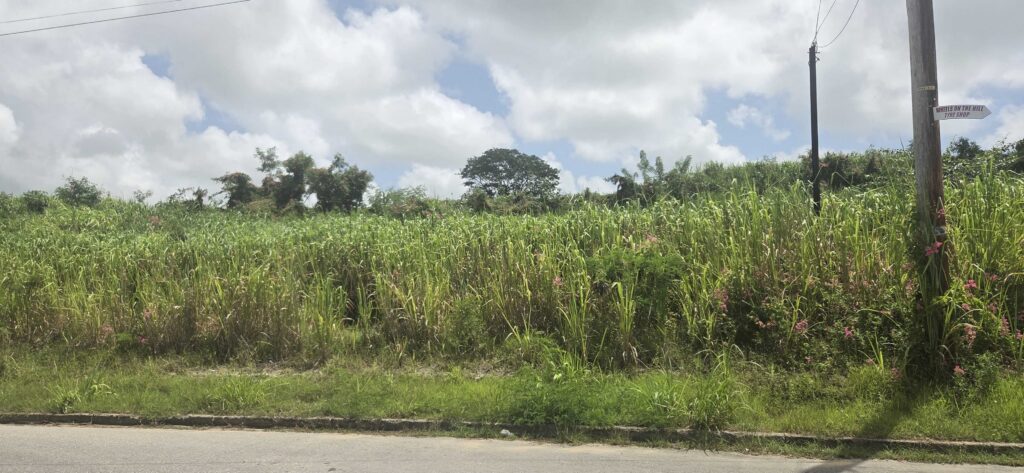
Residents of Lower Burney, St Michael, have urged authorities to fix longstanding drainage, soil, and utility problems before building new homes on land earmarked for rehousing families from crowded estates.
The position follows Tuesday’s disclosure by Housing Minister Chris Gibbs of plans to reduce density in older, high-density communities where structural degradation renders full rewiring or refurbishment impractical. Under these plans, the government intends to construct climate-resilient housing projects in designated greenfield sites, including Lower Burney, to accommodate households relocating from congested estates such as The Pine.
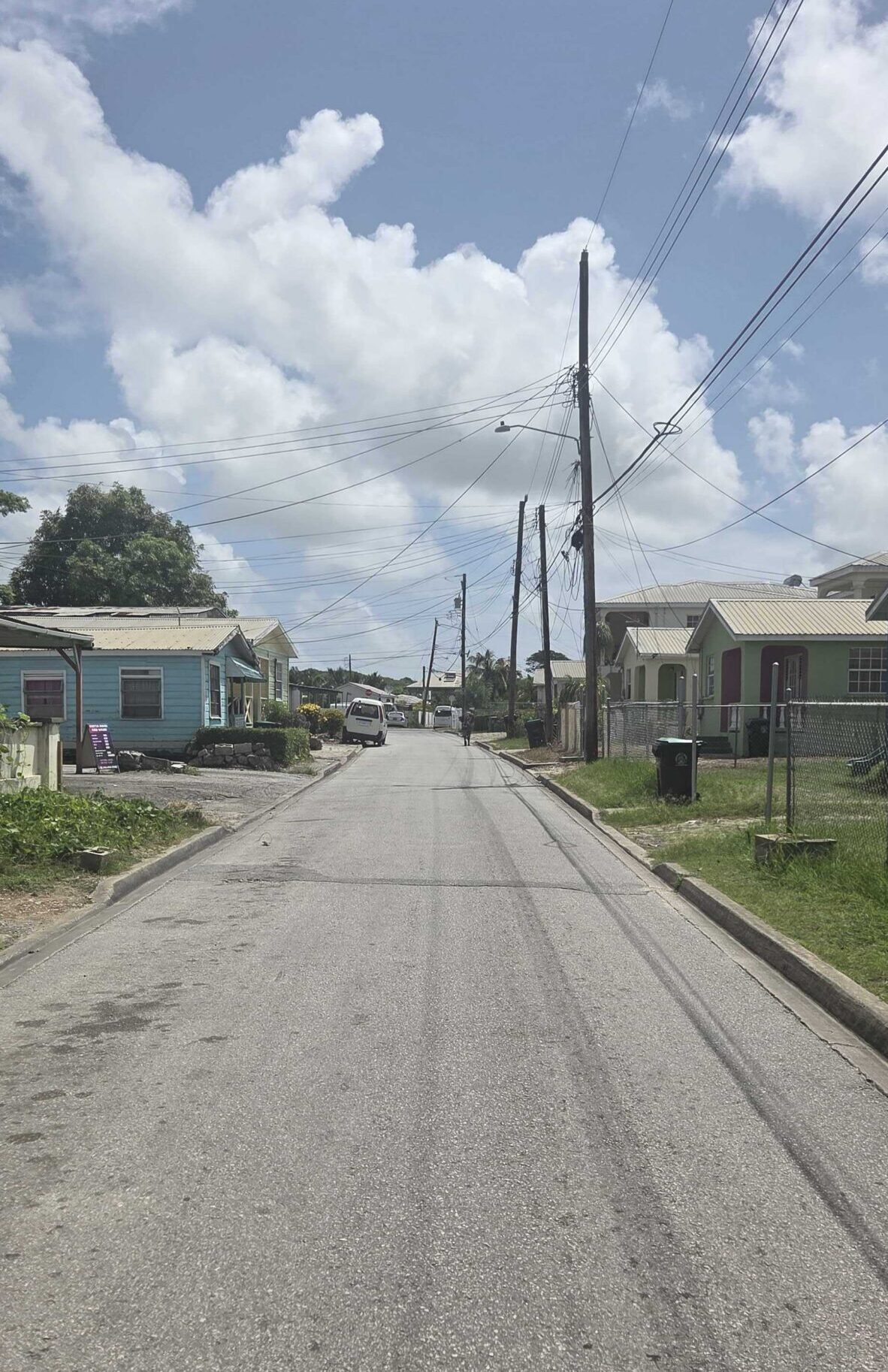
Lower Burney St Michael. (Photo Credit: Ricardo Roberts/Barbados TODAY)
While some long-standing community members welcomed the prospect of new neighbours, others called on authorities to address existing environmental and infrastructural deficits before breaking ground on new residential units. They maintained that close consultation with those who know the landscape best will be critical to ensuring that new construction does not exacerbate existing flooding or utility issues.
Dennis Douglas, 63, said outside developers and engineers often fail to consult long-standing residents like him about the terrain’s unique topography and water behaviour.
“Engineers come into the neighbourhood and build, but they don’t come and ask the older residents about the water system in Burney,” Douglas said. “When we have heavy rainfall, the water lay off back down here in the bottom. People come out here to build houses and cut foundations, and when they come back the next year, they find water.”
Douglas noted that historical watercourses traverse the area, running down from St David’s, which can cause significant flooding if construction sites fail to account for subterranean channels and old plantation springs. Recalling an October downpour during the 1970s, he described floodwaters extending from the lower valley straight through to neighbouring districts.
Beyond drainage, residents highlighted an urgent need to expand basic utilities—most notably the installation of domestic natural gas lines. Despite living in close proximity to main distribution points and a nearby petrol station, several households in the interior of Lower Burney remain disconnected from the natural gas network.
“The natural gas came to the valley and stopped in the middle,” Douglas said. “People want natural gas in here, but they claim there is no space for the gas lines or that it costs too much money to run past the water pipes. We are begging for it. If a commercial developer comes and builds, they will get natural gas straight away, but the local residents have been left waiting.”
Other residents raised questions about the ground conditions and foundation costs associated with the targeted housing parcel, noting that deep layers of soft topsoil and mud could inflate construction costs for new home builders.
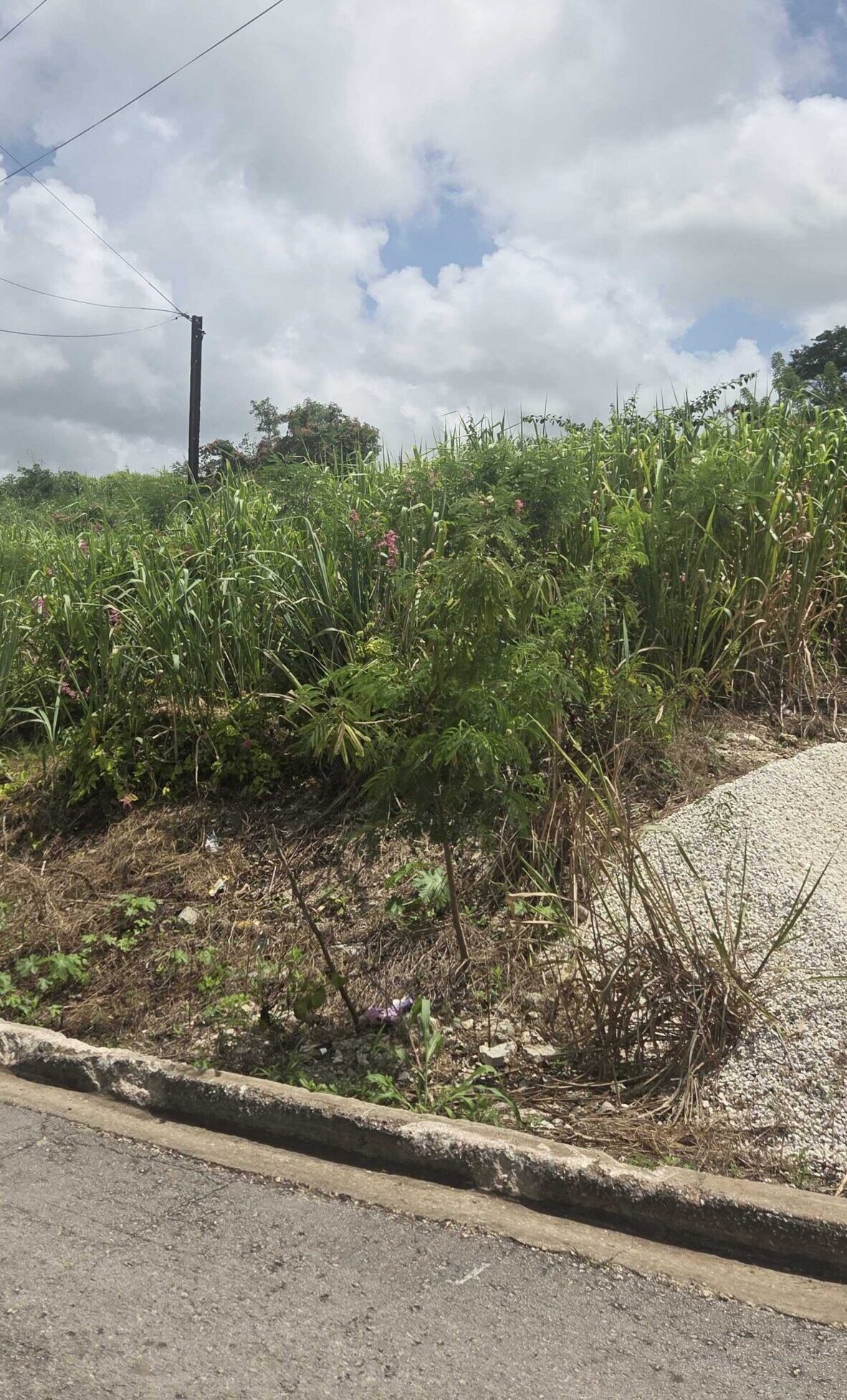
Residents of Lower Burney, St Michael, raised questions regarding the ground conditions and foundation costs associated with the targeted housing parcel, pointing out that deep layers of soft topsoil and mud could inflate construction costs for new home builders. (Photo Credit: Ricardo Roberts/Barbados TODAY)
Resident Sean Adams noted that constructing stable dwellings on the terrain requires substantial foundation engineering, which could prove cost-prohibitive for average buyers if the land is not properly prepared beforehand.
“If you spend hundreds of thousands of dollars just on the foundation because you are building on mud, you can’t complete the house,” Adams said. “The foundation has to be deep, or you have to come up on columns. It is better to have a solid foundation that can withstand earth tremors than just reliance on pillars. I believe the authorities should help lift and level the ground first before selling or developing the lots.”
Adams also urged authorities to address social infrastructure and general community upkeep alongside any proposed home building.
“We have a lot of bush in the area, and when it is overgrown, it creates spots for illicit activity,” Adams said. “We need the government to clean the canals regularly and trim the bush. We have young people looking for work who are willing to work if given the opportunity. When you help the community and provide support, everything goes well, and you reduce crime.”
Regarding the government’s target strategy to rehouse families from high-density areas into newly built estates, community perspectives remain mixed. Some residents noted that representatives from housing entities had conducted preliminary visits in recent years to gauge community sentiment and present plans for proposed developments.
While some established homeowners expressed scepticism about whether long-settled families in existing communities would willingly relocate, others view the prospect of new housing stock as a positive step for the wider parish.
One 20-year resident of the area said additional housing would be welcome, provided the surrounding road network is upgraded to handle increased traffic volumes.
“The more the merrier, I don’t have an issue with new housing,” the resident noted, while pointing out that traffic management would need attention. “We need speed humps across the road because vehicles come through too fast. It is a quiet area, but infrastructure needs to keep pace.”
(RR)
The post Lower Burney residents urge drainage, utility fixes before new housing appeared first on Barbados Today.