Journalists across the Caribbean are being urged to rethink how they cover disasters, with greater attention to protecting children and other vulnerable people rather than simply being first with the story.
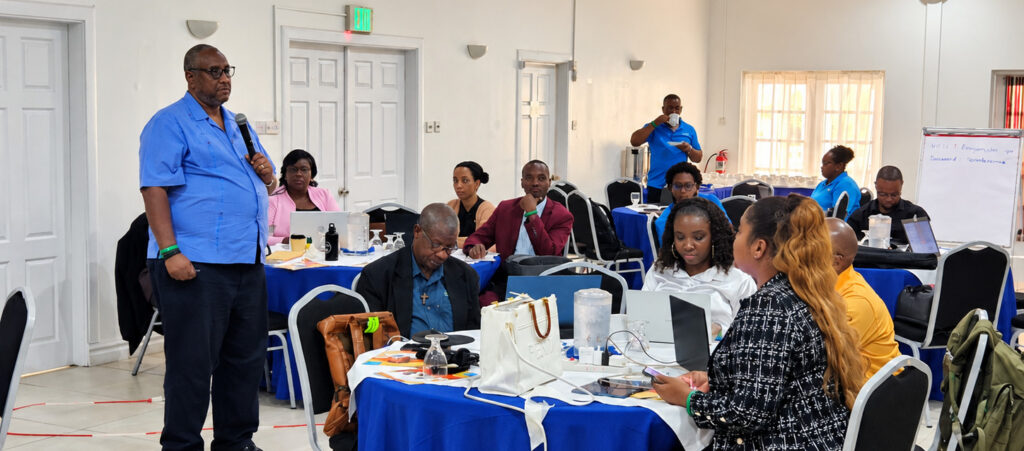
Julius Gittens, principal consultant of Herald Media Partners Limited and facilitator of a two-day regional workshop in Saint Lucia, said the media must recognise that disasters are not merely events to be covered, but situations involving people whose rights, dignity and privacy must be protected.
Gittens, a veteran regional journalist, said this was particularly important when reporting on children.
“Disasters are not merely events to be covered. They involve very vulnerable groups,” he said.
“In the case that has brought us here for this workshop, children, they have a right to the protection of their persons.
They have a right to dignity and, in particular circumstances, they certainly have a right to privacy.”
Seventeen journalists and information officers from Barbados, St Vincent and the Grenadines, Grenada, Dominica, Trinidad and Tobago, Antigua and Barbuda, St Kitts and Nevis and Saint Lucia participated in the training which ended on Thursday.
Speaking to Barbados TODAY, Gittens said responsible coverage should extend to how journalists approach children for interviews, obtain consent and report experiences which could cause them to relive trauma.
“We are mindful of operating always in the best interest of the child, not in the best interest of the media house,” he said.
He also challenged the traditional newsroom emphasis on being first with information, particularly during emergencies when access to affected areas may be limited and information is critical to survival, protection, recovery and the delivery of assistance.
“It is not important to be first or to be the only media house covering that story. It’s important that everyone has access to that information and that that information is credible,” Gittens said.
He warned that professional media were also operating in an environment where misinformation and deliberate disinformation could spread rapidly through social media, including images from previous events being presented as though they were current.
The workshop therefore exposed journalists to tools for verifying information and material received from members of the public.
Demion McTair, journalist and founder of One News, St Vincent, told Barbados TODAY that the training changed how he viewed a significant gap in his own disaster reporting.
McTair, who has covered several disasters, including Hurricane Beryl, said he had generally focused on adults because he was uncertain about how to approach children caught up in emergencies.
“Most of my coverage didn’t include children because I didn’t really know how to cover them,” he said.
“This workshop opened my eyes as to how many things we miss when we don’t cover children, and children are some of the most impacted people in the aftermath of disasters.”
McTair said the training also made him more conscious of how seemingly simple editorial decisions, including the angle from which a child is photographed, could affect how that child is represented.
He suggested similar training should be extended to photographers.
CNC3 Climate Change Editor Seigonie Mohammed said the workshop pushed participants to become better journalists while balancing the public’s need for information with the need to protect vulnerable people.
“It really does push us to be better journalists and be better for the people that we serve and give them the information that they need while protecting those that we need to protect the most,” she said.
CDEMA Communications and Public Relations Specialist Keith Goddard said he was particularly pleased with the level of engagement from journalists and their willingness to consider how their reporting could affect vulnerable groups.
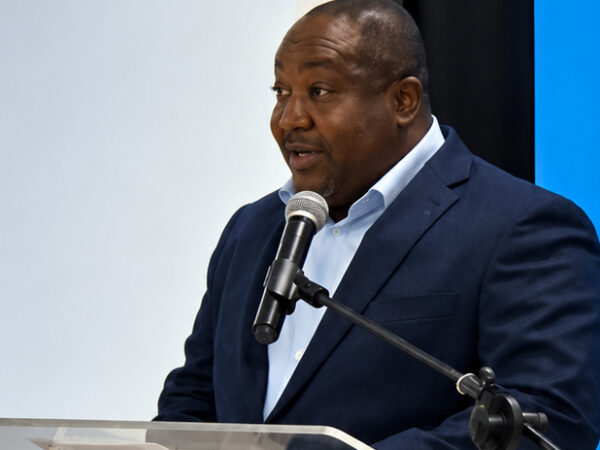
CDEMA Communications and Public Relations Specialist Keith Goddard (FP)
He said the discussions also gave agencies valuable feedback about what journalists need from humanitarian organisations to effectively do their jobs during emergencies.
Goddard said the next step should be to take the training into newsroom leadership.
“We need to begin to take this information or take this training forward, focus more on the editors and managers of the newsroom,” he said, noting that they are the ones who make decisions about coverage.
UNICEF Climate, Environment, Energy and Disaster Risk Reduction Specialist Clive Murray described the workshop as “very engaging and thought-provoking”, particularly around access to timely information in a disaster setting and ethical reporting to protect the rights of children and other vulnerable groups.
Murray said UNICEF was also pleased with journalists’ interest in climate study findings presented on the first day of the training and the resulting coverage by media houses across the region.
“We look forward to continuing the engagement and strengthening the partnership with the media on important matters such as climate change impacts on children, young people and families across the region,” he said. (SM)
The post Media urged to put children before the story in disaster coverage appeared first on Barbados Today.