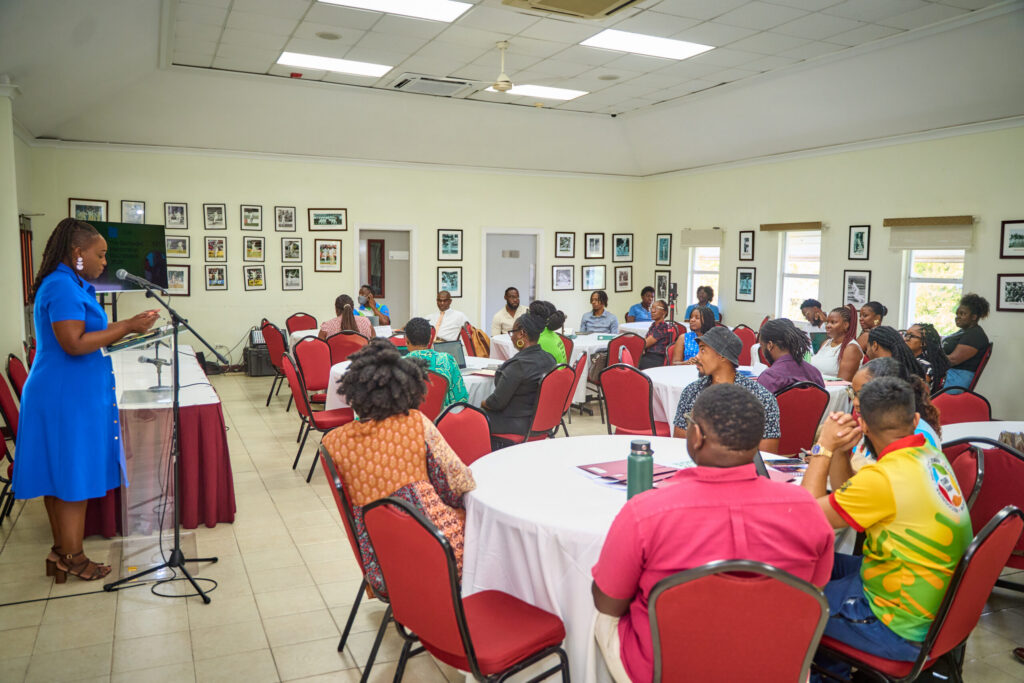
Mentorship programmes and safe spaces where young people can speak freely are vital in tackling growing youth crime and mental health challenges, participants heard at a national roundtable held on Thursday at the University of the West Indies at Cave Hill.
The event brought together representatives from government, civil society and academia, all focused on strengthening mentorship frameworks as part of a broader response to youth vulnerability and crime.
The discussion comes at a crucial time, not only for Barbados but across the Caribbean, as countries grapple with rising crime and violence alongside growing mental health concerns among young people, said UNICEF Youth Engagement Officer, Firhaana Bulbulia, at the Barbados Mentorship Roundtable at the 3Ws Pavilion.
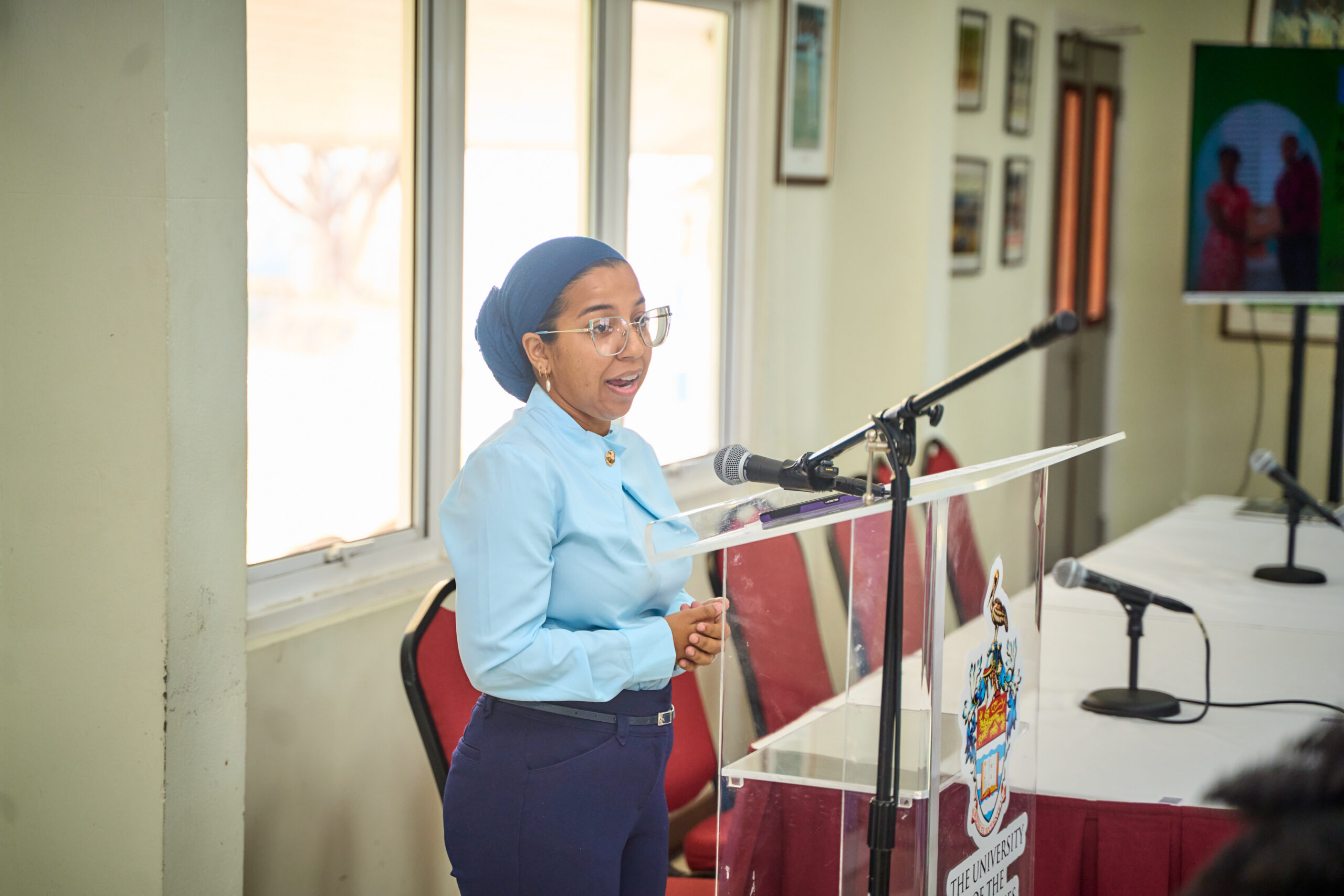
Youth Engagement Officer with UNICEF, Firhaana Bulbulia. (Photo Credit: Shamar Blunt)
“We see rising issues of crime and violence, children reporting… increased challenges with mental health… challenges at home… within the school, academic pressures and pressures that come from social media,” she said.
Drawing on UNICEF’s engagement with young people across the region, Bulbulia stressed that children themselves have been clear about what they need.
“We hear over and over again… ‘we just need somebody to talk to, we need a little guidance… I need a safe space… somebody who can give me some advice and help me to make better decisions in life’.”
She also commended mentors and volunteers who continue to support young people, often going beyond the call of duty.
“At UNICEF, we do recognise the need for those safe spaces. [We are] working with governments to ensure that we create those enabling environments through legislation, programming, education and community interventions, to make sure that children are well supported.”
Head of the Institute for Gender and Development Studies, Dr Tonya Haynes, emphasised the importance of care and community in shaping positive outcomes for young people.
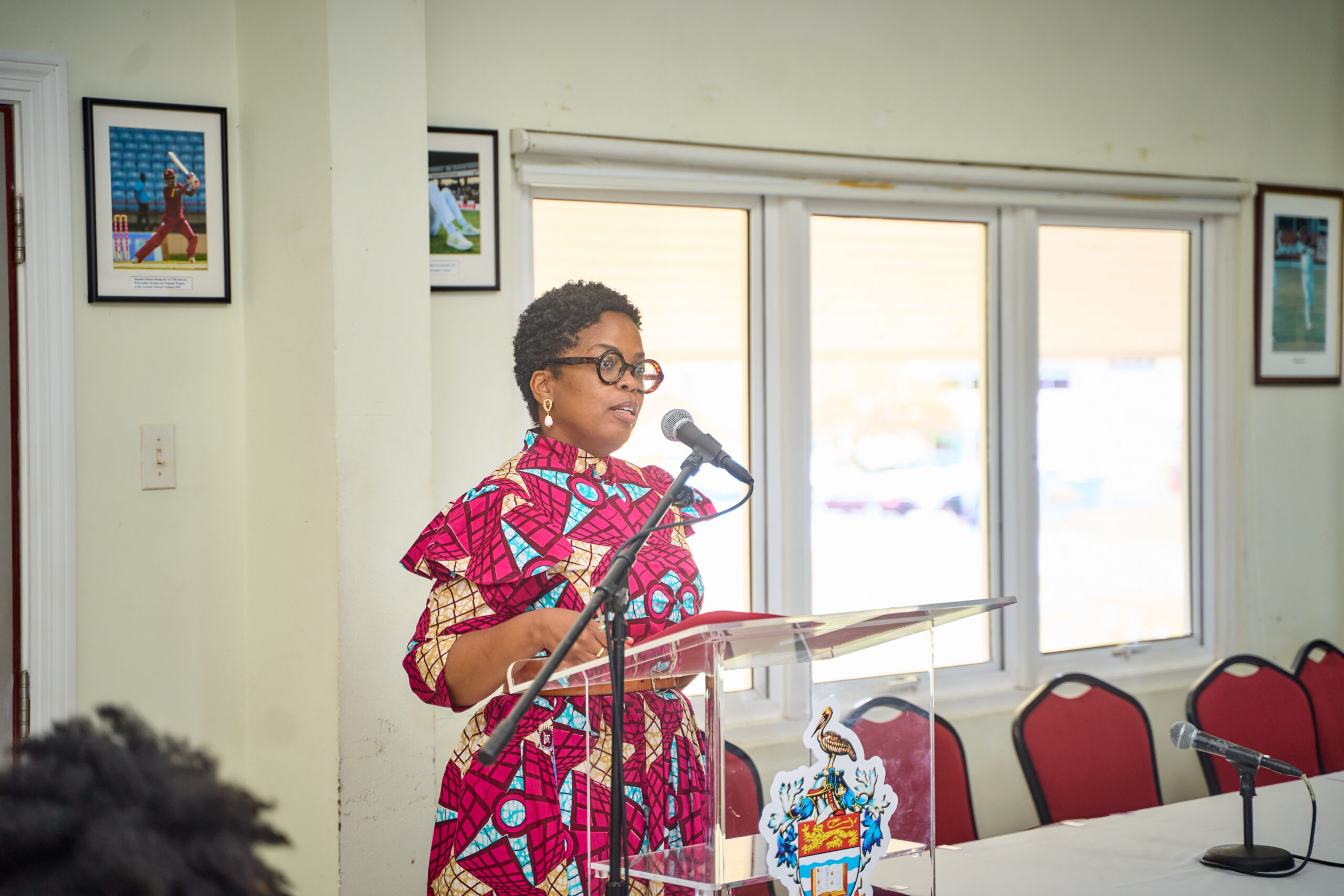
Head of the Institute for Gender and Development Studies (IGDS), Dr Tonya Haynes. (Photo Credit: Shamar Blunt)
Quoting scholar Ana Ford Smith, Haynes noted that “absence of care is death,” stressing that meaningful support systems are essential to counter the alienation many young people face.
“We are all here because somebody cared for us. Care is at the core of the Blooming Youth Project,” she said.
Haynes explained that the initiative promotes positive interaction between youth in conflict with the law and the wider community, with mentorship forming a central pillar.
The project matches residents at the Government Industrial Schools with mentors drawn from the student body of UWI Cave Hill, she said, adding that participants also receive training in climate-smart agriculture, renewable energy technologies and transitional support.
She described the roundtable as a key opportunity to strengthen collaboration among stakeholders.
“Today’s mentorship roundtable… offers an opportunity for collaboration, coordination and knowledge sharing… It is an invitation to deepen our ethic of care through peer-to-peer learning, implementation of best practices, and documentation of challenges, experiences and successes.”
(SB)
The post Mentorship, safe spaces vital in tackling youth crime, forum hears appeared first on Barbados Today.