
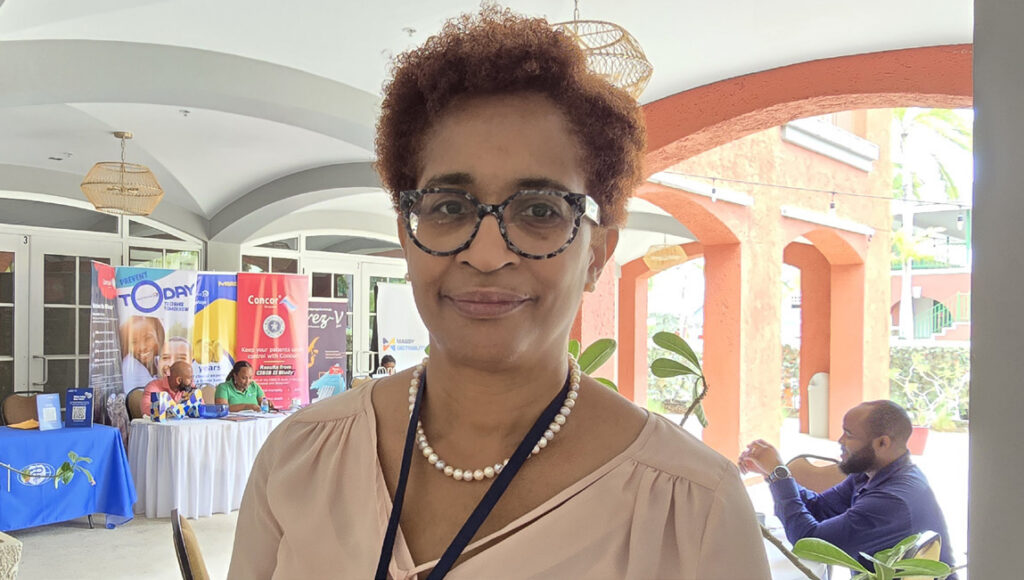
Poor health literacy among the public is becoming a major health challenge, the head of the Barbados Association of Medical Practitioners (BAMP) said on Monday, raising concerns that lifestyle diseases among the misinformed are contributing to health complications.
BAMP president Dr Lynda Williams told Barbados TODAY that Barbados’ health literacy, which is how well the population educates itself about health and the sources of its information, is a major problem.
“There’s a lot of scepticism and cynicism that has come post-COVID about health and the sources of information, and a lot of people take their health information from bad sources – YouTube, Google, whatever – and they do not know how to discern what is correct from what is incorrect. And if you take your health information from those sources, you are going to be led into false beliefs about health, including the need to take your medication and so forth.”
These inaccurate sources of information contributed greatly to the hesitancy to seek medical attention during COVID, though there has since been some improvement, she said.
“We see more people coming forward with getting the children vaccinated. We’ve seen more people coming forward to get health checks. So there was a lag for a couple of years and also in those couple of years, we also saw a rise in incidence of cancers and so forth, because, of course, people were presenting very late for the screening but we’re starting to see some of it come back now.”
But overcoming the challenge of health literacy remains critical, particularly among younger generations, Dr Williams said.
“One of our great difficulties in Barbados is that health literacy and health information. We have to overcome that as a barrier, and we have to start with children, helping them to understand from early how to take in the right information and how to discern when someone is not telling you good health information.”
She urged Barbadians to seek information from credible organisations and healthcare professionals rather than relying solely on information circulating online: “We say use credible sources, like [World Health Organisation], [Pan American Health Organisation], [US Centres for Disease Control], Ministry of Health and Wellness, and even the ministries of health of other countries, and also talk to your doctor about information that you find.”
Some of the misinformation circulating can have serious consequences for public health, she warned.
“Some of it is really bad. Somebody sent me something where they were saying that salt is a cure for hypertension. And that was circulating in Barbados for like the last couple of weeks. This is the farthest thing from the truth. But yet, you know, someone in a video wearing a white coat says it, and it seems credible.”
People should seek guidance from qualified medical professionals before acting on health advice found online, she said.
“You really should have discussions with medical doctors or nurses or nurse practitioners, or anyone in your community that has medical knowledge, so that you do not fall into the group of people whose only source is their friend or online.”
Dr Williams also warned that misleading advertising and misinformation surrounding supplements continue to undermine public understanding of health issues.
“Friends have a lot of influence, and also we have a lot of advertising in Barbados that is misleading about people’s health and about supplements and so forth that is misleading. And this is also contributing to the poor health literacy of Barbadians, poor understanding of health and diseases, poor understanding of what things like asthma and COPD are and how they need to be treated early because they can lead to fatal illness.”
Improving public understanding of health issues is becoming increasingly important as Barbados continues to grapple with a growing number of NCDs, she suggested.
The BAMP president was speaking at its medical education conference titled Navigating Non-Communicable Diseases from a Caribbean Perspective. During the conference, medical professionals discussed a range of conditions beyond the traditionally recognised diabetes and hypertension, including obesity, paediatric obesity, asthma, chronic obstructive pulmonary disease (COPD), kidney disease, strokes, heart attacks and heat-related illnesses.
Doctors were not only examining treatment options but also exploring how to advocate for policies to improve public health outcomes and reduce the burden of chronic diseases nationwide, said Dr Williams.
(LG)
The post Misinformation posing growing threat to public health – BAMP appeared first on Barbados Today.