More Barbadians are exploring ways to grow their own food, with householders showing increasing interest in hydroponics, greenhouse cultivation and other methods that require relatively little space.
The Barbados Agricultural Development and Marketing Corporation (BADMC) reported receiving regular enquiries from people seeking advice on everything from growing vegetables at home to establishing commercial farms and accessing farming rebates.
BADMC agronomist Rontia Crichlow spoke about the growing interest during Thursday’s agri-clinic at Six Roads, St Philip, where farmers and householders were invited to seek technical assistance with plant health and crop production.
“I think interest is definitely growing,” she told reporters.
“Every day we are getting questions about different crop types or what people are supposed to do when they get certain challenges, so the response has been good.”
Enquiries came from people with different levels of experience, including householders who wanted to produce some of their own food, Crichlow said.
She noted that many people were interested in production systems that could be accommodated at home, rather than requiring large plots of farmland.
Greenhouse production and controlled-environment agriculture have become frequent topics of discussion, with householders exploring ways to grow crops in smaller spaces.
“Lots of householders are interested in that because the footprint is a lot smaller, so you can start off with a mini hydroponic system just to grow some leafy greens at home,” Crichlow said.
Interest in agriculture is not limited to backyard cultivation. Crichlow said people considering commercial farming were also seeking information on production methods and available support.
One of the most common questions concerned agricultural rebates and the support farmers could receive for their investments.
Enquiries also covered general crop management and animal production.
The agri-clinic, held to mark World Food Day, brought agricultural officers together to address those concerns and demonstrate equipment being used to support local food production.
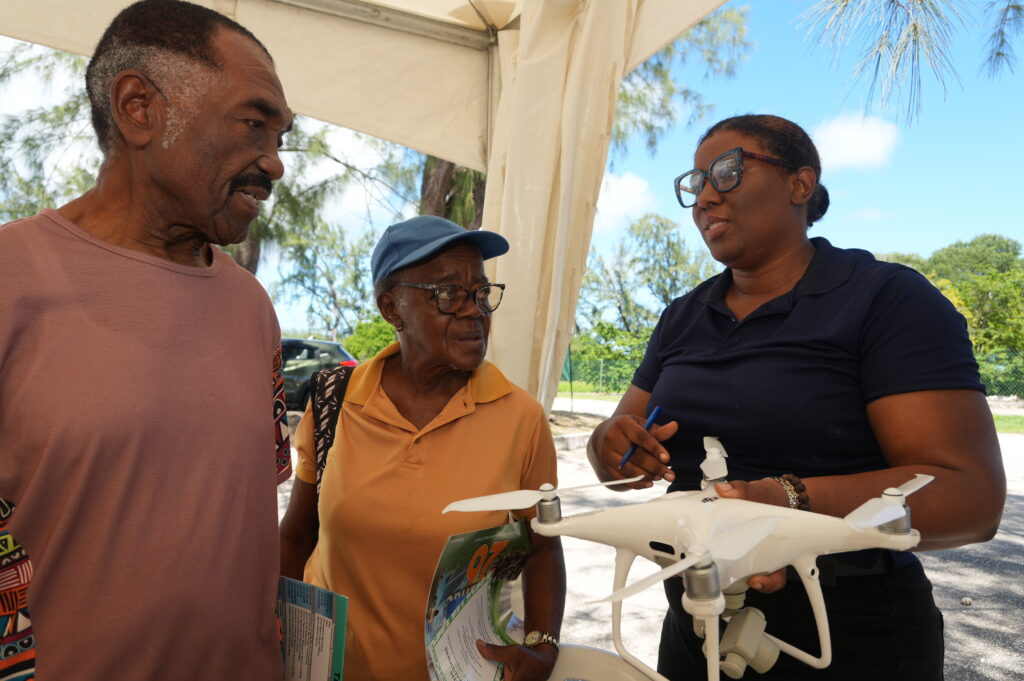
On display was a drone used to monitor farming areas for plant-health problems and conditions such as flooding.
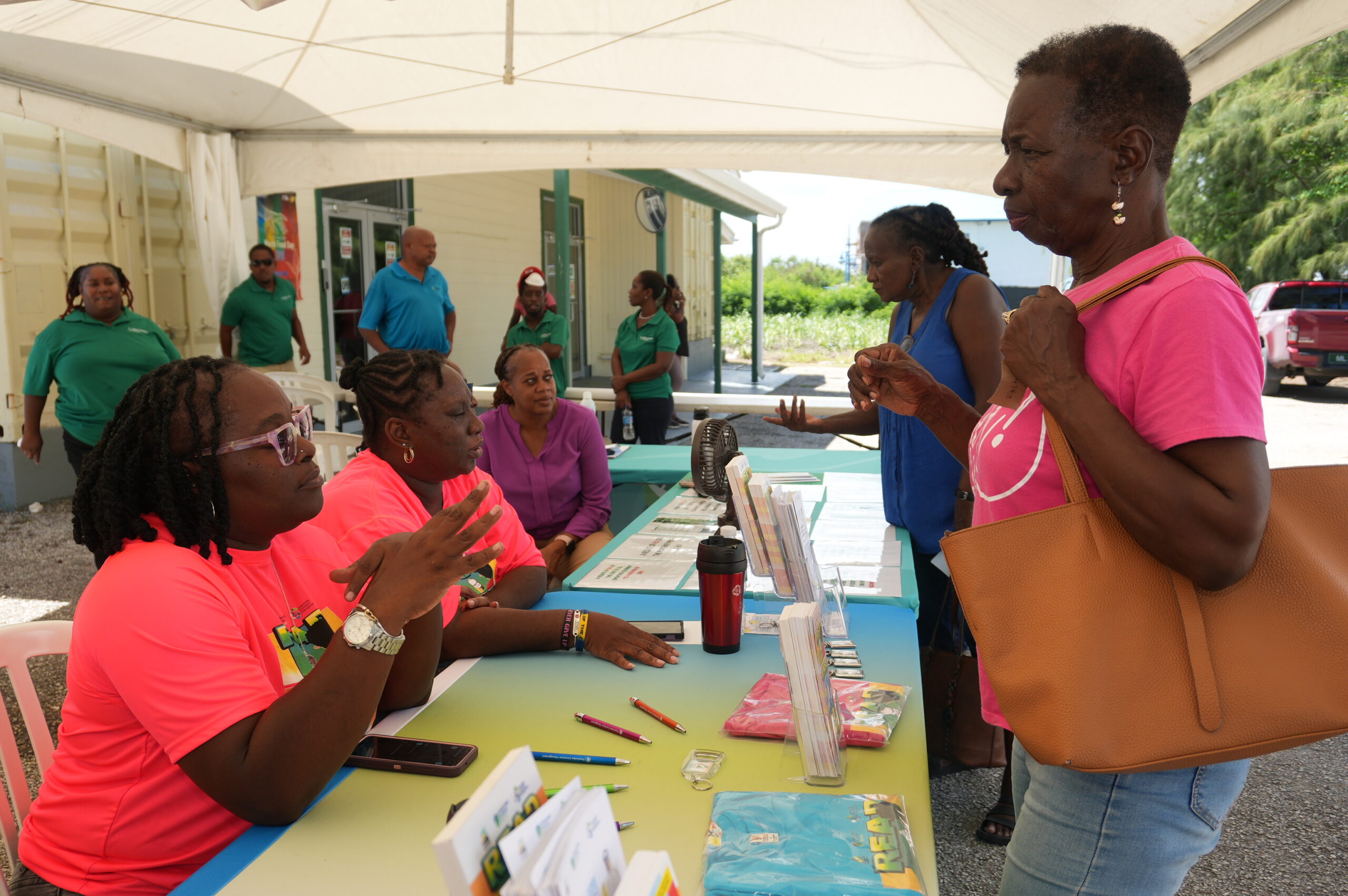
Pesticides Control Unit technical assistant Saskia Rawlins (left, seated) shares information with Celeste Clarke. (Contributed photo)
A soil scanner was also demonstrated, with Crichlow saying it could provide information on soil nutrients, electrical conductivity and pH in five minutes or less.
The equipment lets agricultural officers assess soil conditions and identify problems that may affect crop growth.
Visitors were also introduced to Farmer Dave, an artificial intelligence-powered agricultural assistant being rolled out to give farmers access to information through their mobile phones.
Users could photograph plants to identify possible problems or ask questions about agricultural practices at any time, Crichlow said.
The technology is intended to complement the work of extension officers, who provide technical assistance to farmers across the island.
Despite the growing interest in cultivation, “the one really big challenge is the lack of water that we are having”, Crichlow said.
She noted that farmers had hoped for more consistent rainfall during the wet season but were instead experiencing extended dry periods interrupted by wetter conditions.
“We are in the rainy season, and persons had hoped obviously to have a bit more of an active season so we can have more water. That hasn’t been the case, so we’ve been getting some long bouts of drought conditions and then wet, so the dry and the wet sometimes don’t go well for the plant.”
BADMC is exploring ways to help farmers manage changing conditions, including trials of soil amendments intended to improve water retention.
The farming agency is also using irrigation sensors in farming districts to monitor soil moisture and help farmers determine when crops need watering.
Crichlow suggested basing watering schedules on moisture levels and the stage of crop development rather than a fixed routine.
“When the moisture levels drop below a certain level, then you irrigate, and this is also related to the stage at which the crop is at,” she said.
Although a lack of water could affect production, BADMC could not confirm shortages of any specific vegetables at this stage, Crichlow said.
But she added: “I would have to say it is not the worst in terms of there have been years when it has been absolutely not good, but farmers I think are being more proactive in terms of trying to reduce the impact on their production.” (SM)
The post More Bajans showing interest in growing their own food appeared first on Barbados Today.