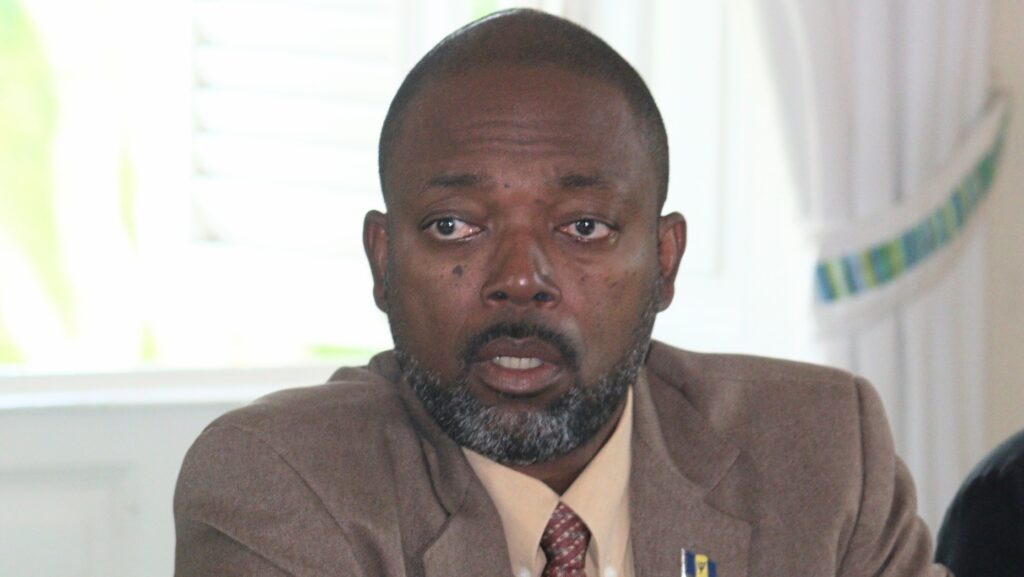

The Social Empowerment Agency (SEA) recently launched its annual Child Abuse Awareness And Prevention Month with a stark warning that neglect remains the most pervasive and damaging form of abuse affecting children across Barbados.
The launch, held in the HIV/AIDS Conference Room at the Warrens Office Complex, St Michael, brought together Government officials, social care specialists and partners who all urged Barbadians to treat child protection as a national duty rather than a bureaucratic process.
Director of the Social Care Delivery and Support Directorate at SEA, Roseann Richards, revealed that more than 600 cases of suspected child abuse were reported over the agency’s last reporting period, affecting over 800 children.
This is a slight decline from the 2023-2024 period where officials revealed that 677 child abuse cases were reported.
“We collect data every day, every week, every month. Once a report is made, there is a process that must be followed because every reported case does not mean it will be substantiated,” Richards said.
“When a report comes in, the Child Care Unit carries out a full investigation and only after that assessment can a matter be categorised as a substantiated case.”
She disclosed that for the 2024-2025 period, “we had about 639 reported cases and those cases affected about 811 children. Of those reported cases, most came from St Michael and Christ Church. Of the categories of abuse, neglect was the highest incidence.”
The majority of those impacted were girls.
“There were more females than males who experienced or were impacted by neglect, particularly under-supervision. That is one of the major reasons behind the high number of neglect cases. Once there is neglect, it flows off into every other area of abuse physical, sexual, emotional, or verbal.”
Richards said the public often misunderstood what constituted neglect.
“Neglect occurs when a child is left unsupervised and according to our law, children under the age of 12 should not be left alone in a house or anywhere by themselves. There must be adequate supervision,” she noted. “If you leave a child unsupervised and that child has to take care of younger siblings, it compounds the neglect. We also see cases where unsupervised children end up misusing phones or digital devices.”
Asked whether long-standing backlogs in the court system continued to hinder the resolution of child protection cases, the director said the issue must be understood as a multi-agency challenge.
“When we do the investigation, the judiciary handles the charging and what goes before the court. There are many factors that impact the backlog. If the court is waiting for a psychological report, a police record or a medical report, any one of these can delay matters.
“The concern, however, is that these children are abused in their early years and the matter only gets before the court in adolescence. That is the major concern. We have new legislation to help expedite cases, but it still requires many agencies working together to resolve matters,” she added.
Richards said they will be engaging in a month-long programme of outreach, education, media appearances, school engagement and specialised workshops.
Minister of People Empowerment and Elder Affairs Adrian Forde said the scars of child abuse, whether physical or emotional, can last a lifetime.
“Whether we are talking about physical scars or the internal scars from emotional and sexual abuse, the effects can manifest as maladaptive patterns of behaviour throughout a person’s life.”
He stressed that while Government must lead the fight, “we can only do so much. That is why we are asking every single Barbadian to have the visual acuity, the appreciation, the vigilance and the responsibility to recognise abuse or threats to our children, and to act”.
Forde reminded that new child protection legislation, passed on January 2, makes mandatory reporting a legal requirement.
Executive director of the SEA Collen Walcott urged Barbadians to recognise their own role in safeguarding children not just through legislation, but by everyday vigilance.
“The issue of child abuse has expanded from the family to the community and now to the digital space, a space we cannot fully control but in this business of protecting the vulnerable, we cannot give up. We must commit, rededicate and use every resource we have.”
She added: “Broken children become maladaptive adults, so today is not just another calendar activity, it is a call to action.” (TRY)
The post Neglect tops child abuse cases appeared first on nationnews.com.