
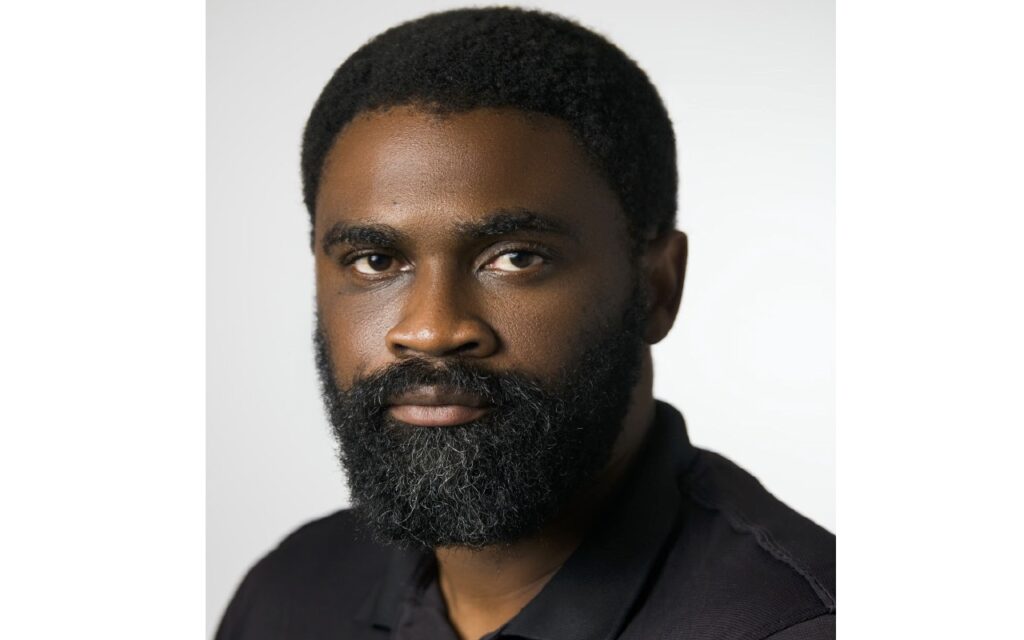
A new passport-free travel agreement between Barbados and Guyana is unlikely to deliver an immediate boost to trade or investment and may prove largely symbolic unless longstanding airport processing delays are addressed, according to prominent economist Jeremy Stephen.
While the initiative has been hailed by some as a historic leap towards deeper Caribbean integration, Stephen suggested the policy is largely “ceremonial” and unlikely to spark an immediate boom in trade or investment, unless deep-seated administrative bottlenecks at regional airports are dismantled.
Under the new arrangement, citizens of both nations can travel between Bridgetown and Georgetown using only official national identification cards. While the policy removes a traditional administrative layer, Stephen argued that the move tackles a barrier that was never a major deterrent to regional travel.
“I really don’t think it’ll be that much of a jump since the process of getting a passport is not a terribly exclusive one in the Caribbean,” Stephen said, analysing the immediate impact on intra-regional trade volumes.
“The issue always pertains to visas, and visas were never really an impediment to travel between Barbados and Guyana. Just the step of having a passport — which will cost you a few months in some cases — was the barrier.”
Instead of triggering a massive wave of new commercial investment, Stephen expects the policy to primarily facilitate “more expeditious travel decisions”. He noted that the true beneficiaries would likely be individuals facing sudden business requirements or residents from remote areas who previously lacked a commercial reason to hold a passport.
“If you need to do emergency travel down to Guyana for business reasons and your passport runs out, it’s a cheaper decision as opposed to getting emergency travel documents,” Stephen said.
He added that the framework could open unique windows for rural Guyanese producers: “It certainly presents an opportunity for those in the countryside or remote areas in Guyana to travel, at least for the first time. Some of those people do have farms, and they can come and look for partners in Barbados for importation.”
A critical pitfall of the new arrangement, according to Stephen, is that removing the passport requirement does not inherently speed up the transit process at ports of entry. True efficiency, he argues, depends on whether authorities drop physical immigration barriers entirely, mirroring models seen in other sub-regional blocs.
“The Organisation of Eastern Caribbean States (OECS) has their own path,” Stephen observed, pointing to swift transit protocols in islands such as Antigua and St Lucia.
“There’s a separate path for OECS travelers that doesn’t include CARICOM. If you have that separate path that allows them not to have to see Immigration—where it’s just a straight beeline for Customs—then it makes a difference because it takes time being in the immigration line.”
Without structural changes to how passengers are processed upon arrival, the economist remains unconvinced of major logistical gains. “Once you drop the physical barriers at the airport, then, yeah, you see some gains. Otherwise, no. Truthfully, this is more ceremonial as long as you have the physical structures of immigration. If you don’t have a specialised line, it does not save you any time at all.”
When questioned on whether this country-by-country approach risks fragmenting CARICOM or serves as a genuine template for the region, Stephen acknowledged the philosophical merit of the move but doubled down on practical execution.
“In CARICOM, it makes more sense to be able to travel on ID cards, but that’s philosophical again,” Stephen remarked. “Unless you drop physical barriers—that is, the need to go through immigration leaving the country or entering your destination—then I really don’t see a major benefit.”
The economist did, however, concede that the arrangement provides a vital safety net for highly mobile professionals who frequently find their travel plans paralysed by foreign bureaucracy. “You need to do a quick business trip, you don’t have your passport because a US Embassy asked you to surrender it for a visa… in situations like that, it makes a lot more sense.”
Regarding potential shifts in the labour market and whether the policy might trigger a reverse brain drain of Barbadian professionals moving south to Guyana’s booming oil economy, Stephen maintained that while the policy eases the path for skilled and unskilled labourers alike, the structural realities of airport processing will continue to dictate the actual velocity of human capital movement across the Caribbean Sea.
(RR)
The post Passport-free travel deal seen as ‘ceremonial’, economist says appeared first on Barbados Today.