
A multi-million-dollar plan is under way to convert the Government Industrial School (GIS) into a modern juvenile detention centre, as its principal called for major investment to bring the institution in line with the 2024 Child Justice Act.
Minister of Home Affairs Gregory Nicholls announced the plans on the second day of the Barbados Probation Service ‘Modern Perspectives on Sentencing and Penal Reform’ symposium, during a panel titled ‘The Child Justice Act: Readiness and Requirements’.
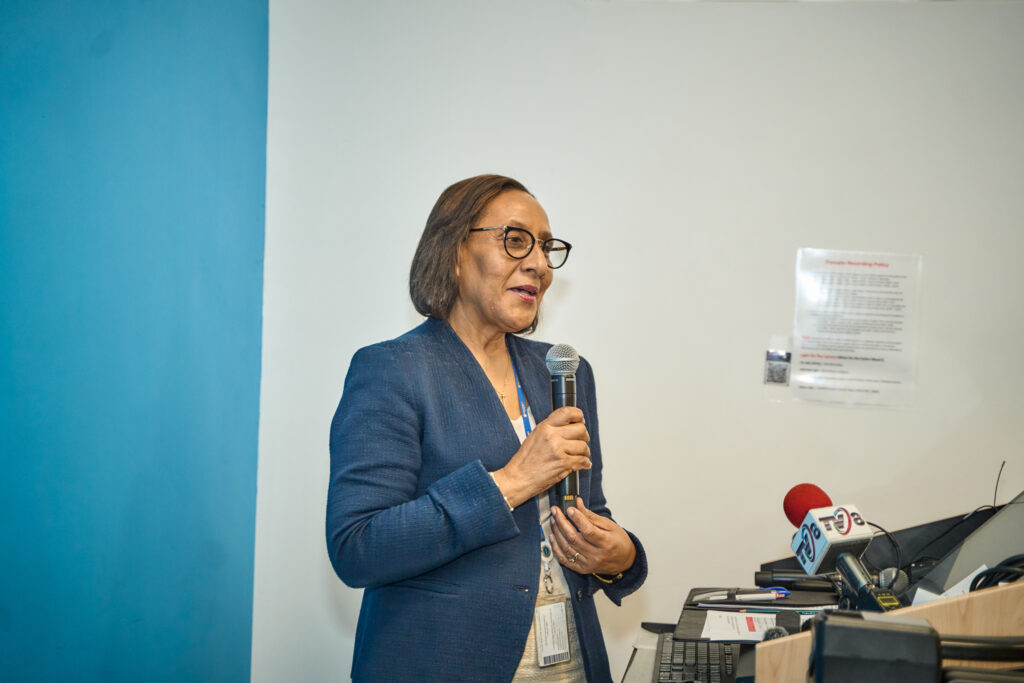
Principal Seilest Bradshaw told the audience gathered at the Lloyd Erskine Sandiford Centre that for the 2024 law to have a meaningful impact, greater resources must be directed to the GIS.
“First of all, the act calls for a secure residential facility, that is not what we have at present. We have something that can be akin to a group home, and that will not work for this act . So, we need to have a great investment in the GIS infrastructure. We need to have a great investment in specialist staff. In short, a complete restructuring of the GIS is what is really needed to fully implement the act’s vision. Legislation sets the standard. Funding determines whether that standard can be met.”
It was then in response that Nicholls said:
“We are dealing with the issue of the facilities at the Government Industrial School. We have spent many man-hours together – the principal, myself, the project implementation unit of the ministry, the [permanent secretary] and all of the team. We met with the architect on Friday. It will cost us millions of dollars to outfit that facility to a juvenile detention centre because, as Seilest said, it was built as a dormitory setting for hard-ears little boys and girls.
Referring to the former Reformatory and Industrial Schools Act of 1926, Nicholls added: “Now you are not getting those going in for the things that the 1926 legislation was talking about, but still the children who are neglected, the children who are abused verbally, physically, sexually, emotionally, the children who are starved, abandoned, who find their way on the streets, who give trouble at school, who smoke weed, who start out as the police said as scoping for the police and other people, then stashing, then doing the petty theft, and then graduate into gun crime.”
Bradshaw said the Child Justice Act signalled a fundamental philosophical shift, in which children in conflict with the law are first and foremost children with rights, potential and capacity to change. She outlined principles of accountability through counselling, restorative justice, community sanctions and a focus on rehabilitation.
Highlighting the challenge of community stigma, Bradshaw said that when these children returned to society, they were not given “a fighting chance”.
“Some people still throw it back in their face. Yes, young people do not have a criminal record, but sometimes I think that the gossip does more harm than actually having a criminal record,” she said.
“Many residents return to the same environments that contributed to their offending. Family stability and support is often absent… I am begging, I am pleading for these young people to be given the support in the community.”
The principal also called for inter-agency coordination among the social services, education, health and justice systems, noting that the practice of working in silos must end for the benefit of residents.
While the facility provided resources and opportunities for rehabilitation, it was the young people’s own hard work and determination that carried them forward, she said, pointing to several success stories.
“We had nine young people in our custody who have completed [Caribbean Secondary Education Certificate] examinations. We have seven young men who are now waiting to be assessed for their barbering certificate. So at the end of the day, these are young people who, if you come to the school on a normal day, you can see them in classrooms, you can see the structure. These are the same young people who nobody believed in, who nobody told them that they were capable of doing it.”
(JB)
The post Plans to upgrade Government Industrial School to juvenile detention centre appeared first on Barbados Today.