Prime Minister Mia Mottley has firmly denied that her administration plans to privatise the Transport Board, asserting instead that the proposed overhaul of the island’s public transport system will centre on worker ownership, tighter regulation and guaranteed service across all communities.
The issue resurfaced during Wednesday’s Ideas Forum with Mottley pushing back against suggestions that the state-owned entity would be sold off. She stressed that no such divestment was being pursued and outlining a model centred on worker ownership and tighter regulation.
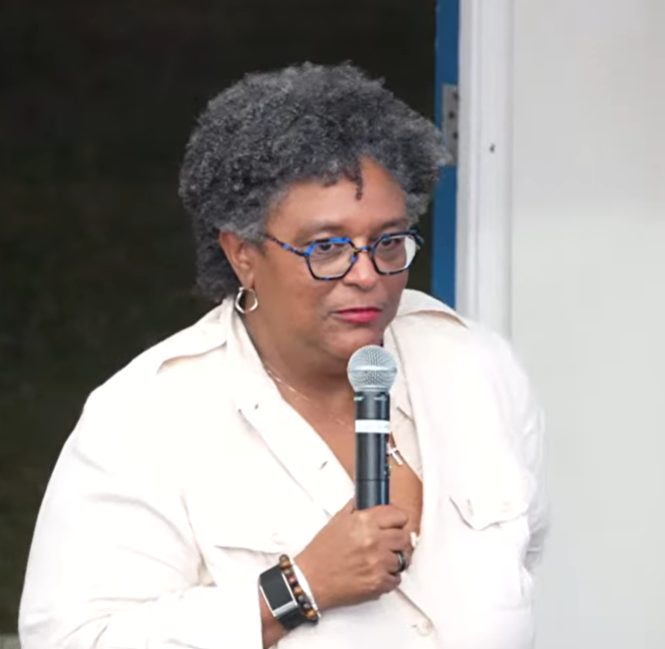
“There is no divestment of the Transport Board or privatisation,” she said, responding to concerns raised by Jason Phillips, Democratic Labour Party candidate for St Peter.
But previous public statements by Mottley and senior members of her administration have explicitly framed the Transport Board overhaul as a divestment exercise, even as they stressed worker participation and protection of vulnerable groups.
The issue gained traction late last year following the circulation of an official Ministry of Transport and Works letter outlining elements of the proposed restructuring.
The three-page document, signed by then Permanent Secretary Jehu Wiltshire, confirmed Cabinet’s approval for a transition to a new Barbados Mass Transit Authority, which would regulate public transport and hold the bill of sale for the buses.
Its circulation triggered strong public reaction, including concern from the Congress of Trade Unions and Staff Associations of Barbados about the potential implications for workers and the wider transport system.
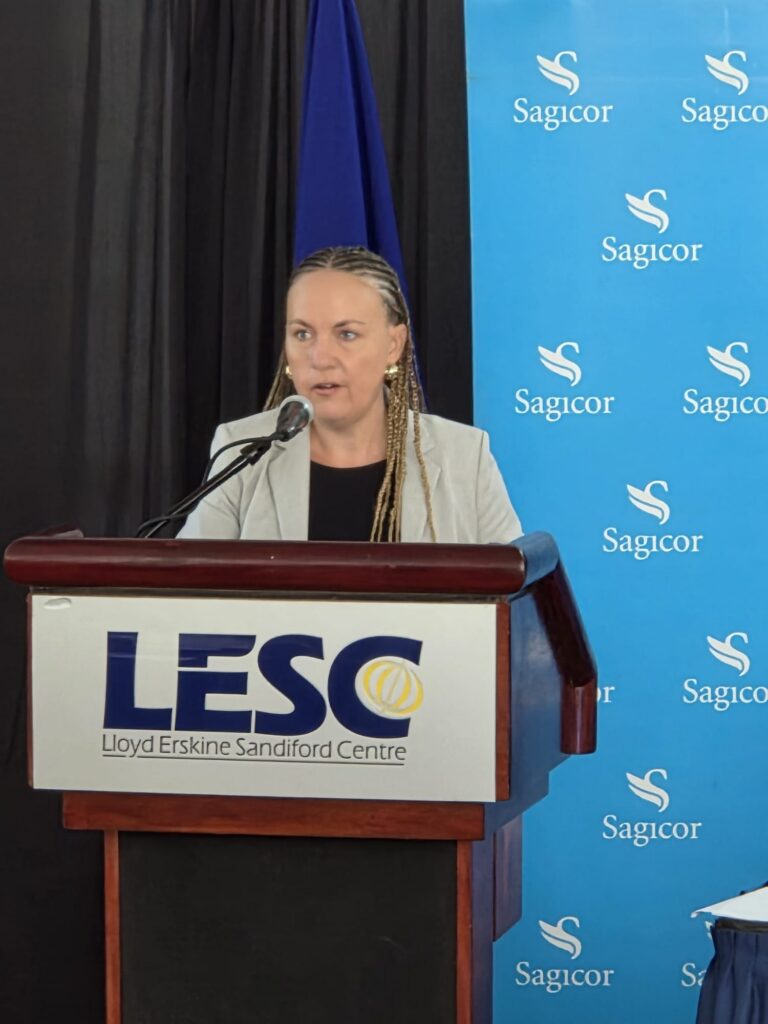
Speaking at Wednesday’s forum, Phillips reiterated those concerns, warning that any move toward divestment could disadvantage residents in rural communities, particularly those in areas such as Boscobel and Indian Ground who rely on early morning and late-night transport.
He argued that private operators, driven by profit, might avoid less lucrative routes unless compelled by law.
“I can’t see a businessman wanting to take his vehicle… to deep Boscobel with three people in it,” Phillips said, calling for legislation to ensure that routes and schedules are maintained.
But Mottley rejected Phillips’s premise, drawing a distinction between privatisation and what she described as enfranchisement — allowing workers and drivers to own within the system.
“We have said from the beginning that there is no divestment in the traditional sense,” she declared. “There is enfranchisement.
“At the end of the day… the enfranchisement that is being entertained is to allow the drivers and the workers at the Transport Board to own.”
That approach, she said, was intended to expand participation in public transport while maintaining strong state oversight, rather than transferring control to external investors.
Central to the restructuring is the establishment of a Barbados Mass Transit Authority, which Mottley said would bring a level of regulation currently lacking in the system.
“You cannot have a public transport system that does not have appropriate day-to-day regulation,” she said.
The authority is expected to regulate all public transport services — including buses, minibuses and route taxis — and ensure that operators meet service requirements across the island.
Under the proposed system, operators will not be free to select only profitable routes, she said, as assignments would be managed to ensure equitable service.
“If at the end of the day you are not operating your route to the terms and conditions of the license… you are out.”
Mottley added that the authority would have the ability to rotate routes among operators, ensuring that no one benefits exclusively from high-traffic corridors while rural communities are underserved.
This move toward a unified mass transit system forms part of the government’s broader plan to restructure public transport, bringing the existing Transport Board and Transport Authority under a single regulatory framework while expanding participation through worker ownership.
Also addressing Phillips’ concerns at the forum, Minister of Transport and Works Kirk Humphrey reinforced that position, dismissing suggestions that any private company would take over the Transport Board.
“There’s no company that’s coming in to own the Transport Board or none of those things you’re alluding to,” he said.
Instead, he outlined a model that places buses into the hands of workers, supported by the government, while central oversight ensures accountability and service delivery.
“The Barbados Mass Transit Authority… is going to be responsible for regulating all that service… so that they regulate to ensure that… you have to be able to commit to delivering services to these areas,” Humphrey said.
He said the new framework would introduce stronger enforcement in a sector that has long struggled with service gaps, particularly in rural districts.
“The people will get a better service as opposed to less quality of service by the route that we are going,” he added.
The reform effort comes against the backdrop of longstanding financial and operational challenges within the Transport Board, which has required significant state support over the years, prompting calls for a more sustainable model.
At the same time, the government has repeatedly assured that vulnerable groups — including schoolchildren, pensioners and essential workers — would continue to be protected under any new system.
In parliamentary debate and statements to the media, the Mottley administration repeatedly used the language of “divestment of the Transport Board” while casting it as a form of enfranchisement rather than straightforward privatisation.
Deputy Prime Minister and then Minister of Transport and Works Santia Bradshaw, speaking in Parliament, described “the divestment of the Barbados Transport Board” as “a serious exercise in enfranchisement” and insisted “the elderly and students will always be protected when the time comes”.
At the Bridgetown Port, during the handover of 35 electric buses, she told reporters that “the government is moving ahead with divesting the Transport Board amid growing public opposition and establishing a new mass transit system”, stressing that consultations with workers would shape how the new framework operates.
She further argued that “when we speak of divestment, we also equally speak of the enfranchisement of the workers of Barbados and the workers of the Barbados Transport Board”, adding: “While we divest on one hand, our intention as well is to enfranchise the workers of the Transport Board who have given committed service for decades to Barbados and public transportation.”
Despite Mottley’s explanations at the forum, Phillips maintained that his concern was not with ownership opportunities, but with ensuring consistent and reliable service.
“My only concern… is that the private investor does not run the service only for a profit,” he said.
The post PM puts distance from Transport Board sell-off appeared first on Barbados Today.