With five days to go before Barbadians cast their votes in the general election, mounting unease over the stalled sugar industry has reignited political debate, as political parties pressed the Barbados Labour Party (BLP) for full disclosure on ownership promises, crop readiness, and the industry’s future.
With more than 1 100 workers and retirees still awaiting promised ownership stakes, and no clear indication of when canes will be delivered to the island’s lone factory, political leaders are warning that the country’s oldest industry remains mired in confusion, stalled reforms, and unanswered questions.
Kemar Stuart, political leader of the New National Party (NNP), which is part of the People’s Coalition for Progress (PCP), said the government had failed to provide the true financial and operational state of the industry.
“The sugar industry, much like many other state-owned enterprises, was intended to be privatised because of a promise to the International Monetary Fund,” Stuart said. “So the government would have gone ahead in making attempts to remove the agricultural SOEs from the government books. However, the government is still giving the BAMC substantial amounts of money to run the organisation.
“So on the surface, it looks like the organisation has been cut off from government subvention, but that’s really not the case.”
Official estimates and commentary by economist Anthony Wood had already pointed to structural weaknesses within the industry, despite sugar’s historic profitability.
“Sugar has been a very profitable venture for the country in our early years,” said Wood, a former agriculture minister in the Owen Arthur administration. “But thanks to the changing up and the relaxation of preferential agreements for Europe, Barbados has had to suffer.”
From a labour perspective, Stuart said workers had been marginalised throughout the transition process.
“If we can get some clarification… that would definitely be some way to go in terms of transparency and getting a more holistic picture on the state of sugar,” he said.
Stuart maintained that an NNP-PCP administration would prioritise revitalising sugar production rather than allowing the sector to collapse.
“I don’t think we should let sugar go altogether,” he said. “We as a party would meet with the strategic stakeholders, especially the producers as well, who benefit significantly from our local sugar production.”
However, he dismissed as unrealistic government promises that workers would become shareholders.
“You can’t have ownership of the sugar industry,” he said. “I think it’s a fallacy. I don’t think it’s an idea that will pan out…. Because realistically, you would have to be giving the workers the land. You have to be giving the workers the machinery… and that just would not happen.
“So the government would have to come and say clearly what they are offering the workers,” Stuart added. “But I would not, if I was a worker, get my hopes up about receiving money, any shares or any benefits whatsoever.
“Because the government at this point was not able to substantiate exactly what they are giving the workers. So, for example, in the case of the Transport Board, if you want to enfranchise the workers, the government said they are giving them buses. So tell the workers in the sugar industry what they will be getting in these shares.”
He also raised concerns about reports of unsold sugar stockpiled across the island because it allegedly fails to meet export standards.
Similar concerns were raised by Democratic Labour Party (DLP) spokesperson on agriculture Amoy Gilding-Bourne, who described the industry as being “in limbo” following the collapse of a key partnership arrangement.
“The long and short of it is that we’re just… in limbo,” she said. “We have been told that there is no longer a memorandum of understanding. So we’re left with more questions than answers.”
She said uncertainty surrounded the ownership and control of the two private companies created during the 2023 restructuring – Barbados Energy and Sugar Company (BESCO) and Agricultural Business Company Ltd (ABC).
“We were told about ABC and BESCO, but we don’t know about the directors, we don’t know where their registered office is, who is in control of the sugar industry right now. We haven’t a clue,” Gilding-Bourne said.
“Since we don’t have a memorandum of understanding, well the promises that were made to the sugar workers… that’s just words in the wind.”
She also questioned the viability of converting the Portvale plant into an energy-producing facility.
“We were also told that it would have taken $100 million to retrofit Portvale… and since the memorandum of understanding has fallen through, where are we in relation to that?” she asked. “Is that just a pipe dream or is that another promise broken?”
Calling for “complete” transparency, Gilding-Bourne said the Ministry of Agriculture had remained largely silent.
“We haven’t heard a peep from the ministry,” she said. “We don’t know about the assets at Portvale, who’s controlling them, what’s going on with the machinery, the tractors, what’s happening with the sugar workers, what’s happening with the start of the crop.”
With February already under way, she warned that prospects for the 2026 harvest appeared bleak.
She added: “We still don’t know about the numbers of sugar for production for last year, a year before. We still don’t know about that.”
Describing the situation as unfair and disrespectful to workers, Gilding-Bourne said the promise of worker ownership had raised expectations that were never fulfilled.
Reflecting on the industry’s cultural importance, she said: “I remember travelling through the country as a little girl and seeing sugarcane arrows blowing in the wind… and you can smell the sugar in the air. My six-year-old grandson may not have that experience if we do not get this thing arrested and dealt with.”
The renewed political pressure comes against the backdrop of the troubled 2023 restructuring, which saw the transfer of production operations from the state-owned Barbados Agricultural Management Company (BAMC) to BESCO and ABC.
At the time, the arrangement, involving worker participation, was hailed as a “historic development” that would transform sugar workers into shareholders and co-owners of a revived industry under a “sugar and energy” model.
However, little tangible progress followed. Both initiatives stalled, and questions also emerged over the true ownership structure of BESCO and ABC.
Last year, Barbados Sustainable Energy Co-operative Society Limited (Co-op Energy) confirmed that its memorandum of understanding with BAMC had been terminated in August. The cooperative said the government had not transferred BAMC’s assets and that it did not establish either BESCO or ABC.
The failed partnership was intended to place farmland under ABC and the Portvale mill under BESCO, with worker shareholdings and cooperative management.
In December, the Barbados Workers’ Union warned of mounting uncertainty surrounding the 2026 crop.
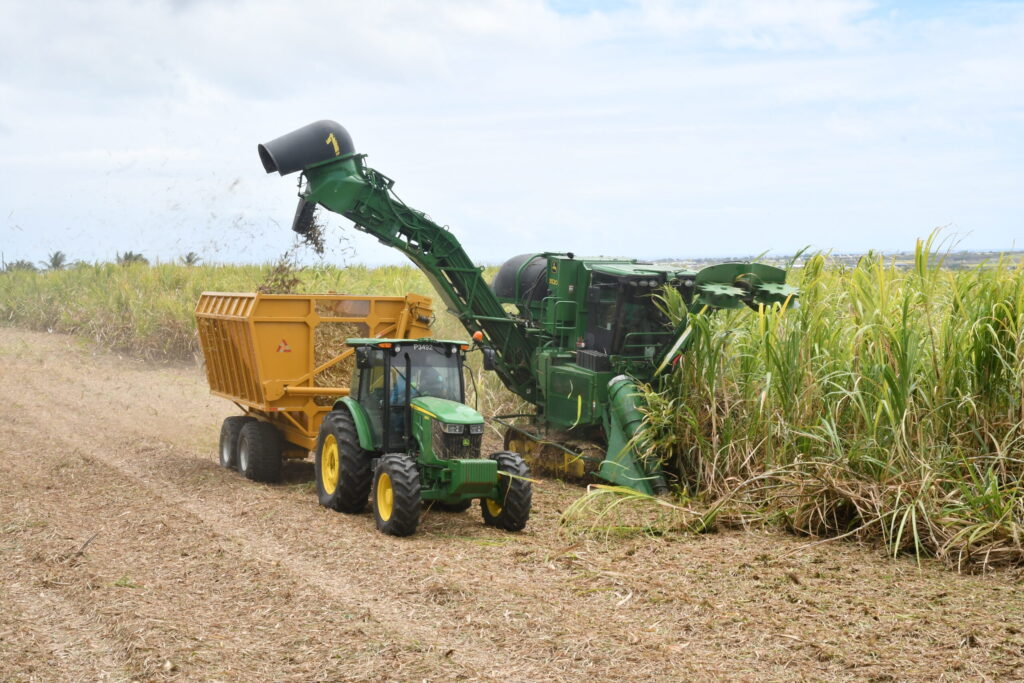
Industry sources and representatives of the Sugar Industry Staff Association (SISA) have since indicated that Portvale Factory, the island’s last working mill, is unlikely to be ready to receive canes this month.
There is currently no indication that harvesting will begin in February, despite calls from BSIL planters to start harvesting this month.
The post Political parties demand answers on sugar industry amid uncertainty appeared first on Barbados Today.