
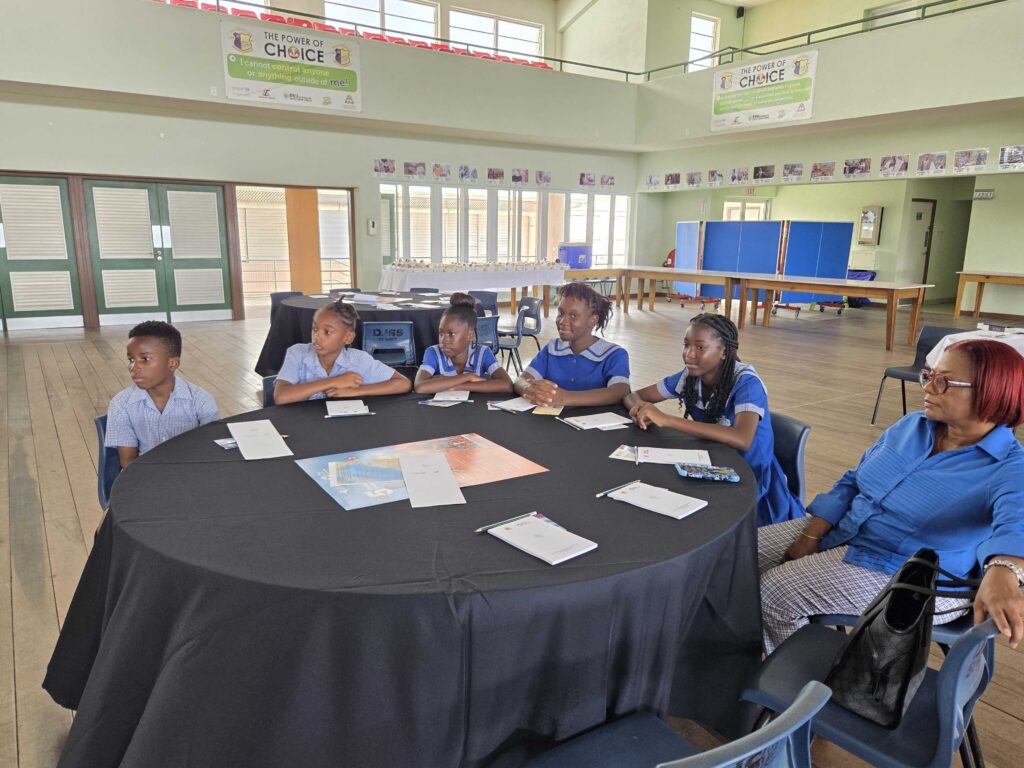
In a major push to educate children about their rights, the Ministry of Labour, Social Security and the Third Sector extended its educational campaign to northern schools during an interactive awareness forum at the Daryll Jordan Secondary School.
The event, which targeted primary school pupils preparing for the transition to secondary school, emphasised the importance of maintaining Barbados’ long-standing record of zero child labour cases.
Organisers revealed that the event was strategically timed ahead of the global observation of World Day Against Child Labour, which aligns with the International Labour Organisation’s campaign theme, Red Card to Child Labour.
Addressing a lively auditorium of Class Three and Class Four pupils from St Alban’s Primary, Ignatius Byer Primary, A. DaCosta Edwards Primary, St Lukes Academy, St Elizabeth Primary, St Joseph Primary, St Bernards and Elliot Belgrave Primary, Rhonda Farley, a member of the National Child Labour Committee, maintained that childhood needed to remain a protected period of development.
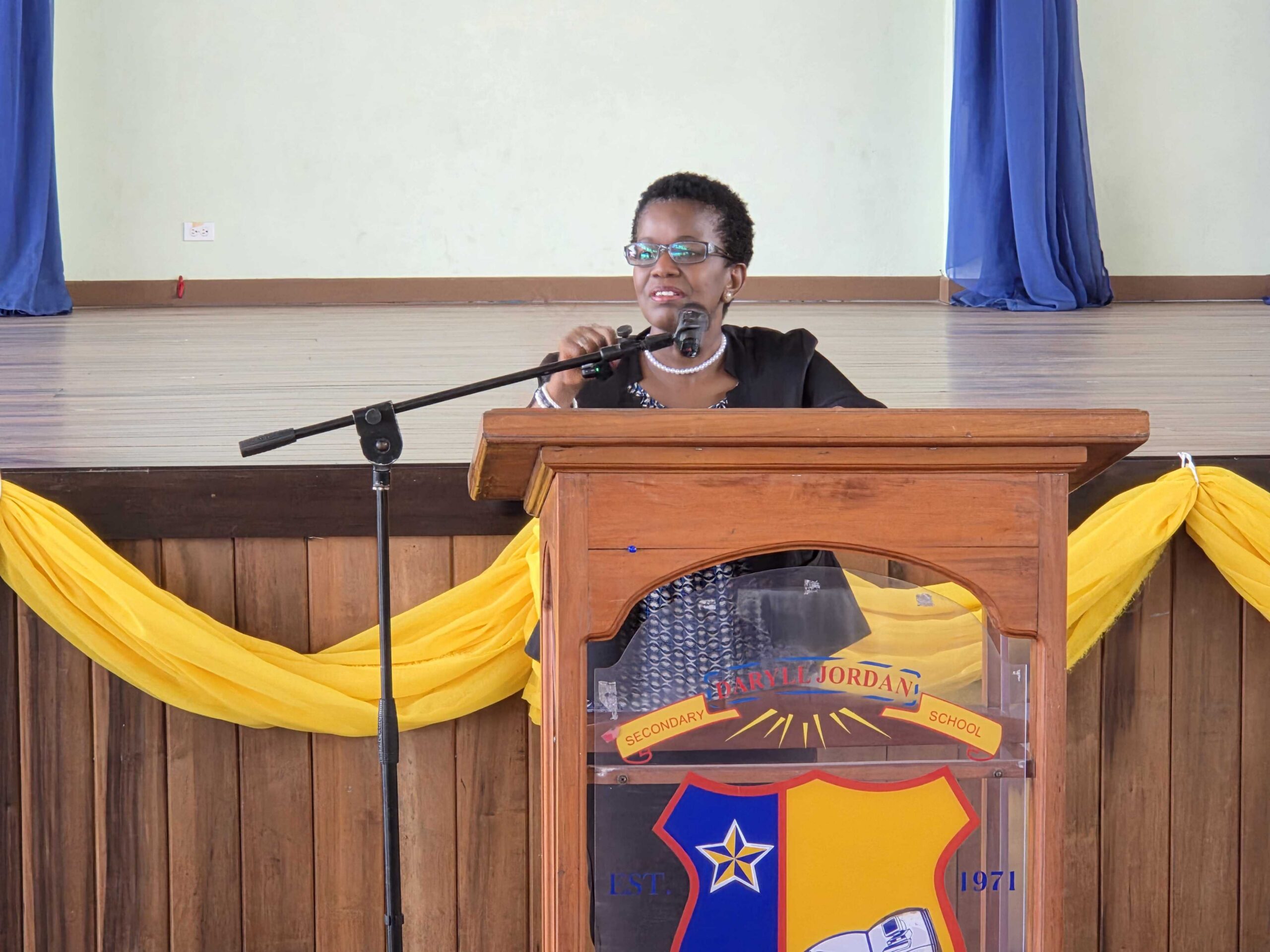
Committee Member, National Child Labour Committee Rhonda Farley. (Photo credit: Ricardo Roberts/Barbados TODAY)
She explained that childhood is a time for learning, growing, playing, and dreaming, and a time when children should be in school.
”Unfortunately, that’s not the reality though for millions of children around the world,” Farley said, noting that approximately 138 million children globally between the ages of five and 17 are trapped in child labour. “Can you imagine that? You can imagine working at five-years-old instead of sitting in a classroom? Many must work long hours to help support their families.”
While acknowledging traditional hazards like agricultural work, mining, and factory labour, Farley drew attention to emerging digital threats, noting that new forms of labour were surfacing online.
She said many children were now involved in online work – creating content for social media platforms like TikTok and YouTube, participating in online gaming for money, selling products online, and completing digital tasks.
”While technology can be exciting and creative, it can also expose children to exploitation, long working hours, and online abuse,” Farley warned, citing recent findings from UNICEF.
She noted that these digital formats were particularly concerning because they are often hidden, difficult to regulate, and cross international borders easily.
Farley said regardless of whether the work takes place in a field or online, excessive labour interferes with school attendance, reduces time for rest, and limits healthy social development.
She detailed Barbados’ strong legislative framework, referencing the island’s commitment to International Labour Conventions 138 and 182, which govern the minimum age for employment and the prohibition of the worst forms of child labour, such as human trafficking, drug pushing, and prostitution.
Under domestic legislation, children are required to remain in formal education until the age of 16. The government supports this mandate by allocating millions of dollars annually toward free primary, secondary, and tertiary education, alongside welfare initiatives like free school meals.
Farley revealed that the committee is currently working to strengthen specific aspects of domestic legislation, including compiling a definitive hazardous work list. This register will explicitly ban individuals under 18 from participating in dangerous occupations, such as quarrying or handling toxic chemicals.
The forum follows a similar session held in March for schools in and around Saint Michael, reflecting a national strategy to cover the entire island. Although a recent fire in the parish prevented pupils from nearby St Lucy’s Primary from attending, the forum successfully brought together youth from across the northern districts.
The interactive sessions encouraged the young participants to view themselves not just as spectators, but as active defenders of human rights. Organisers rewarded pupils with prizes for answering questions regarding Barbadian history and global statistics, fostering an atmosphere of energetic engagement.
”An advocate is someone who speaks up for others, raises awareness about important issues, and encourages positive change,” Farley told the pupils.
“As young people, you have the power to educate others, to challenge harmful practices, and to promote the rights of every child to learn, play, and grow in a safe environment. We are going to raise our voice, we are going to speak up, and we are going to speak out.”
(RR)
The post Primary school students encouraged to learn children’s rights appeared first on Barbados Today.