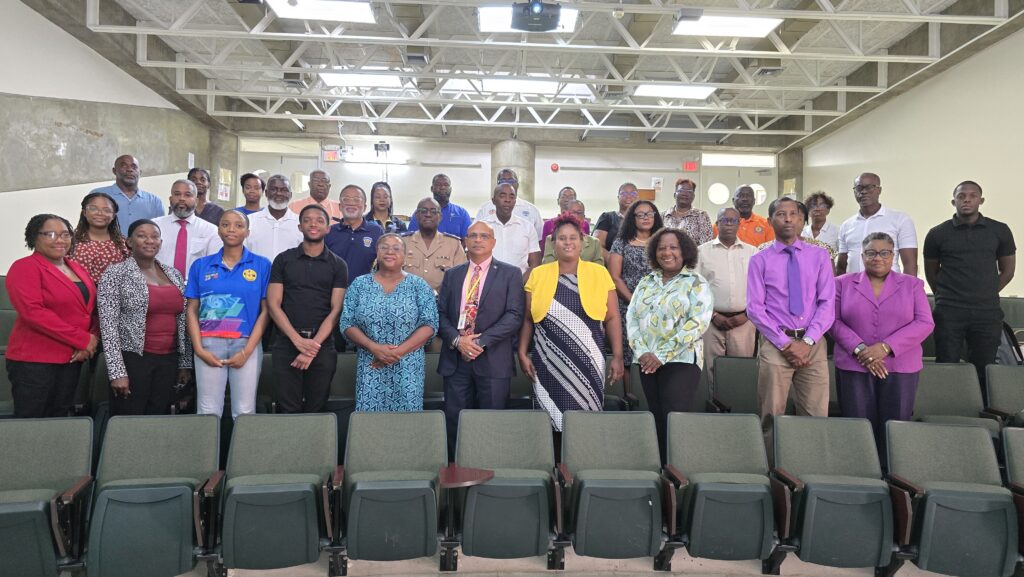
Civil servants are being urged to strengthen coordination and preparedness as Barbados faces increasingly complex and frequent hazards, with a new training initiative aimed at improving the country’s disaster response capacity.
Public officers are attending a two-day workshop to strengthen their understanding of their roles within the National Emergency Management System, improve inter-agency communication and coordination, and develop practical emergency management skills.
Deputy director of the Department of Emergency Management, Major Robert Harewood, focused on the importance of the training for effective disaster management.
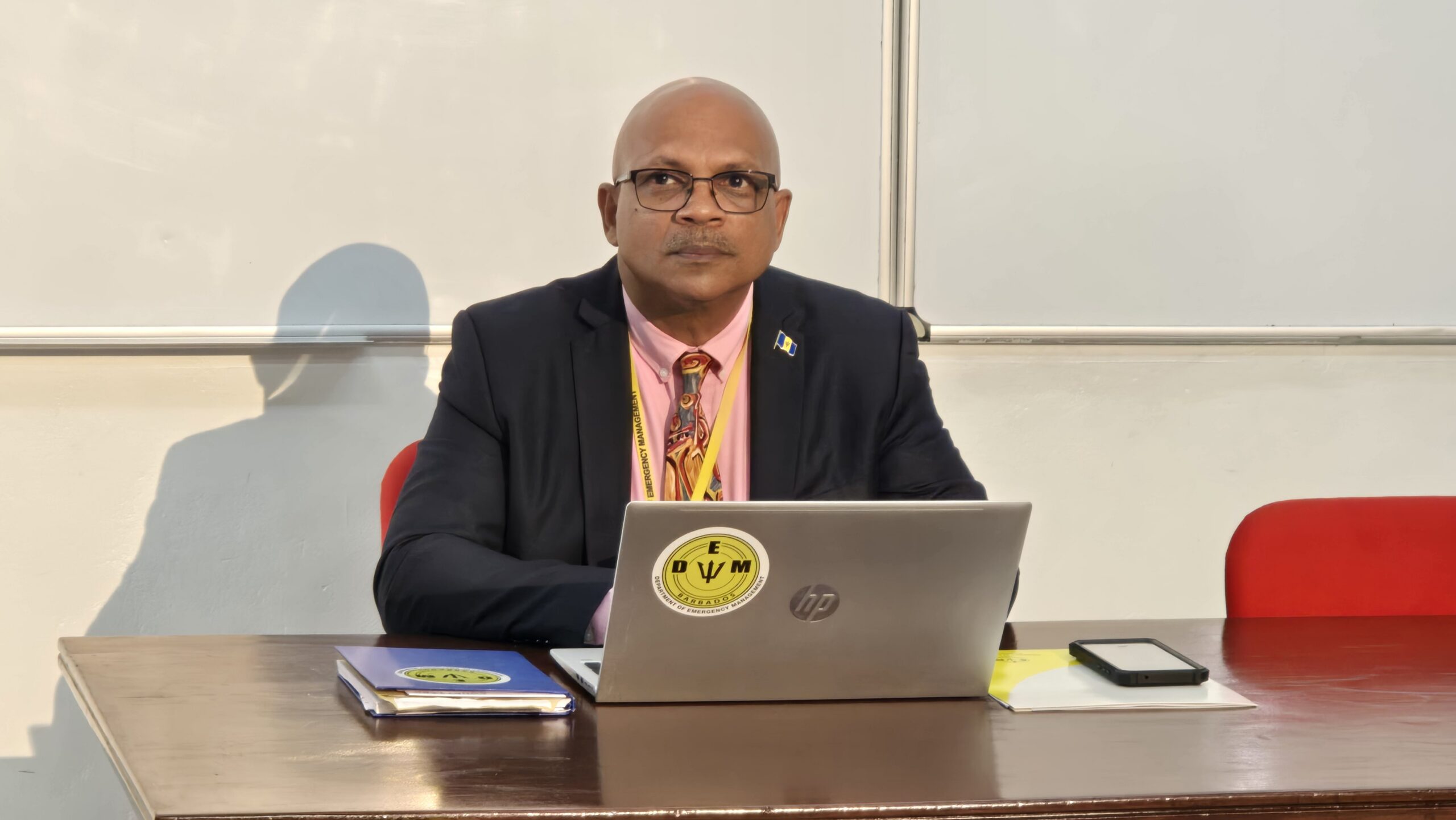
Deputy Director of the Department of Emergency Management, Major Robert Harewood. (Photo Credit: Lourianne Graham/Barbados TODAY)
“This training course comes at a particularly important time, as you know that globally countries are facing increasingly frequent and intense natural, technological and managed hazards and disasters, including, as we know, hurricanes, floods, wildfires, droughts, earthquakes, transportation, and public health emergencies. Recent global experiences have demonstrated that no country, institution, or community is immune to the effects of these types of hazards or disasters.”
Programme officer with the Department of Emergency Management, Julia Rawlins-Bentham, said the main objective of the workshop is to orient new liaison officers and reorient experienced officers to their roles within the National Emergency Management System.
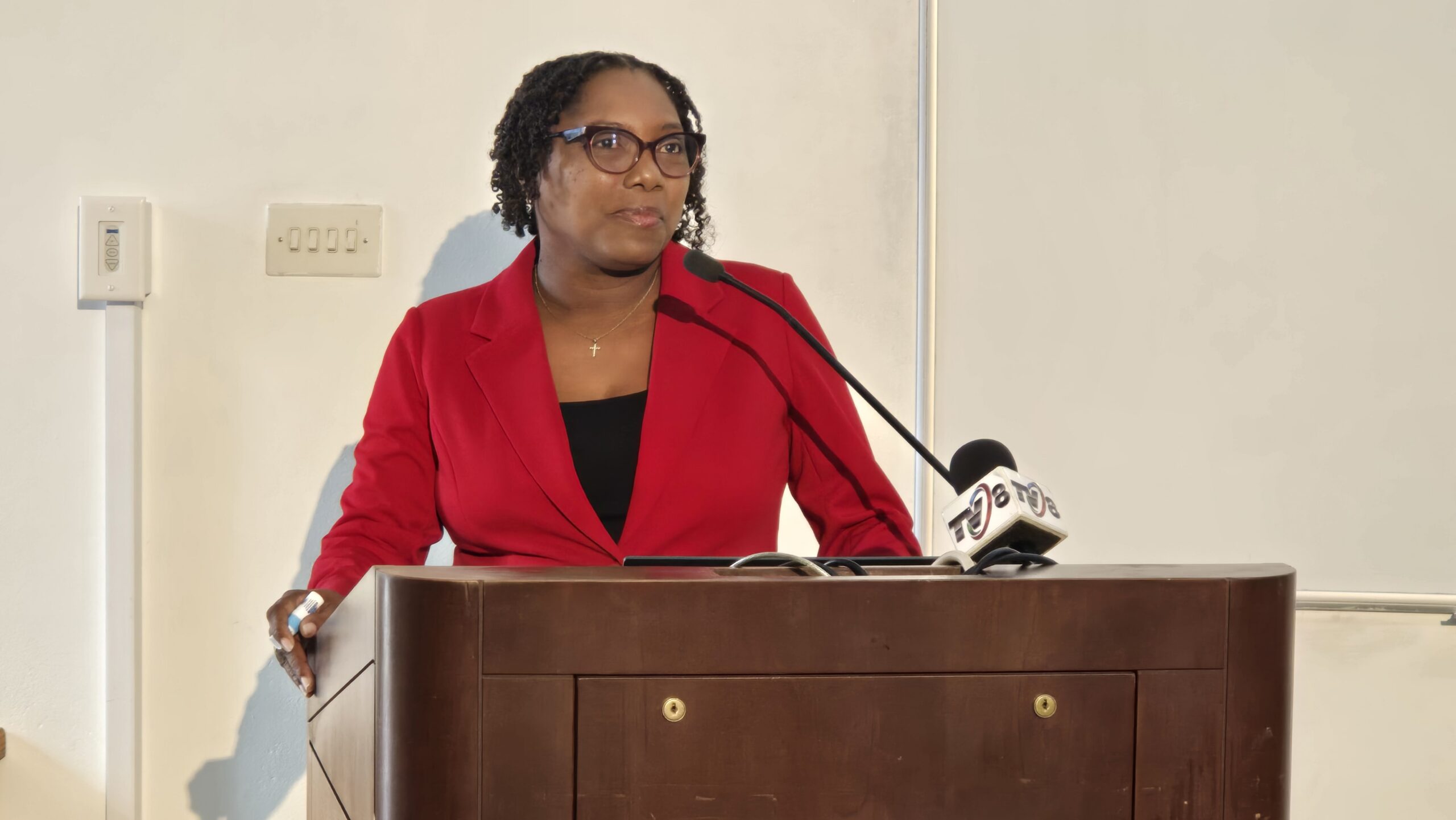
Programme Officer with the Department of Emergency Management, Julia Rawlins-Bentham. (Photo Credit: Lourianne Graham/Barbados TODAY)
“Those who are new and those who have been there before. Reorient public officers and other stakeholders to their roles within the national emergency management system.”
She outlined some of the activities they would participate in during the two days.
“Throughout this training, participants will engage in a variety of interventions designed to build both knowledge and practical skills. These interventions include presentations on disaster management, the DEM, and the National Emergency Management System, emergency or disaster contingency planning, and, more importantly, the role of the liaison officer.”
Speaking at the opening of the workshop on Thursday at the University of the West Indies Law Library, Harewood pointed to expert reports related to the Caribbean.
“The European Commission and other pundits have reported that the Caribbean is the second most hazard-prone region in the world, and in Small Island developing states like Barbados, are increasingly vulnerable to climatic events, which we know are becoming more intense, unpredictable, and frequent. These events, when coupled with urbanisation and interconnected economies, further increase the complexity of our disaster management interventions.”
He noted that disaster events such as COVID-19 and the most recent earthquake in Venezuela stressed the need for preparedness and coordination to save lives.
“Preparedness and coordination save lives. Effective disaster management cannot be improvised during a crisis. It requires planning, training, partnerships, and a whole-of-government approach long before an emergency occurs.”
Major Harewood argued that disaster management is more than just responding to emergencies.
“It is a legal, institutional, and governance responsibility.”
“Disaster management legislation establishes the framework within which governments, agencies, and stakeholders operate. It defines roles and responsibilities, provides authority for emergency actions, and creates mechanisms for coordination and accountability. Effective implementation of disaster management legislation requires trained personnel who understand not only their own responsibilities but how their organisations interact with others within the national emergency management framework to ensure public safety.”
He explained that this is why the Barbados government took action for an all-inclusive national emergency management system to be established through the 2007 Emergency Management Act, “recognising the importance of a bottom-up approach to a national emergency management system.”
“Part five, section 12 of the legislation speaks to the obligations of public officers and other persons, and requires that every permanent secretary and head of the department of government shall ensure that there is at all times an officer of his ministry department or statutory body falling under his ministry, who is the liaison officer for communication with the director in relation to the procedures of the ministry department or statutory body, and be as required by the director, cause an emergency management plan for each ministry department or statutory body to be prepared and reviewed by first April annually, and to be submitted to the director.”
Major Harewood explained the role of public officers in disaster preparedness and management.
“Whether the responsibility involves health services, education, transportation, public works, social services, utilities, communications, or public safety, continuity of operations is essential to national resilience.”
“This reality underscores the need for every organisation to develop and maintain disaster management contingency and business continuity plans. These plans provide clear guidance on how organisations will prepare for, respond to, and recover from disruptive events, while continuing to deliver critical services.”
He further explained that a contingency plan prepares organisations to anticipate risk, outline procedures, identify resources, clarify responsibilities, and “ensure operational continuity when the normal systems are disrupted.”
He maintained that organisations with tested plans and trained personnel recover more quickly and are better able to support affected communities.
Harewood also stressed that disaster management is a shared responsibility.
“Disaster management is not solely the responsibility of emergency services or the Department of Emergency Management, it is a shared responsibility that requires commitment from every sector and every institution.”
By the end of the two-day workshop, participants are expected to have a better understanding of the roles and responsibilities of the liaison officer function, strengthened communication and information sharing among stakeholders, and the ability to support emergency operations through effective coordination and collaboration.
(LG)
The post Public officers sharpen emergency management skills appeared first on Barbados Today.