With the Caribbean becoming increasingly vulnerable to disaster risks, regional stakeholders have underscored the need for targeted and accurate displacement data in the aftermath of major disasters.
With more than five million people having been displaced over the past decade, a two-day workshop currently underway at the Courtyard by Marriott, has brought together stakeholders from National Disaster Offices across 13 CDEMA-participating states, as well as regional agencies, UN partners and technical experts, in an effort to develop standard operating procedures for displacement data in disaster management.
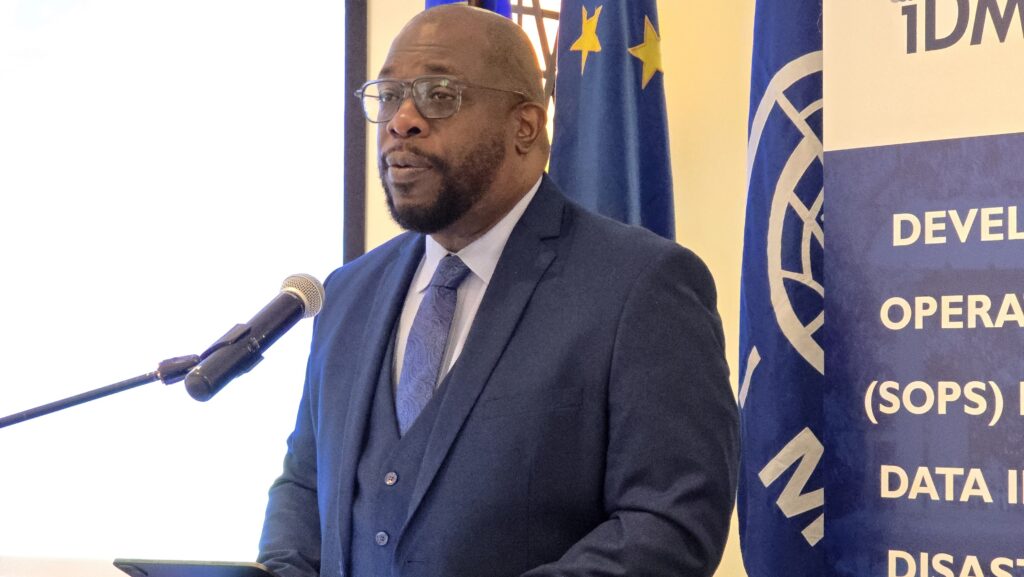
The initiative has been given the thumbs up by Minister of Home Affairs and Information Gregory Nicholls.
“Comprehensive disaster management in Barbados addresses the displacement of individuals through a coordinated, policy-driven system that integrates preparedness, emergency response and long-term recovery,” he said.
Meanwhile, Programme Manager for Preparedness and Response with CDEMA, Mandela Christian said the importance of displacement data to the Caribbean region was critical.
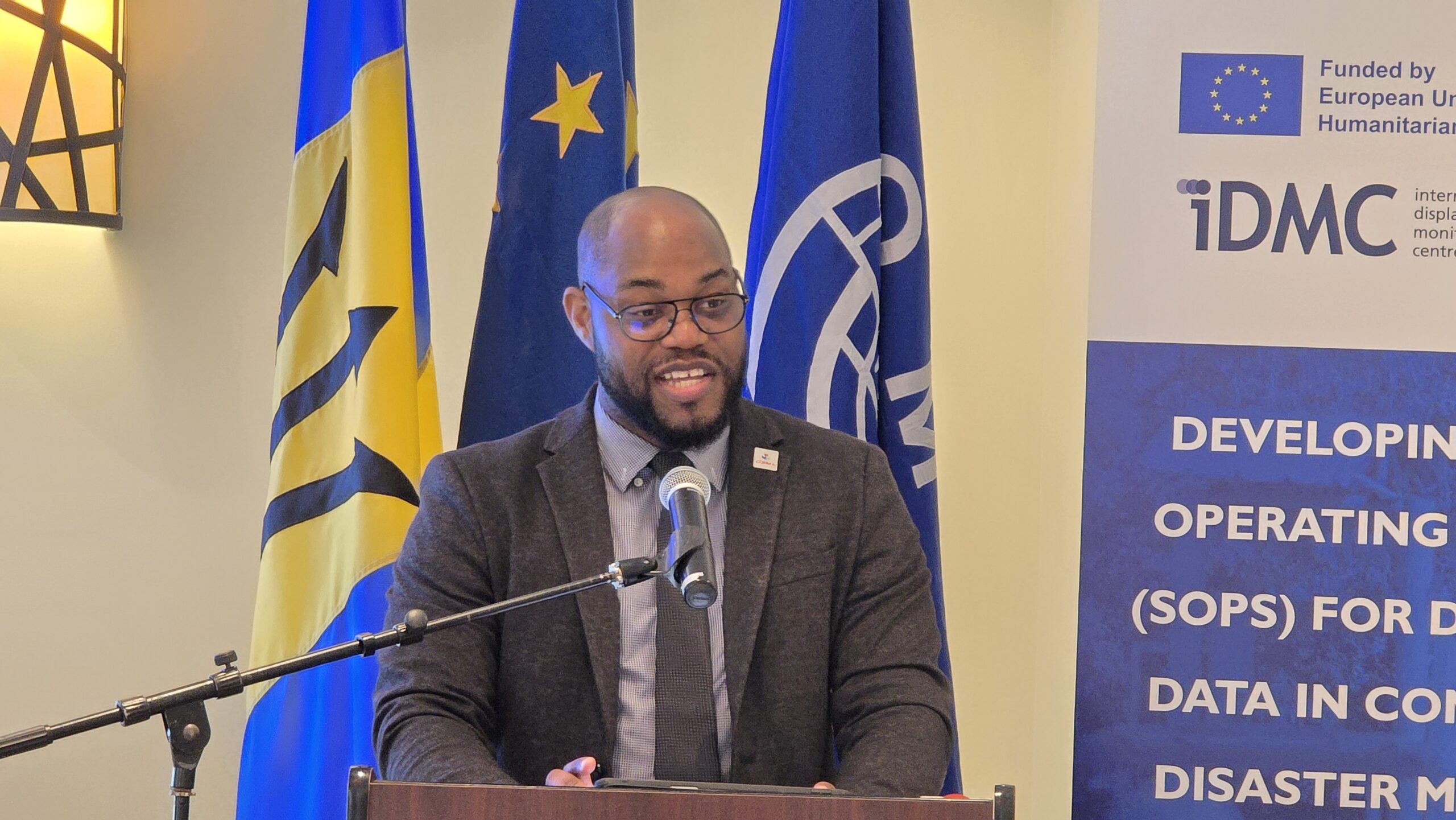
Programme Manager for Preparedness and Response with CDEMA, Mandela Christian
“After each major event, the same questions arise. How many people are displaced? Where are they? Where have they been displaced? Are they in official shelters, informal shelters, or staying with family across the island or across the state? What do they need? What considerations are in place to ease their displacement and meet their humanitarian needs? These are things that we need to know in order to provide critical support to our population or citizens,” Christian pointed out.
He said those answers were critical not only for humanitarian response, but also for logistics, protection, health coordination and “dignified recovery that must follow after an emergency impact.”
Christian also outlined the objectives of the two-day workshop.
“The standard operating protocols (SOPs) will be anchored within CDEMA’s damage assessment and needs analysis continuum, or as we know it, the data framework, and it will target the pre-impact data assessment fees, initial shelter operations, and initial damage and humanitarian needs assessment.
“It will establish common definitions, data collection standards, interoperability protocols, and enhance clarity on lines of responsibilities across shelter managers, emergency operation centres, and regional systems that depend on that information to coordinate an effective response,” Christian explained.
“The harmonised standard operating protocols will also directly strengthen the information management architecture of the Caribbean Development Partners Group and the regional coordination centre operations, ensuring that when the regional response mechanism is activated, the data flowing into regional coordination structures is reliable, comparable, and actionable.”
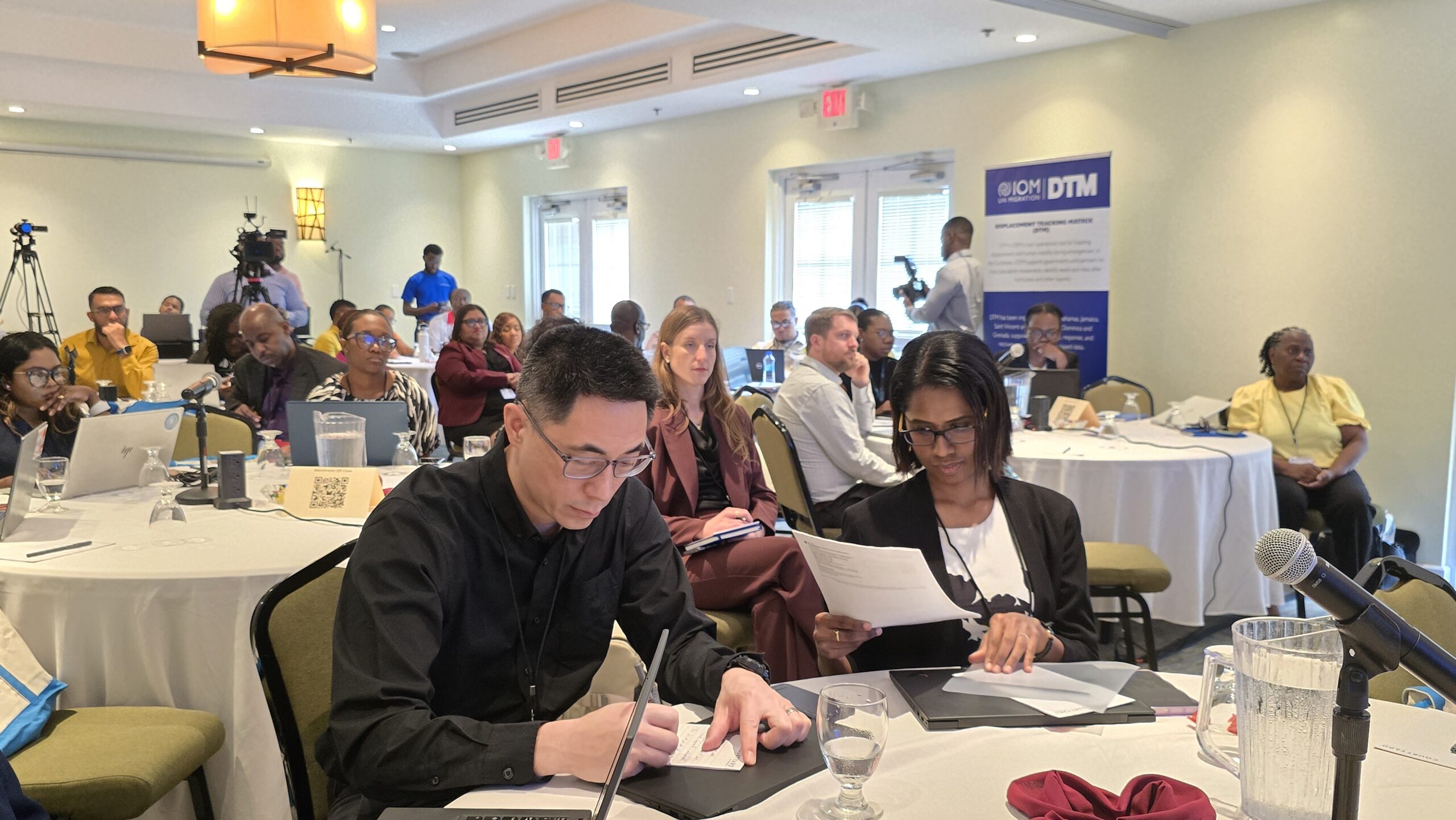
Participants of the two-day workshop
Nicholls stressed the need for reliable data to guide assistance to families following a disaster.
“Good data helps respondents locate families faster, match assistance to real needs, and protects dignity. Especially when systems are under stress, displacement data must always serve people and not processes.
“We must also ease the burden on our communities. Standardised displacement data allows us to better target assistance, manage shelter occupancy flows, and reduce pressure on both host communities and the frontline responders,” Nicholls said.
Nicholls also noted the disruptive nature of disasters, particularly for education, as schools are often used as shelters.
“While sometimes unavoidable, the government’s goal has always been to minimise disruption and restore our schools to their original function quickly. Recovery is not only about infrastructure but also about children returning to safe, stable learning environments without delay. Better displacement and shelter data is key to enabling that transition,” he stressed.
Linking migration governance with disaster management and CARICOM free movement, Nicholls said Barbados is developing a modern facility to support displaced people.
“We have deliberately streamlined our integration processes, strengthening coordination with disaster preparedness, response and recovery frameworks, recognising that climate-related hazards increasingly shape mobility across our region as we move forward together with continued collaboration to address the remaining vulnerabilities,” he said.
(LG)
The post Region moves to strengthen disaster response data systems appeared first on Barbados Today.