Disaster managers and humanitarian partners from across the Caribbean have converged in Barbados this week for a pioneering emergency logistics coordination simulation — the first exercise of its kind aimed at strengthening the region’s readiness for the 2026 Atlantic hurricane season.
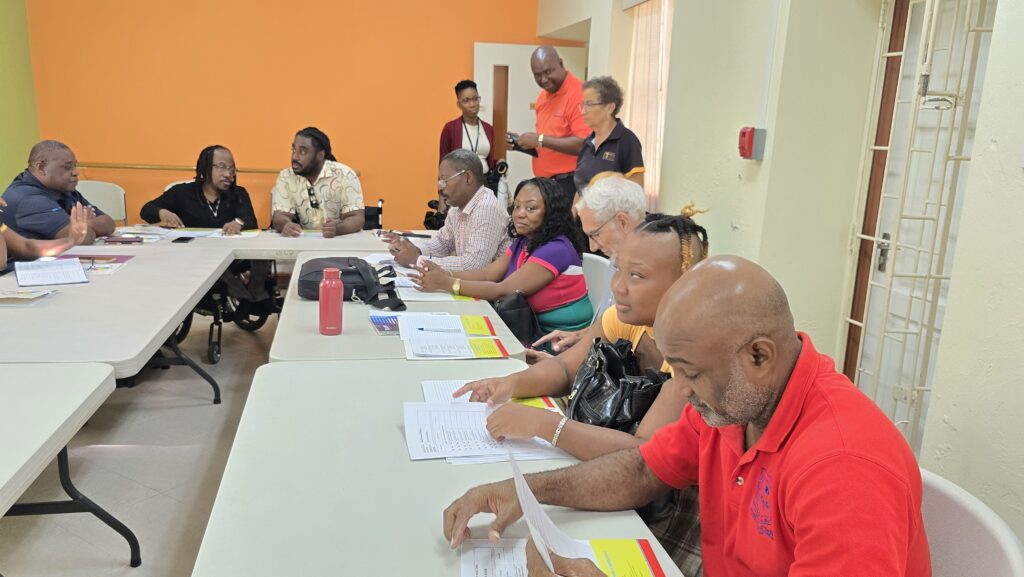
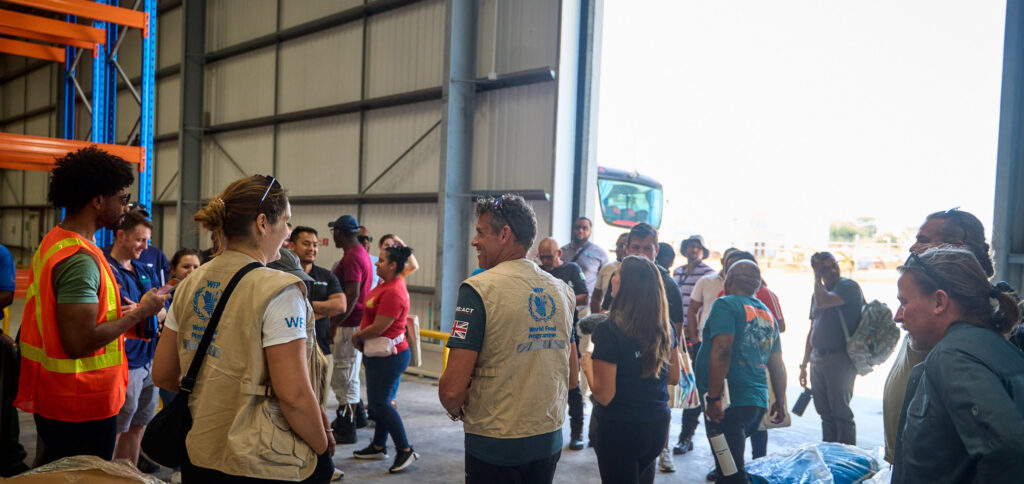
The exercise, which is being held at the Caribbean Regional Logistics Hub, brings together representatives from the national disaster management authorities of 12 Caribbean countries, along with 14 partner organisations actively involved in humanitarian response across the region.

Regional Logistic Hub. (SB)
According to the organisers, the simulation was designed to improve coordination, information-sharing, and collective decision-making during major emergencies. Participants worked through a realistic, scenario-based hurricane response in a fictional Caribbean country, allowing agencies to jointly analyse challenges, develop solutions, and test how effectively they could collaborate under pressure.
Brian Bogart, Representative and Country Director for the United Nations World Food Programme (WFP) Caribbean Multi-Country Office, based here, stressed the importance of the exercise, particularly as the region prepares for another potentially active hurricane season.
“What we’re really working on is trying to simulate what it would be like to respond to a hurricane in a fictional Caribbean country,” he told Barbados TODAY. “That gives us the opportunity to really think through how we would solve problems in real time, and introduces different elements of change and unexpected developments very much like what you would experience if you were responding to a hurricane in reality.”
Brian Bogart, Representative and Country Director for the WFP Caribbean Multi-Country Office. (SB)
The simulation is designed to mirror the complexity and uncertainty of real-world disaster response, forcing participants to adapt quickly as new challenges emerge, Bogart explained.
“So that we can really begin to improve our understanding and our knowledge and practice around hurricane response in the Caribbean,” he added.
One of the key benefits of simulation exercises is that they allow responders to gain practical experience without the human cost of an actual disaster, he said.
“The first thing, and I think the most powerful element of simulations, is that we can’t practise disaster response unless we have a disaster,” Bogart said. “We don’t wish for countries to experience disasters.”
He explained that while humanitarian organisations may gain experience through real emergencies, not all countries or agencies have the same exposure, making structured simulations an essential training tool.
“It’s not possible for everyone to get the same opportunity that we do as humanitarian organisations to experience emergency response, to learn from that experience, and to continuously learn and improve upon what we’ve done in the past,” he said.
“So the best way for us to achieve that is by having simulations that allow us to imagine scenarios, imagine challenges, and develop solutions in real time based on trainings and based on a lot of the work that we put into emergency preparedness at country level and at regional level in advance of each and every hurricane season.”
The post Regional emergency managers meet, test response readiness appeared first on Barbados Today.