The Barbados Revenue Authority is embarking on an ambitious reform programme to modernise tax administration, strengthen compliance and restore public confidence, Revenue Commissioner Jason King announced on Tuesday.
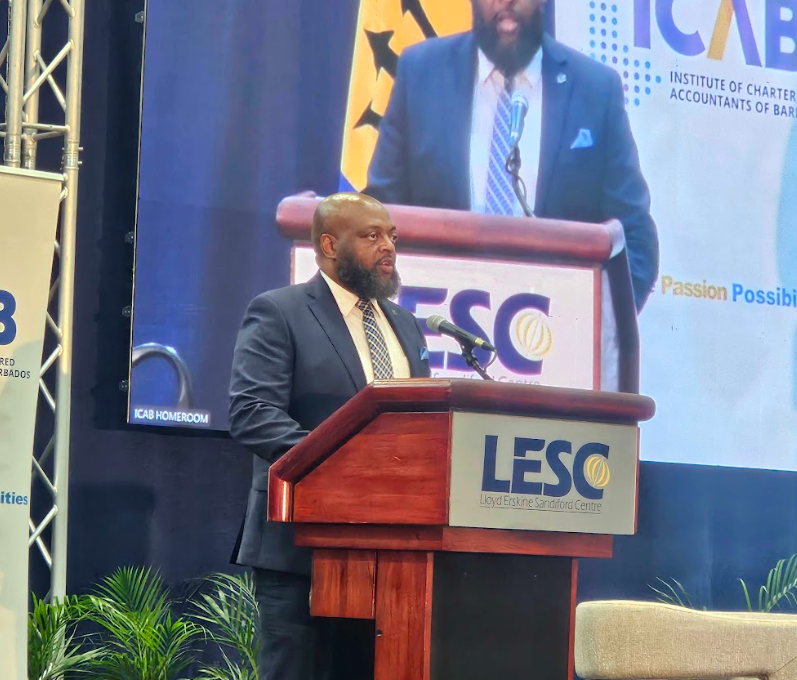
King outlined the authority’s priorities before the Institute of Chartered Accountants of Barbados (ICAB) conference at the Lloyd Erskine Sandiford Centre, just under five months after assuming office.
The authority had undertaken an “honest self-assessment” of its performance, identifying legacy challenges that continue to affect efficiency, compliance and service delivery, King said.
“Some of these gaps stem from challenges confronting the authority that are not new,” he said. “There are legacy issues that have built up over time, presenting us with gaps in systems integration, in automation and in the way our processes connect across tax types.”
He pointed to the persistent reliance on legacy systems and manual processes, weak integration across tax streams that limits real-time information sharing, and gaps in compliance monitoring, arrears management and performance measurement. Inconsistencies in communication and service standards, he added, had also affected public trust and voluntary compliance.
Digital reform was no longer optional, he declared.
“I am not satisfied with that reality,” he said, referring to continued dependence on outdated systems. “This is why digital transformation remains one of the top priorities, not to pay lip service, but as a practical necessity for improving service delivery and supporting the ease of doing business.”
The BRA intended to modernise its core tax system to create a fully integrated digital platform, supported by continued investment in cybersecurity and hardware upgrades, he said.
He added that the gaps identified did not reflect institutional failure.
“The gaps identified during this financial year are not signs of failure. They are a result of taking a hard, honest look at ourselves as an organisation, and they have directly informed our priorities for the 2026–2027 financial year and beyond.”
Integrating BIMPAY, the Central Bank-sponsored new instant payment system, into BRA’s payment ecosystem to expand non-cash options is among its priorities for the 2026–2027 financial year
It will also be focussed on procuring a modern core tax administration system, reducing tax receivables while addressing the refunds backlog, and strengthening governance, risk management and performance monitoring using findings from a completed organisational review.
King acknowledged that the authority’s compliance approach had historically been too reactive and said this would also change.
He said: “Going forward, we will be more targeted and more data-driven by using risk-based approaches that allow us to focus attention where it matters most, while making compliance easier for those who are already trying to do the right thing.”
The shift would reduce unnecessary interactions for compliant taxpayers, while improving the efficiency of audits and enforcement where risk was highest, he added.
Improving customer experience, King said, would also form part of the compliance strategy rather than being treated as a standalone service objective.
“These are not minor issues,” he said of feedback received from taxpayers and practitioners. “They directly influence how the public experiences the tax system and how willing people are to comply voluntarily. Improving the customer experience is therefore not just a service objective, it is a compliance strategy.”
The revenue commissioner also highlighted progress made over the past year, including the introduction of the Online Land Tax Clearance Certificate, which reduced processing times for property owners and professionals; revisions to corporation tax returns; the launch of the Car Rental Levy Return within BRA’s tax administration management information system, TAMIS; and strengthened capacity in arrears management and high-net-worth compliance.
Public trust remained central to the authority’s mandate, King said.
“Public trust is earned when people see an institution that listens, learns and acts,” he said. “It is earned when services are improved, when processes are fair and consistent, and when revenue is administered in a way that supports national development.”
He described revenue administration as integral to economic growth and ease of doing business under Mission Barbados, the national roadmap to 2030, adding that meaningful reform would require time, discipline and collaboration with key stakeholders, including the accounting profession.
“But I’m confident that with a clear plan, a committed team and strong partnerships, we can continue to build a revenue authority that Barbadians trust, respect and are proud of,” he said.
Among other key achievements was the authority becoming the first public institution here to attain employer status approved by the global professional body, the Association of Chartered Certified Accountants (ACCA).
The post Revenue Authority to drive digital overhaul, rebuild public trust appeared first on Barbados Today.