
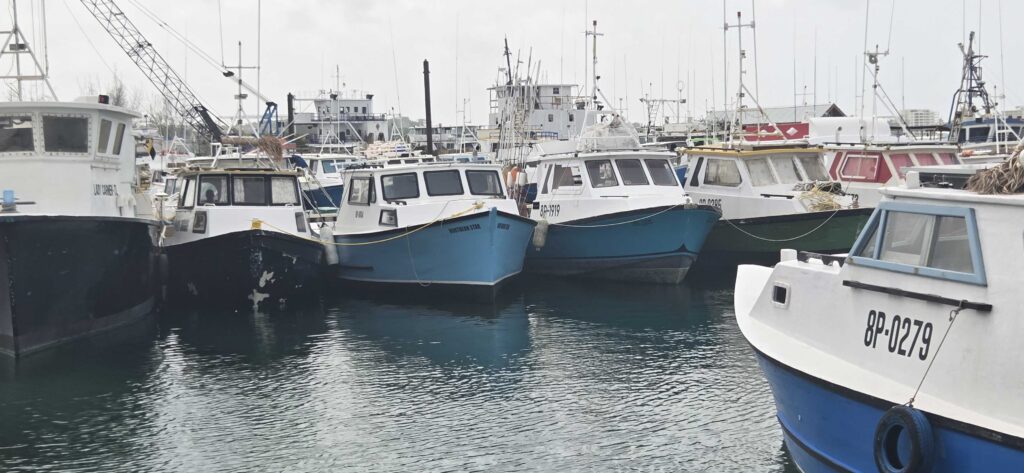
Fishing boat operators in Barbados can spend as much as $7 000 on diesel for a single trip, according to Oistins fisherfolk as soaring costs and tighter access to finance squeeze the industry.
Fishers interviewed by Barbados TODAY described how the economics of owning and operating a fishing vessel have been transformed over the past decade, placing intense pressure on fisherfolk.
Where boatbuilding was once a communal endeavour built on mutual assistance and gradual construction, today’s operations demand substantial upfront financing, soaring fuel expenses and escalating maintenance costs.
These mounting financial hurdles are reshaping the island’s marine industry, raising serious questions about long-term viability for existing operators and accessibility for younger generations.
The traditional method of building a craft piece by piece has largely disappeared.
A decade ago, mariners typically constructed a hull first, secured an engine later and relied heavily on cooperative networks of peers who traded specialised skills to get a vessel sea-ready.
Factory production and strict commercial financing now dictate the entire process. Changes in institutional lending have also tightened the screws on owners.
One fisher said: “Years ago too when you had the boat, right, you were building the boat and you could have gone to the financial institution and you would have been able to take a loan against the boat once you were able to insure the boat.
“All of that is done away with, right? So now it’s like you would have to go get collateral in order to get something to finance the boat.”
Fuel prices and inflated equipment costs have driven operating expenses sharply higher. Fisherfolk must travel much further out to sea to secure a catch, greatly increasing fuel consumption.
A single longline trip requires substantial capital before the vessel leaves the dock, making every voyage a financial gamble.
Oistins fisherman Carl Moseley highlighted the financial burden of surging input prices and apparent price gouging in the industry.
“Even a week of fishing on board is about $1 200 to $1 400 hundred in fuel, just fuel alone,” Moseley noted, emphasising that equipment and maintenance expenses have multiplied tenfold. He recounted encountering extreme price discrepancies for basic building materials, noting that a single sheet of plywood could cost vastly different amounts depending on the supplier.
Moseley also pointed out that diesel costs for larger vessels can reach thousands of dollars per trip, making profitability increasingly elusive. He stressed that boats put in as much as $7 000 in diesel for a single trip.
Despite the hardships, he underscored the necessity of financial discipline, explaining that operators must constantly set money aside to cushion against dry spells.
Chronic shortages and delays in sourcing specialised marine parts compound these costs. When essential components fail, vessels remain docked for extended periods, with lost productivity and no income while overheads mount. A limited pool of skilled marine tradespeople also leaves owners facing prolonged waits for servicing.
The first boat owner also highlighted shortcomings in disaster relief and recovery grants. He acknowledged that recovery loans offer some assistance but criticised policies restricting replacement funding to the exact dimensions of a lost vessel.
“The financing [offered] is for a twenty-foot boat, but you might be saying to yourself, no, I want to upgrade to a thirty-foot boat, then you have to finance that other ten extra feet of boat on your own,” he explained.
A third fisherman, who operates a larger longline vessel imported from Canada, reinforced the view that fuel and bait prices represent the single greatest threat to daily operations.
Discussing the heavy reliance on imported squid for bait and the massive diesel requirements for offshore voyages, he noted that while men continue to fish out of necessity, soaring operational costs relentlessly squeeze profit margins.
“The problem is the petrol… squid is a lot of money, so you’ve got to go fishing,” he said, describing the heavy financial toll of offshore expeditions where fuel consumption frequently runs into thousands of dollars per trip.
As inflation, steep fuel tariffs and tightening credit terms converge, the question of whether younger Bajans can afford to enter the fishing industry grows increasingly urgent.
Industry veterans warn that without policy interventions, modernised financing options that support fleet expansion and targeted relief on essential gear, Barbados’s maritime heritage risks becoming the preserve of outside players with substantial capital.
(RR)
The post Rising costs, tighter credit squeeze fisherfolk appeared first on Barbados Today.