
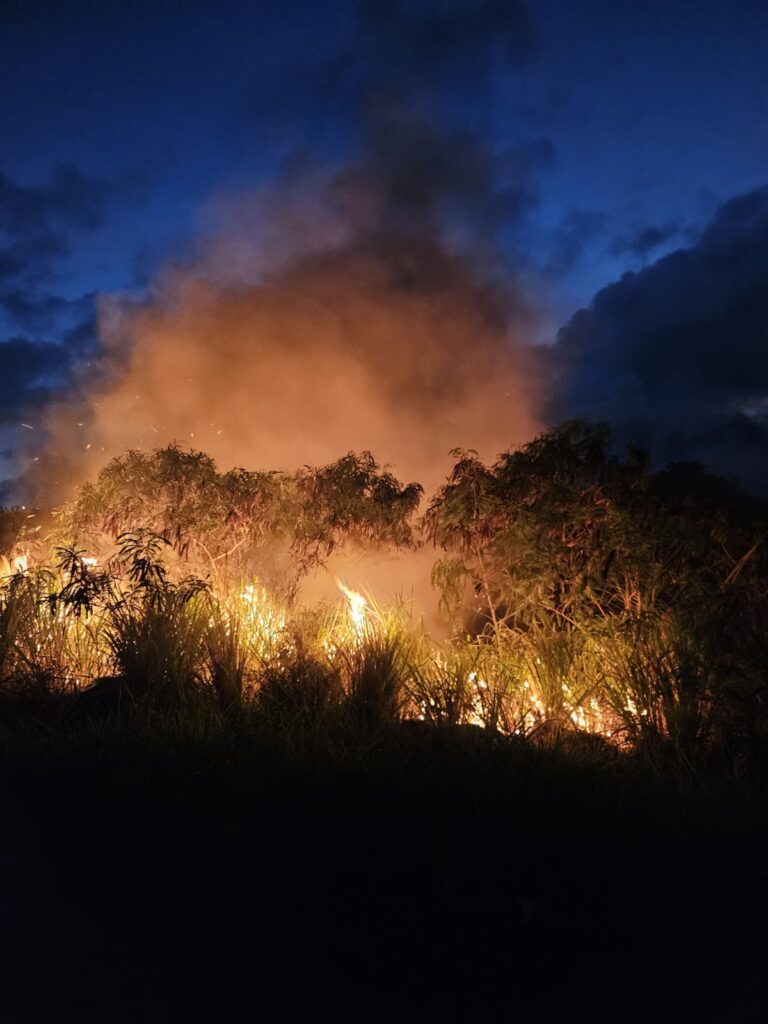
Residents of St George and St John are demanding that authorities tackle the root causes of seasonal brush fires after relentless blazes blanketed both parishes in smoke and ash on Tuesday, forcing an asthmatic woman indoors, ruining a shopkeeper’s stock and pushing firefighters to their limits.
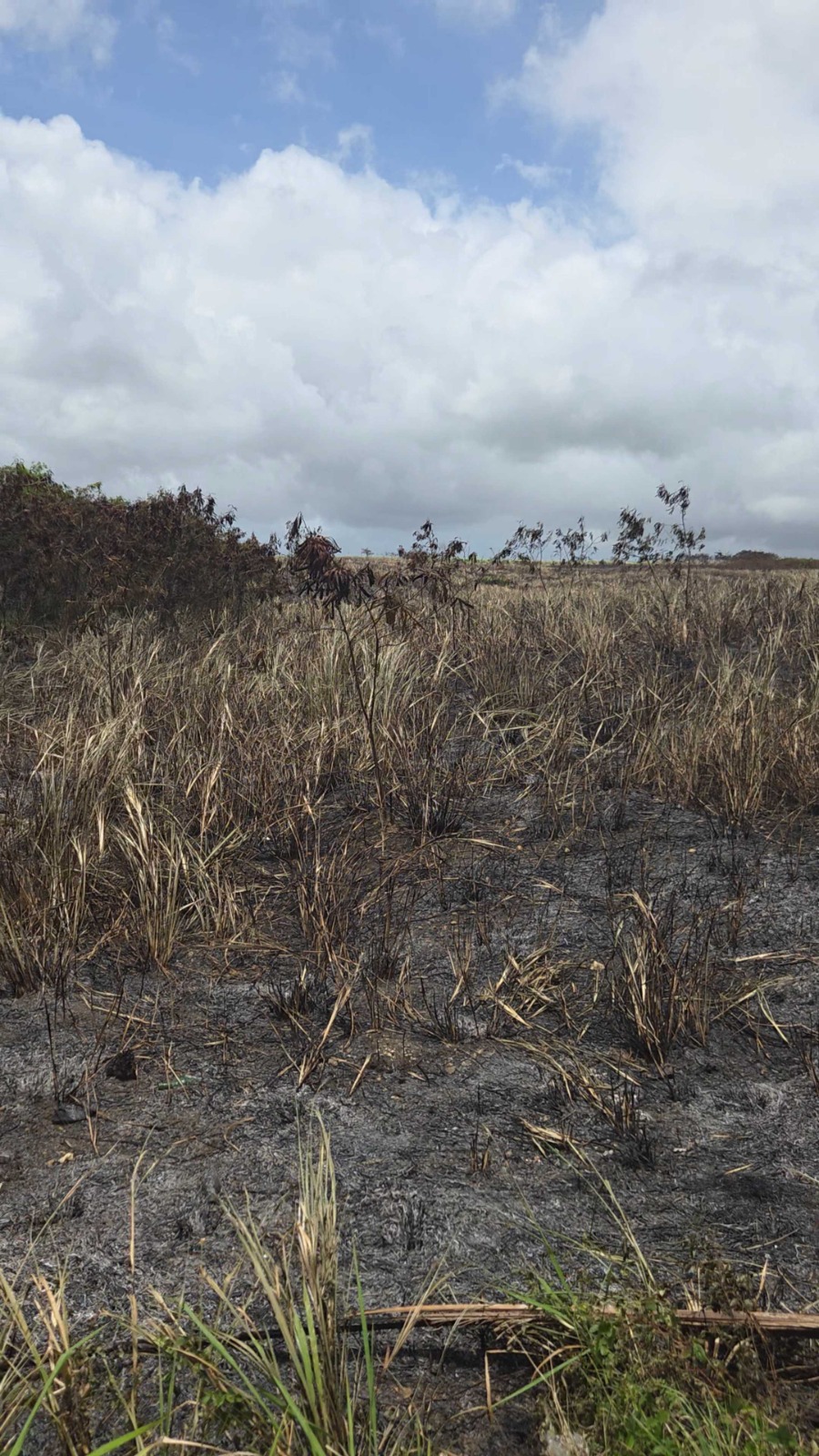
An open field in St George ravaged by Wednesday night’s blaze. (RR)
For villagers living on the front lines – and next to vast swathes of abandoned farmland – the experience has been defined by a constant, irritating haze, the sting of cow itch vine in the air, and a growing sense of frustration with what many describe as a preventable annual crisis.
The two parishes in the island’s agricultural heartland are also home to several fallow plantations owned by the defunct CLICO insurance giant, including Pool, Henley, Wakefield and Todds, where cow itch and river tamarind have displaced sugar cane and vegetable crops for decades.
The severity of the situation has prompted residents to speak out, painting a vivid picture of a region gasping for air and demanding that authorities address the root causes of the blazes.
For Brad Harper of Middleton, St George, the reality of the fires hit home while he was on the move. What he initially mistook for a mechanical failure in his vehicle quickly revealed itself to be an environmental hazard.

Middleton St. George resident Brad Harper shares his experience following yesterday’s fire. (RR)
“The smoke, it was very irritating to the sinus,” Harper recalled, describing the moment the air quality shifted. “I was driving in the AC. At first, I thought something was wrong with the vehicle, so I just checked the instruments and so on, and it was pretty good. When I rolled down the window, then I realised that outside was a bit hazy.”
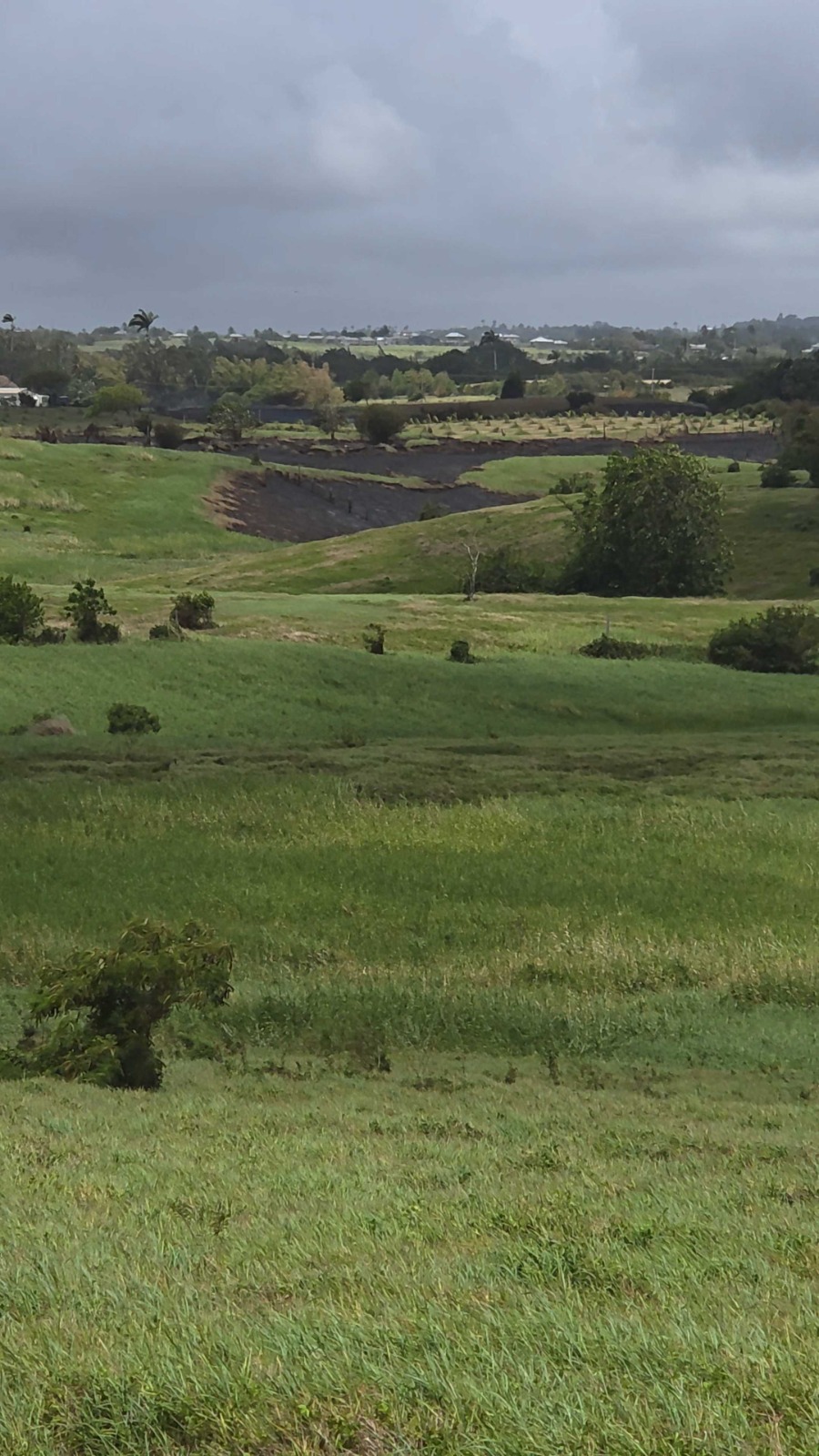
A large section of a plantation in St George hit by grass fire. (RR)
Harper’s experience is not just a one-off event; it is a worsening trend. Later that evening, a trip back into the area with a friend confirmed his worst fears: “Late in the night, me and a friend, we went in the area, and it was even worse. Very irritating to the sinus. I heard over the radio the fire chief said that he noticed an increase over the years, so I wouldn’t say that it is normal.”
Having lived in the area for most of his life, Harper is struck by the unprecedented scale of the current situation: “I’ve never seen that level of smoke. I just wondered how the layout was to see how far the grass could have burned. I was confident that the fire service would have probably had the situation under control, but the sheer volume of it makes you wonder.”
The fires are not just an inconvenience; for the vulnerable, they are a direct threat to health. In St George, Susan, who struggles with asthma, described the atmosphere as suffocating. The smoke, she noted, took on a frightening, oily quality.
“It wasn’t pleasant because the ashes and truly not the dust, the smoke from the ashes had me coughing a lot, but I’m asthmatic too, you understand?” she said. “It feels like burning… like tire, that black kind of idea. And then it fades and we get like this white cast. It’s not good.”
The environmental fallout has also seeped into the area economy. Taylor, a mini-mart proprietor in St Judes, St George, watched as her livelihood was literally covered in soot. The cow itch and ash forced her to shut her doors early and throw away stock that had been contaminated by the fallout.

Taylor, a proprietor at a mini mart in St Jude’s, St George, said she was forced to throw away stock from the ash and smoke. (RR)
“It was really bad,” Taylor said. “It even bothered the veg. We had to pack up early because the ashes, the dust, everything was blowing by the place. It’s terrible for the people with sinuses. They’ve got to get rid of the cow itch… you don’t know with the biting and what they’re doing with the babies. I’m glad for them to find a way that won’t go like such a big smoke to affect us.”
In St John, the perspective from farming is equally bleak. Maria Simpson, a farmer at Wakefield, has a bird’s-eye view of the devastation from her fields. For her, the sheer frequency of the fires has turned the parish into a revolving door for emergency services.
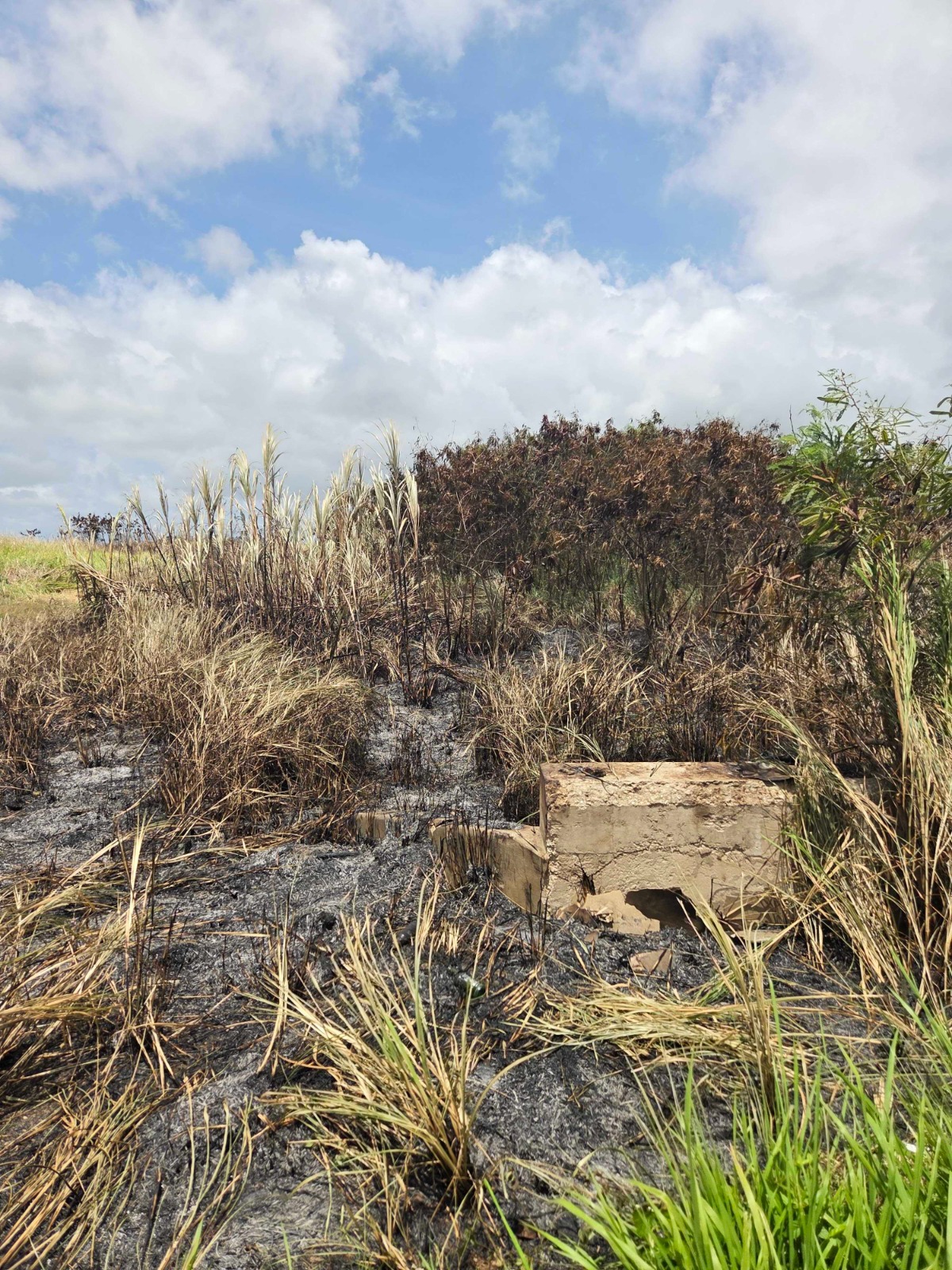
A grassy area in St John parched by the fire. (RR)
“This one here, this is ridiculous,” Simpson said, gesturing towards the charred horizon. “Because like any day is one fire truck there from a fire station. So if you got a fire there, then they got a fire back behind it, and you hearing sirens going. That’s a real pandemic for real. That’s real hard.”
As a farmer, Simpson is acutely aware of the dynamics of the land, specifically the overgrowth of cow itch and river tamarind that fuels these blazes. “What they’re trying to do is basically burn out the cow itch. When you burn the cow itch, yeah, it’s good, but when it’s dry time now, all the cow itch gonna blow, and that’s what’s gonna really give you the effect. It’s infested out of control. Monkeys out of control, the bush out of control.”
Her recommendation is one of prevention over reaction: “Deal with them from early. If they could get them, do it from early… pulling them up before they start to form the flower and everything, that’d be real good.”
In Massiah Street, Mavel Knight, a long-time St John resident, found herself under a self-imposed lockdown as the fires surrounded her home. Starting around 3:00 p.. and lasting until late into the night, the blaze from Donkey Hill brought the threat to her doorstep.
“Last night it was some smoke because the most things is enough bush, so that gives enough smoke,” Knight said. “I had the windows closed. To be truthful, I don’t open the house. I tell my daughter, anybody can pull this window, I’m buckling down. I ain’t moving. I keep the door locked.”
The sentiment of frustration is perhaps most palpable in Cherry Grove, where Marcia Clarke described a cycle of cleaning and coughing that has lasted for years. For Clarke, the issue is a failure of land management that has transformed formerly productive sugar cane fields into neglected firetraps.
“Yesterday, I had to wash my clothes three times,” Clarke lamented. “And then you have to close all the windows in the house. Years ago, when out in front, here used to be canes; we don’t need to get this problem. But from the time that the grounds get out of hand, that is what we are getting now. We tell the MP, but nothing happened. It is terrible up here in St John.”
As the smoke eventually clears, the people of St George and St John are left with the same lingering questions. With the Fire Service pushed to its limits and the health of the community at stake, the call for a comprehensive plan to manage overgrown farmland and prevent the seasonal “burning of the bush” has never been louder. Until then, as Maria Simpson put it, they remain caught in a “ridiculous” cycle of fire and smoke.
(RR)
The post Rural folk fed-up with ‘ridiculous cycle’ of brush fire, smoke appeared first on Barbados Today.