Barbados’ heavy dependence on imported fossil fuels is leaving the country vulnerable to global oil shocks that can send its fuel import bill soaring by hundreds of millions of dollars, Minister of Energy, Business Development and Consumer Affairs Kerrie Symmonds has warned.
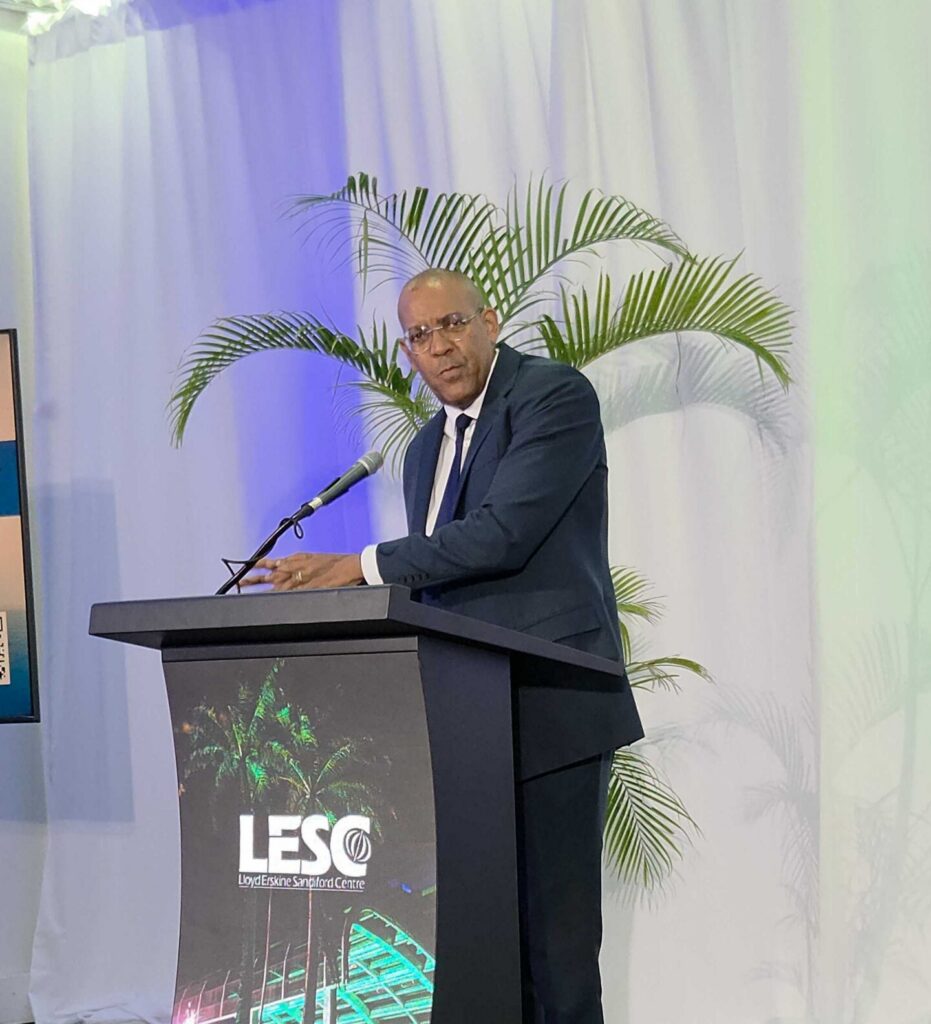
Speaking at the State of the Energy Sector national conversation at the Lloyd Erskine Sandiford Centre, Symmonds said geopolitical instability, particularly affecting key transit routes such as the Strait of Hormuz, can trigger dramatic price swings that directly affect Barbadian consumers.
With the island dependent on imports for more than 90 per cent of its fossil fuels, fluctuating crude prices present a continuous challenge to national economic stability.
”The immediate concern for Barbados has not been the physical accessibility of our oil supply. Our concern is the principal exposure that we have with respect to the question of cost,”
Symmonds said, “The potential for geopolitical instability to drive up international oil prices and consequently the cost of energy to Barbadians is at the core of our concerns. We are in a very vulnerable situation with respect to that, and it is a vulnerability that the government of Barbados will not ignore.”
To illustrate the severity of the situation, the Energy Minister pointed to the sharp escalation in the nation’s energy import expenditures over recent years. Referencing 2019 as a baseline year, Symmonds noted that Barbados spent $728 million on fossil fuel imports. However, subsequent international developments caused those figures to surge dramatically.
Following the outbreak of the war in Ukraine in 2022, the import bill jumped significantly.
“Barbados was forced to find $1.123 billion with respect to fossil fuel importation into the country. In other words, as a result of the Ukraine war, which obviously had nothing to do with us, our consumers were confronted with a 54% increase in the cost of fuel import value into this country,” Symmonds remarked.
Though global prices eased slightly in subsequent periods, costs remained far above historical averages. In 2023, fuel imports stood at $1.1 billion – 40 per cent higher than in 2019 – while in 2024, expenditures reached $951 million, remaining 31 per cent above pre-crisis levels.
Symmonds emphasised that these rising costs ripple through the entire domestic economy, driving up inflation and putting immense pressure on foreign exchange reserves.
“So we see the pattern of surging energy prices impacting everything. And quite frankly, there’s a knock-on effect as we all in here know across our economy with respect to the cost of electricity, with respect to the cost of transportation… and most importantly with respect to the question of the cost of living for all of the consumers in Barbados.”
In response to international price surges earlier in the year, when crude spiked from roughly US$60 per barrel in January to over $106 by March, the government took financial steps to limit the impact.
”We would have instituted a hedge which would have been the first hedge that the National Energy Company would have utilised in circumstances such as these. And that hedge would have been initially at $92 a barrel,” Symmonds explained, noting that locking in that price shielded domestic consumers from extreme market peaks during a three-month period.
A subsequent hedge was secured at $78 per barrel, continuing to offer protection even as international prices hovered around $93 per barrel.
Despite the temporary relief provided by hedging, Symmonds stressed that short-term financial mechanisms cannot permanently solve the underlying vulnerability of relying on imported fossil fuels.
”The lesson I think is very straightforward. We cannot control geopolitical events. But what we can do is to strengthen our resilience to their consequences,” he asserted.
The Minister maintained that achieving long-term price stability and shielding Barbadians from unpredictable external shocks ultimately depends on accelerating the transition to local renewable energy sources, enhancing grid infrastructure, and executing national energy conservation measures.
”The larger issue facing the energy sector in Barbados still has to be confronted. And that issue turns on the question of stability. It turns on the question of predictability. And frankly, ladies and gentlemen, it turns on the question of us being able to ensure that our consumers get the lowest, most practical rate,” Symmonds said.
(RR)
The post Symmonds warns of economic exposure from volatile oil markets appeared first on Barbados Today.