Former insurance executive Alex Tasker’s extradition to the United States to face money laundering charges has been upheld by the Court of Appeal but put on hold to allow him to mount a further challenge at the Caribbean Court of Justice (CCJ).
US authorities are seeking Tasker’s extradition to face one count of conspiracy to launder money and two counts of money laundering arising from an alleged bribery scheme involving former Barbados government minister Donville Inniss.
Prosecutors allege that Tasker, a former senior vice-president of the Insurance Corporation of Barbados Ltd (ICBL), and former chief executive Ingrid Innes arranged about US$36 000 in payments to Inniss in exchange for his help securing the renewal of government insurance contracts. The payments were allegedly disguised as consulting fees and routed through a US company’s bank account.
Tasker has denied wrongdoing. During his extradition proceedings in Barbados in September 2021, he said in an unsworn statement that he had not laundered money or conspired to do so, and challenged the allegations against him.
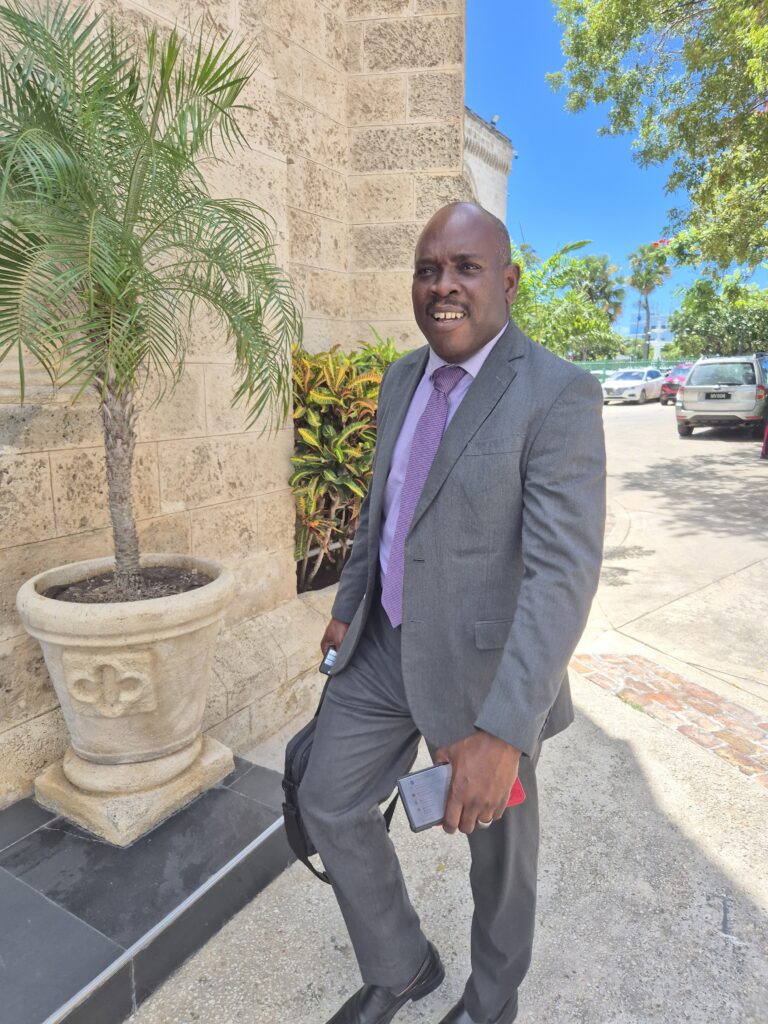
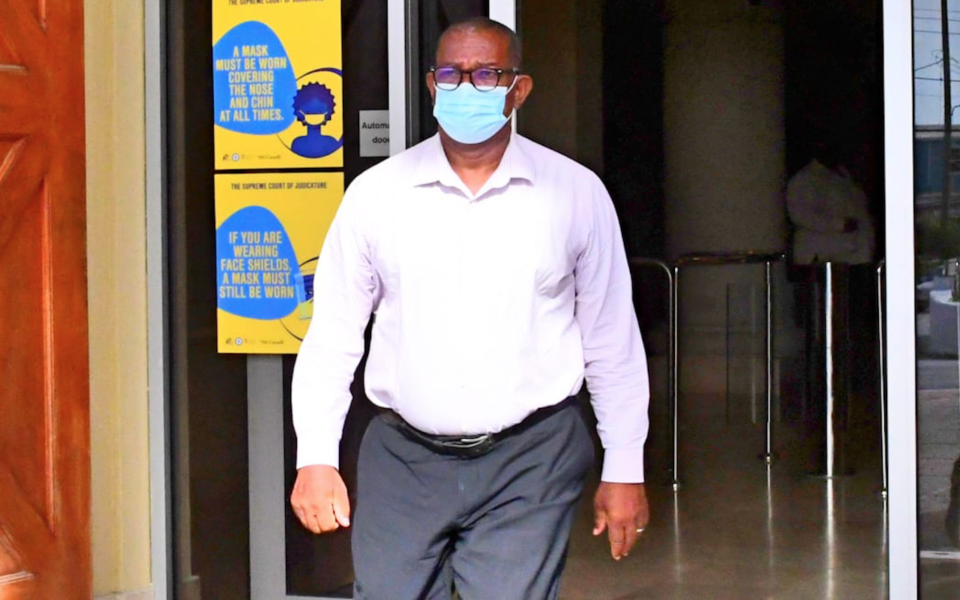
Tasker was present as his lawyer, Andrew Pilgrim SC, requested the stay immediately after the ruling by the three-member panel of judges.
The court’s president, Justice Francis Belle, who read the decision, ruled that the stay would remain in place until all proceedings related to the case were completed.
Pilgrim initially requested a six-week stay of the extradition order, explaining that this was the period within which his client was allowed to file his application to the CCJ.
He had also expressed concern about his client’s protection while awaiting extradition if the stay was not granted.
Justice Belle cited bail as an outstanding issue. That was soon settled, with the court acknowledging that Tasker would remain on bail.
After the adjournment, Pilgrim told reporters: “It seems to me that the Court of Appeal has said that the extradition is now effective. So, we asked them for a stay, so that we can appeal to the CCJ yet again. Obviously we waited 19 months to get this response, I think it is, and we have to avail ourselves of all the remedies that are available to our client and go from there.”
Asked how his client felt knowing there was a real possibility he would be extradited, he said: “It is difficult to deal with a matter like this when you have waited this long for a response. So, maybe the longer you wait, the more you think that things are going to go in your favour. So, it’s hard to say, but the CCJ did the right thing before, hopefully they’ll do the right thing again.”
In December 2023, the CCJ reopened its previous decision to refuse special permission to appeal and allowed Tasker’s appeal.
In September 2021, a magistrate committed him to surrender to the US authorities to face money laundering charges.
Immediately after the committal, the magistrate, in accordance with section 19 of the Extradition Act of Barbados, advised Tasker how he could challenge the decision and the time limit for doing so.
Tasker challenged the decision under the wrong law and did not file the correct application until after the time limit had expired.
The appeals court dismissed this application on the grounds that it had been filed late. The justices also held that they had no jurisdiction to hear Tasker’s application for leave to appeal because they lacked the power to consider whether time should be extended or, alternatively, whether the purported appeal, filed under the wrong law but within the time limit, should carry any weight.
The panel, which included Justices William Chandler and Jacqueline Cornelius-Thorne, noted the CCJ’s ruling that the Court of Appeal had erred on the matter of jurisdiction.
Tasker then approached the CCJ seeking special permission to appeal against these decisions.
In July, relying on the papers filed but without holding an oral hearing, the CCJ delivered a judgment refusing Tasker special permission to appeal against the Court of Appeal’s decision, effectively ending his efforts to challenge the extradition order.
But he applied to the CCJ to reopen the case, asking it to reconsider its decision because he had not been given an oral hearing as he had expected and had therefore not made full submissions.
The application to reopen the case, along with the application for special leave to appeal and the appeal, were heard by the CCJ on 16 October during its itinerant sitting in Barbados.
The CCJ unanimously agreed with Tasker’s lawyers that it had not been made clear beforehand that the court could and would proceed without an oral hearing.
The court therefore gave Tasker an oral hearing of his application. Having heard both parties, the court decided that the Court of Appeal had erred in concluding that it had no power to decide for itself whether to hear the application for leave to appeal.
As a result, the CCJ referred the matter back to the Court of Appeal to exercise its own discretion and determine afresh how best to deal with Tasker’s attempt to challenge the magistrate’s committal order.
Douglas Mendez SC is appearing with Pilgrim, while Director of Public Prosecutions Alliston Seale and Principal State Counsel Romario Straker represent the State.
(EJ)
The post Tasker’s extradition upheld but put on hold pending further appeal appeared first on Barbados Today.