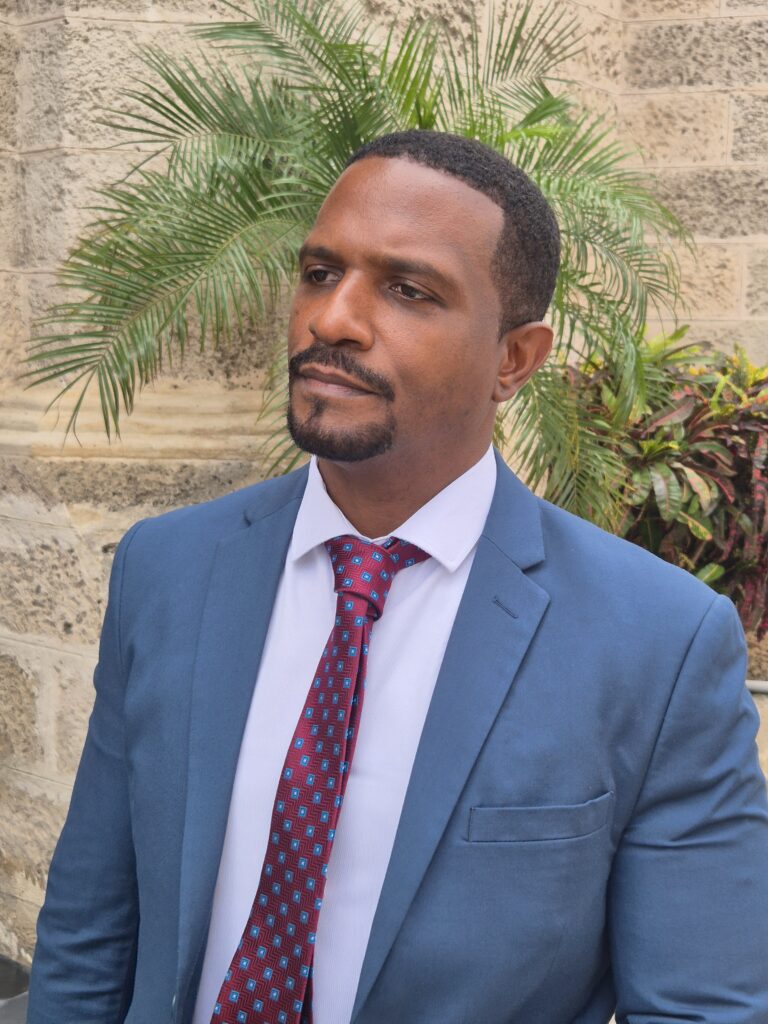
The first phase of the redevelopment of Temple Yard, an historic City centre for artisans, is due to be completed before Independence Day, Minister of Housing Chris Gibbs has pledged.
The initial stage of the project focuses on accommodating existing tradespeople displaced during construction, Gibbs told Barbados TODAY during a break in Tuesday’s House of Assembly sitting.
“Phase one will be finished before Independence, which will host the majority of the individuals who were there from before, the existing tenants. I can’t give the phase two [completion date], but phase one, which is obviously very important because it does almost 100 per cent match what was there already in terms of the artisans that were there before.”
Gibbs highlighted that the site is currently undergoing final quality checks and snagging to ensure the facilities meet expected operational standards. No timelines have been given for when the tenants can occupy the new spaces.
While the secondary phase is intended to expand to accommodate new craftsmen and creative shops, priority remains on restoring the livelihoods of long-standing community members ahead of the national benchmark date, Gibbs said.
The rejuvenation of Temple Yard forms part of a national plan to establish permanent, dedicated infrastructure for creatives and micro-entrepreneurs.
Gibbs elaborated on this plan as the House passed a resolution to lease a parcel of State-owned property for the long-mooted Barbados National Art Gallery.
He linked the commercial space at Temple Yard with wider legislative efforts to dignify the work of visual artists and craftsmen.
Reflecting on the historic challenges grassroots creators face, Gibbs shared his personal experiences observing artists struggling in the capital city.
“In a previous life, I… interacted with many of them in Cheapside, Bridgetown,” he recalled. “These were guys who had to go and sell a little fruit and hustle little DVDs to be able to make ends meet so that they could do what they love: paint, draw, sculpt, create work. But they didn’t have anywhere to do it, so you would see them walking around, sometimes the beaches, plying their trade to tourists, sometimes walking around with two or three paintings. The truth is that those people now have a home. Along with this institution, we are also renovating Temple Yard in The City of Bridgetown.”
The resolution approves a 25-year concessionary lease for Block A, The Garrison, securing 4 000 square metres of State land and building space to serve as the art gallery’s official home.
The development comes six years after Cabinet officially designated Block A as the gallery’s permanent home and nearly 20 years after Parliament passed the Barbados National Art Gallery Act.
Calls for a national art gallery go back to the colonial era in the 1930s and were repeated in the late 1950s.
Leased at a nominal rate of $6 000 per year, or $500 monthly, the historic site will provide a permanent venue to care for publicly owned art, run exhibitions, support research, and nurture upcoming creative talent.
The housing and lands minister told the House: “A national gallery needs more than legislation. It needs a place where Barbadians can enter, encounter the work of our artists, and seek their own reflections about them. This resolution takes us to another step of fulfilling that long-held aspiration.”
Gibbs noted that while key entities such as the Caribbean Art Gallery in Speightstown and the National Cultural Foundation Gallery at Queen’s Park have stepped in over the years to showcase artistic talent, the island lacked a central national home for visual arts, craft, and design. The decision to house the national collection at the Garrison World Heritage site carries symbolic importance, bridging the island’s colonial history with its contemporary artistic identity.
After the initial handover of keys in 2020, Gibbs blamed the COVID-19 pandemic for temporarily stalling progress. He reaffirmed the government’s commitment to delivering both the gallery space and the broader cultural infrastructure network, which includes plans for Queen’s Park and the Newton slave cemetery memorial.
He said: “Art helps us to understand who we are. It records what we have lived through. It allows us to question ourselves, celebrate our achievements, and imagine what comes next. We tell our story through literature, through photography, through sculpture, through paintings, and through digital art.
“Our visual artists deserve an institution with the responsibility and the space to collect, care, and present their work.”
In March 2019, almost a year into the first Mia Mottley administration and a full year before the pandemic’s outbreak, then-Culture Minister John King vowed the government’s commitment to creating a national art gallery – though he could not give a timeline for its creation.
He said: “Oftentimes you look at … a politician and he makes a statement and everybody goes ‘yeah right’ nobody really expects that. We heard that before.
“I want to assure you that I’ve also been on the other side of the fence. I probably know it better than most of you. If I tell you that we’re going to do something for you, believe me that is going to be done.” (RR)
The post Temple Yard redevelopment phase to be ready ‘before November 30’ appeared first on Barbados Today.