A new batch of about 20 people has begun hands-on training in bartending and mixology, with organisers aiming to fast-track participants into jobs in the island’s hospitality industry.
The third cohort of the Bartending and Mixology Course under the MAED Satellite Programme was officially launched at the Centre for Hybrid Studies, Spirit Bond, Wharf Road, Bridgetown.
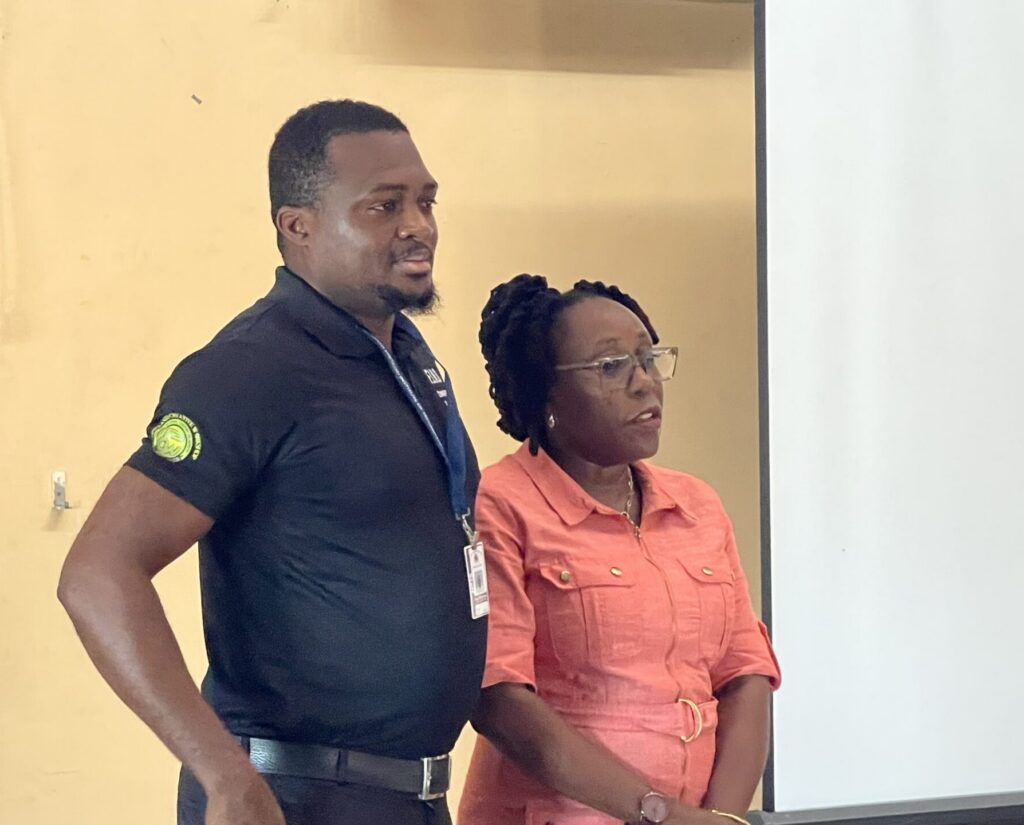
Chief executive officer of the Pinelands Creative Workshop (PCW), Sophia Greaves, said the programme is designed to address both workforce demands and social development needs by creating pathways for individuals who may not have traditional academic qualifications yet seek professional opportunities.
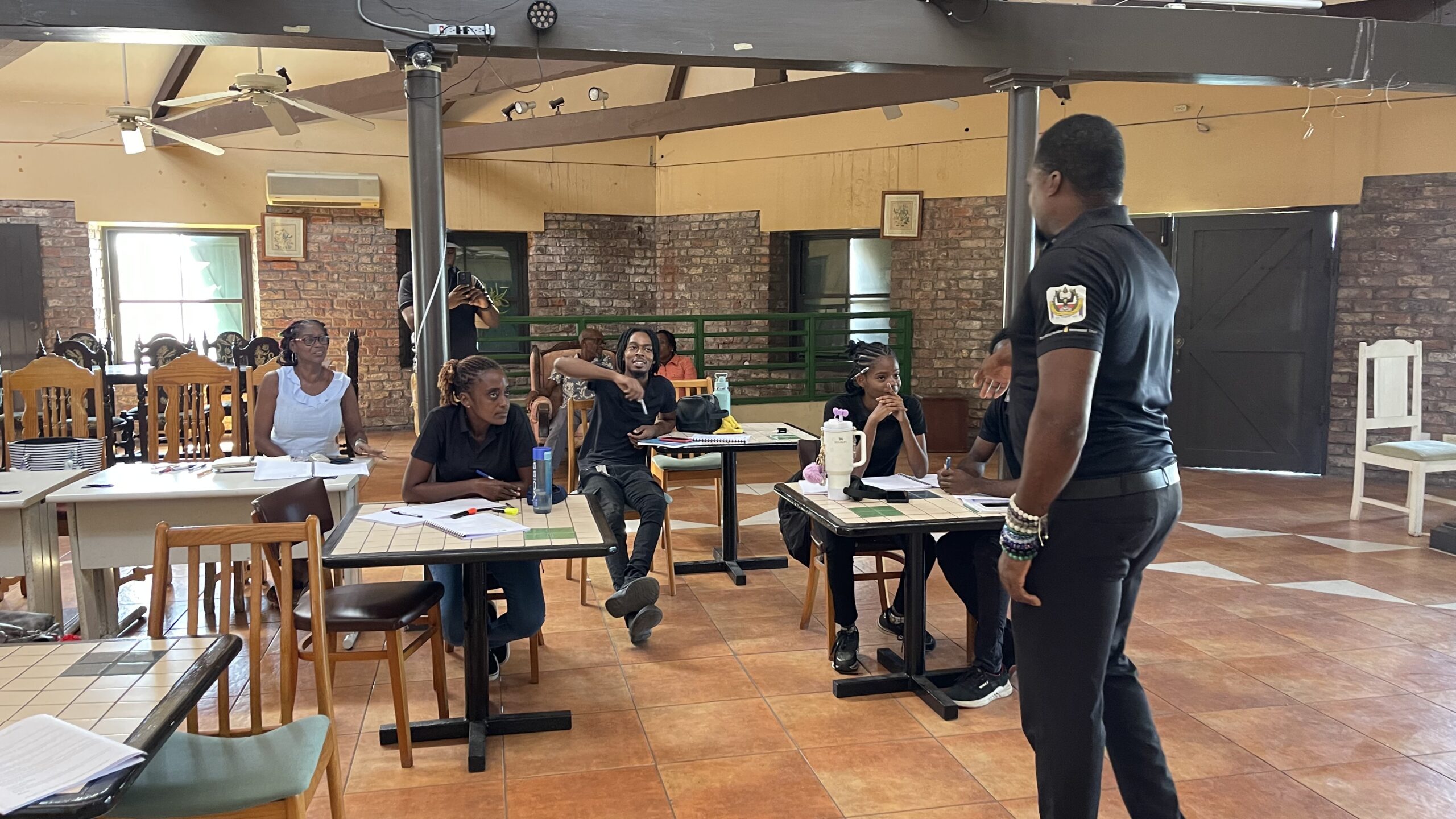
Mixologist Shane McClean talking to the class. (Photo Credit: Lauryn Escamilla/Barbados TODAY)
“Today we have a cohort of approximately 20 persons… ranging from age 18 up to about 40 years old,” she said. “These are all persons we considered, based on the criteria we’ve set, who are transitioning out of secondary school, looking to upscale; single heads of households; persons looking to retool themselves to fit into a greatly emerging environment, especially the hospitality and hotel industry.”
Greaves explained that the course forms part of the Multi-dimensional Approach to Inclusive Development (MAED) initiative, which is supported by the Maria Holder Memorial Trust and focuses on helping individuals access training and employment opportunities.
“This is our third cohort and we are happy to say that our students are doing extremely well and they absorb into the industry because of the quality of the programming and the kind of focus that we place on customer service and the quality of work,” she said.
According to Greaves, Barbados’ tourism product requires workers who can consistently deliver a high standard of service, and the programme is helping to build that capacity.
“We are trying to change that through each cohort, through each student, to make sure that when persons come to our shores or even when locals enjoy any of the facilities, hotel or restaurants or villas, that they know that the service they receive is one that is genuine.”
She noted that accessibility remains a major focus of the initiative.
“A key thing for Pinelands for us as well is to make sure that we provide spaces for those who don’t always have the matriculation requirements,” she said. “We are here providing that source of support and opportunity for young persons so that at least they can move forward and we can have even more productive citizens.”
Participants were also encouraged to remain engaged throughout the programme, which includes practical assessments, competitions and incentives.
“There are going to be some exciting things that we will share with you throughout, as it relates to prizes and incentives, midpoint assessments and your end-of-program competition,” Greaves told the class.
International mixologist Shane McClean, who is facilitating the 10-week programme, stressed that discipline and industry knowledge would be critical to participants’ success.
“This class basically is half theory and half practical, which means for the first 14 sessions theory,” he said. “The theory is what gets you past most other persons because there are persons in their spaces but they don’t have the knowledge and knowledge will get you very, very far.”
McClean told participants they would not begin mixing drinks immediately, emphasising that understanding the profession comes first.
“We ain’t touching a bottle. We ain’t sipping nothing. We ain’t shaking nothing for the first 14 sessions,” he said.
The veteran mixologist, who recently travelled from Africa to Barbados to teach the course, said commitment would be essential.
“Be committed to be here every single time you have class because I’m going to get your job ready and I’m going to have you in the position where anybody calls, be ready to go.”
Highlighting the practical value of the programme, he added: “With that knowledge, that will actually put you in a position where you can have job placement right after this course, which is 10 weeks.”
Greaves said the programme is also being linked to employment opportunities through partnerships with industry partners and will continue to evolve to meet labour market needs.
“As we start to speak with our partners, we’re looking at that key thing that they always want: employment, a placement to make sure that they can move from the classroom into the professional space,” she said.
She revealed that former students are also being offered opportunities to advance beyond the introductory level and towards intermediate training, while additional initiatives are being rolled out under the Satellite Programme.
Among them are an AutoCAD cohort currently underway, plans for a CVQ-certified wire-bending programme, and a CVQ in Dance Choreography scheduled to begin on June 22.
“This is a start of something significant to respond to market needs, demanding market needs, as well as to deal with the social development needs of people, to develop the human capital so that as our society evolve, we have the kind of human resource and manpower to fill the areas that we need them most in,” Greaves said.
(LE)
The post Training programme hopes to raise bar in jobs appeared first on Barbados Today.