
A worsening nursing crisis threatens to overwhelm the national health system, with the island’s largest public sector union warning on Monday that the government’s bid to recruit nurses from abroad will not succeed unless urgent steps are taken to keep Barbadian nurses from leaving these shores.
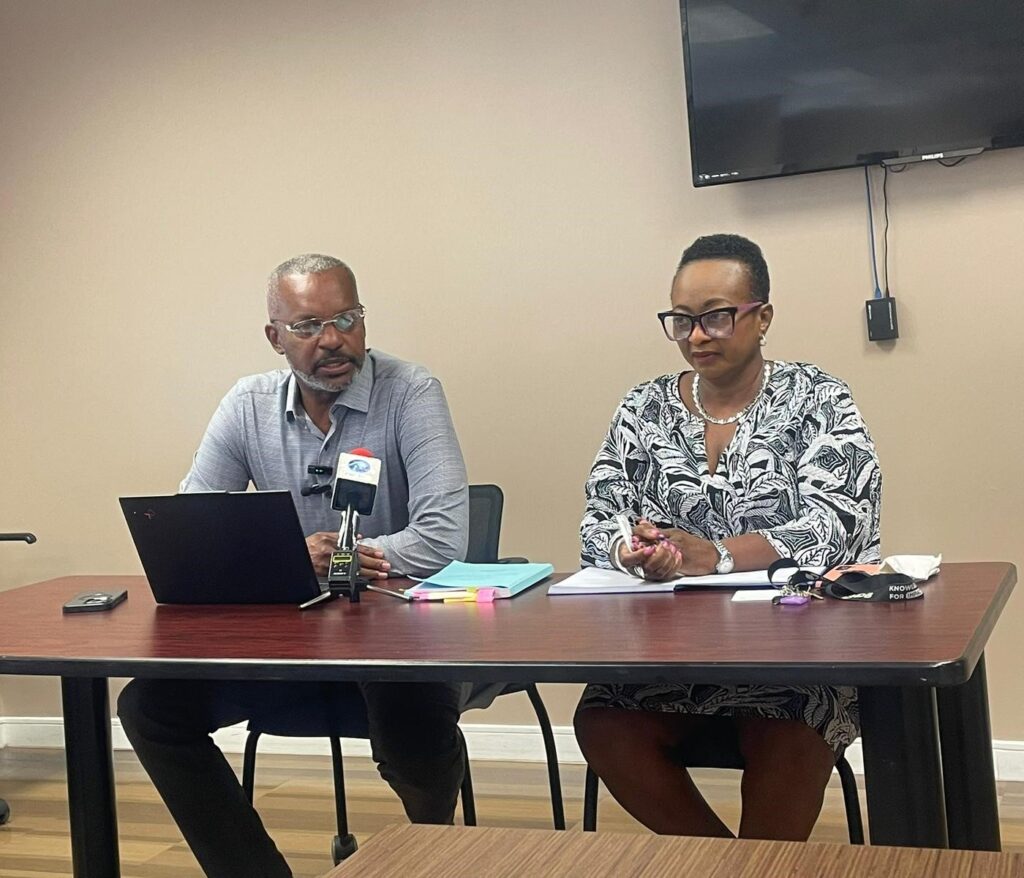
In a statement, the head of the National Union of Public Workers’ nurses division, Mechell Marshall, said the union remained fully aware of the scale of the problem, noting that nurses had worked for years under mounting pressure caused by chronic understaffing, heavy patient demand and limited resources — particularly within primary healthcare and at the Queen Elizabeth Hospital.
Her comments followed last Friday’s disclosure by Prime Minister Mia Mottley that Barbados faces a shortfall of about 200 nurses across the public health system, prompting the government to launch an international recruitment drive to fill specialist and general nursing posts.
Describing the skills shortages as the country’s most pressing development challenge, Mottley stated that a recent assessment placed the deficit at roughly 200 nurses between the Queen Elizabeth Hospital and the primary healthcare network.
Health Minister Dr Jerome Walcott said authorities were continuing overseas recruitment, particularly from the African nations of Ghana, Kenya and Ethiopia, under the Health Partnership between Africa and the Caribbean (HEDPAC) to identify, interview and select qualified nurses for vacant posts.
But Marshall said the government’s deficit figure merely reflected what nurses had experienced daily on the ground.
“While we acknowledge the Government’s efforts to address staffing gaps through international recruitment, the NUPW maintains that recruitment alone will not solve the crisis unless equal and urgent attention is given to retention,” she said.
Nurses continued to migrate not out of disloyalty, but because of sustained workplace challenges — including excessive workloads, burnout, limited opportunities for advancement and the need for improved working conditions and compensation, she said.
A comprehensive nurse retention strategy, the NUPW suggested, should include improved working conditions and incentives, clear and transparent career pathways with specialist and advanced practice roles, increased investment in nursing education and mentorship beginning at the secondary school level, and meaningful engagement with nurses and their representative bodies throughout healthcare reform.
Training remained critical, particularly in public health nursing, said Marshall.
“Another recommendation from the NUPW is really for us to continue to train nurses, understanding that public health nursing, that being primary health care, is a foundation or access for all health care,” she said.
She explained that public health nursing required layered training.
“You become a registered nurse, and then you become a registered midwife, and then you go into public health,” Marshall said, adding that short-term recruitment of nurses from Ghana, trained in public health and supported by midwifery, could assist during the immediate transition.
But long-term stability depended on strengthening domestic capacity, she said. “One of our recommendations, based on the prime minister’s own support, is really to strengthen our own capacity within our own nationhood so that we can train more nurses from Barbados and keep them here by improving our retention strategies,” she said.
Marshall also welcomed Mottley’s public recognition of the human dimensions of nursing.
“The prime minister’s acknowledgment that nursing is a profession rooted in touching, caring, and feeling is both accurate and welcome. These human elements are irreplaceable. However, for nurses to continue offering compassionate care, they themselves must be adequately supported, protected, and valued.”
She further welcomed the reopening and upgrading of primary healthcare facilities, including the St Thomas Clinic, as a positive step towards decentralising care and easing the burden of non-communicable diseases, but warned that infrastructure improvements without adequate staffing risked falling short.
“Infrastructure improvements must be matched with adequate staffing, ongoing professional development, and safe nurse-to-patient ratios to ensure sustainability and quality of care,” Marshall said.
While nurses remained committed to serving the people of Barbados, commitment alone could not sustain the health system, the nurses’ spokeswoman argued.
“Partnership, respect, and decisive action are required to ensure that nurses are retained, supported, and empowered to continue delivering safe and compassionate care,” she said, adding that the NUPW stood ready to collaborate with government and interest groups to build a resilient, people-centred healthcare system.
The post Union urges stronger investment in homegrown nurses appeared first on Barbados Today.