The leading historian at the University of the West Indies at Cave Hill has urged universities to teach how to leverage their degrees to create their own jobs and businesses, while warning that Barbados must confront voter apathy, weak institutions and gaps in historical education to secure its future.
Dr Henderson Carter, the head of UWI Cave Hill’s history department, said
“We have to educate people as to how they can create employment for themselves, not necessarily to leave the community college, school or the university and try to seek employment- yes you do that, but how can I use my degree to create employment? How can a scientist with Biology or Chemistry use that degree?
“How can a person with History, use that degree to create scripts for movies and documentaries and be paid good sums? Those are the things that we got to think about. How can those skills be leveraged to create jobs, to create businesses and of course, how can they access financing going forwards”
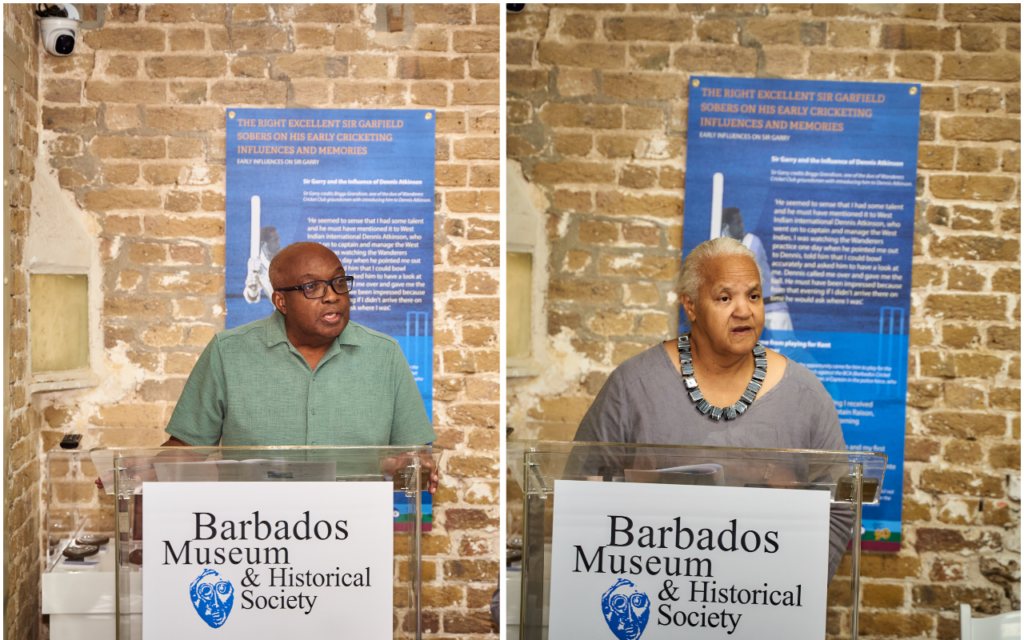
Delivering the annual Dean’s Lecture hosted by the St Michael Centre for Faith and Action, entitled ‘Movers and Shakers: Activism for Democracy Building’, Dr Carter, the dean of the faculty of humanities and education, said there must be a focus on building a better nation for current and future Barbadians.
He identified several issues that must be urgently addressed, including voter apathy and weak institutional responsiveness.
“We must continue to agitate for better conditions. We must agitate and draw attention to this issue of voter apathy, the fact that people are staying home and saying, ‘I ain’t voting’, or ‘You gotta pay me to vote’. That’s a problem we got to tackle. Another problem we have to tackle is this problem of weak institutional responsiveness, that our institutions don’t respond in time. I am not naming any institutions, but both private and public institutions have been called out on call-in programs that they don’t respond in time.
“We have to ensure that wherever we work, whether we’re answering the telephone or whether we are in positions of trust, we must respond to the needs of people. So when my phone rings at Cave Hill, I must respond to the students’ needs. I must respond to the stakeholders. And that is how you build institutions. That is how you build a nation. If your institutions are weak, your nation is going to be weak.”
Taking the audience through centuries of the island’s history and the struggles of many enslaved people against captivity, as well as the work of national heroes and other individuals in shaping modern Barbados, the noted historian insisted that citizens must always pay tribute to these individuals.
He also called for history to be “put back” in schools, describing it as “dangerous” that children could pass through the education system without studying the subject.
Highlighting the Heroes Square monument’s depiction of rusted shackles, he said it served as a necessary reminder of slavery, an area that had been lacking in discussing the island’s landscape.
He said: “For a long time, you’d walk or drive through Barbados and there’s no reminder of slavery at all, and that’s a dangerous thing! No reminder. So a little child can grow up and you tell this child about slavery and they say “What slavery? I do not see the evidence of slavery? That is evidence of slavery, to see those shackles, to see Bussa, that is the evidence that we want.
“We want to remind people that there was a slave society in Barbados and that it should never happen again. If you don’t remind them, you know, what could happen? People could be re-enslaved.”
(JB)
The post Universities must teach graduates to create jobs – historian appeared first on Barbados Today.