

Government has launched a major initiative to reform the criminal justice system by placing victims at its centre.
At the opening of a high-level, two-day symposium at Radisson Hotel on Monday, it was revealed that authorities were in the process of moving towards building a rigorous, compassionate, and highly coordinated mechanism to ensure survivors no longer navigate the aftermath of trauma on their own.
Speaking at the event that brought together members of the judiciary, the Barbados Police Service, government ministries, social workers, counsellors, and non-governmental organisations, Minister of Legal Affairs and Criminal Justice, Michael Lashley promised swift action to bridge gaps in institutional care.
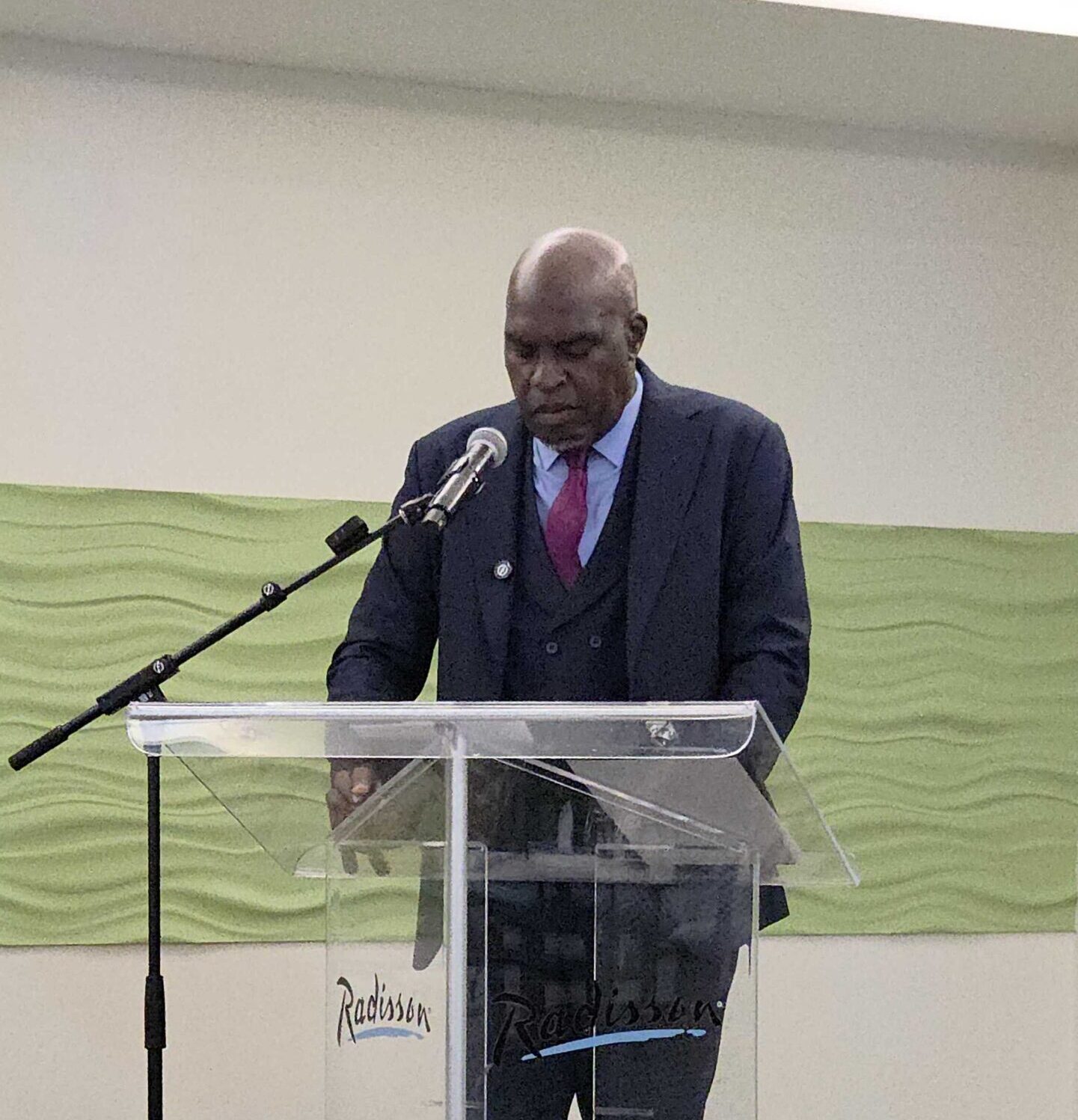
Minister of Legal Affairs and Criminal Justice Michael Lashley. (Photo credit: Ricardo Roberts/Barbados TODAY)
Lashley said while the local justice system was fair, it historically prioritised the prosecution of offenders over the healing of survivors.
”We have built our criminal justice system around the investigation of offences and the prosecution of offenders.
“One thing you can say about our system is that it is fair and that it is impartial, but we have not focused centrally on victims. How we treat the most vulnerable among us is a measure of who we are as a nation. If we are working on rebuilding the Barbadian civilisation, this matters,” Lashley said.
Drawing on his extensive professional background as an attorney, Lashley recounted the profound terror often experienced by victims navigating the legal ecosystem.
He recalled an encounter in his private practice with a domestic violence survivor who was left trembling from fear, despite having successfully secured a protection order, because the perpetrator easily discovered her safe location.
Lashley said the absence of a centralised, well-coordinated state unit left citizens exposed when they enter the intimidating environment of the courts, where they were frequently forced to relive traumatic events and face intense cross-examination by defence teams.
”Ask yourself what happens to the victim after the police report is filed. Who calls them weekly to check and see if they are safe? Who explains what bail means? Imagine a victim going into the court for the first time in their life, having to face trained and experienced legal counsel in a courtroom with jurors, and then the media is there too to report everything. The system itself can feel like a further burden through delays and complexity,” Lashley contended.
He revealed that the reform will likely feature a specialised advisory unit to assess needs, advocate for victims, and direct individuals toward counselling, alternative housing, and legal guidance.
He noted that recent legislative advancements, such as the passage of anti-gang legislation and upcoming debates on a dedicated gun court and amendments to the Evidence Act, are designed to structurally reinforce citizen safety.
To rectify deep-seated systemic issues, Lashley said the ministry had conducted cross-sectoral consultations with the Director of Public Prosecutions, prison authorities, shelters, and individual survivors.
He said preliminary findings indicated that while various support services exist across the island, they operate in silos, creating distinct institutional cracks that damage public confidence in the rule of law.
Lashley maintained that legislative text is futile without robust implementation and enforcement, particularly regarding domestic violence protection orders.
”An order on paper is only as good as its enforcement. We need to ensure that victims understand how to report breaches, and that breaches are responded to in a swift manner. Any new system must be designed with survivors, not just for them. Their feedback must drive continuous improvement,” he admitted.
Lashley assured the delegation that the findings of the symposium would not be left to gather dust on shelves, pledging that a dedicated working group would be established immediately following the closing session to transform the priority options and recommendations into operational policy.
”We are not just about talk. I don’t want out of this symposium a document dated and signed and then there is no action on it. There will be action on it. No victim should navigate the aftermath of crime alone,” he said.
Meanwhile, event chairperson and member of the victim support program since 2001, Marilyn Rice-Bowen said the workshop needed to transcend academic debate to produce concrete structural solutions for vulnerable citizens.
”Over the next two days, we will not be debating whether Barbados needs a national victim support framework; that question has already been answered.
“What we will be doing is something more purposeful. We will be designing it together with rigour, with compassion, and with a commitment to those who need it most at the centre of every decision we make,” Rice-Bowen said.
(RR)
The post Victims to be prioritised in criminal justice reforms appeared first on Barbados Today.