
Caring for a family member, loved one or ward who is sometimes fully dependent on you is not an easy task, and most times it takes a toll on the caregiver.
We often hear about those who are disabled or vulnerable who need the care and attention of their caregivers, but who takes care of the caregiver?
Showing that even the strongest hands need helping hands, a small but meaningful effort on Friday at a Christ Church garden centre created space not just for care, but for carers themselves to be seen, heard and supported.
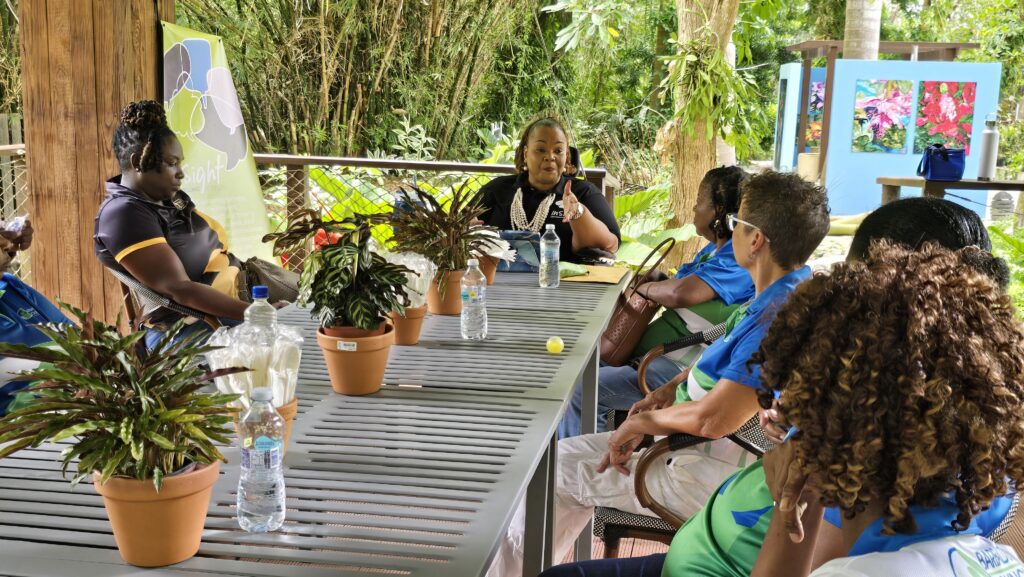
Barbados TODAY visited Nature Care at Lowlands, where staff of the Barbados Council for the Disabled took part in a Mental Wellness Day facilitated by counselling psychologist Janelle Skinner.
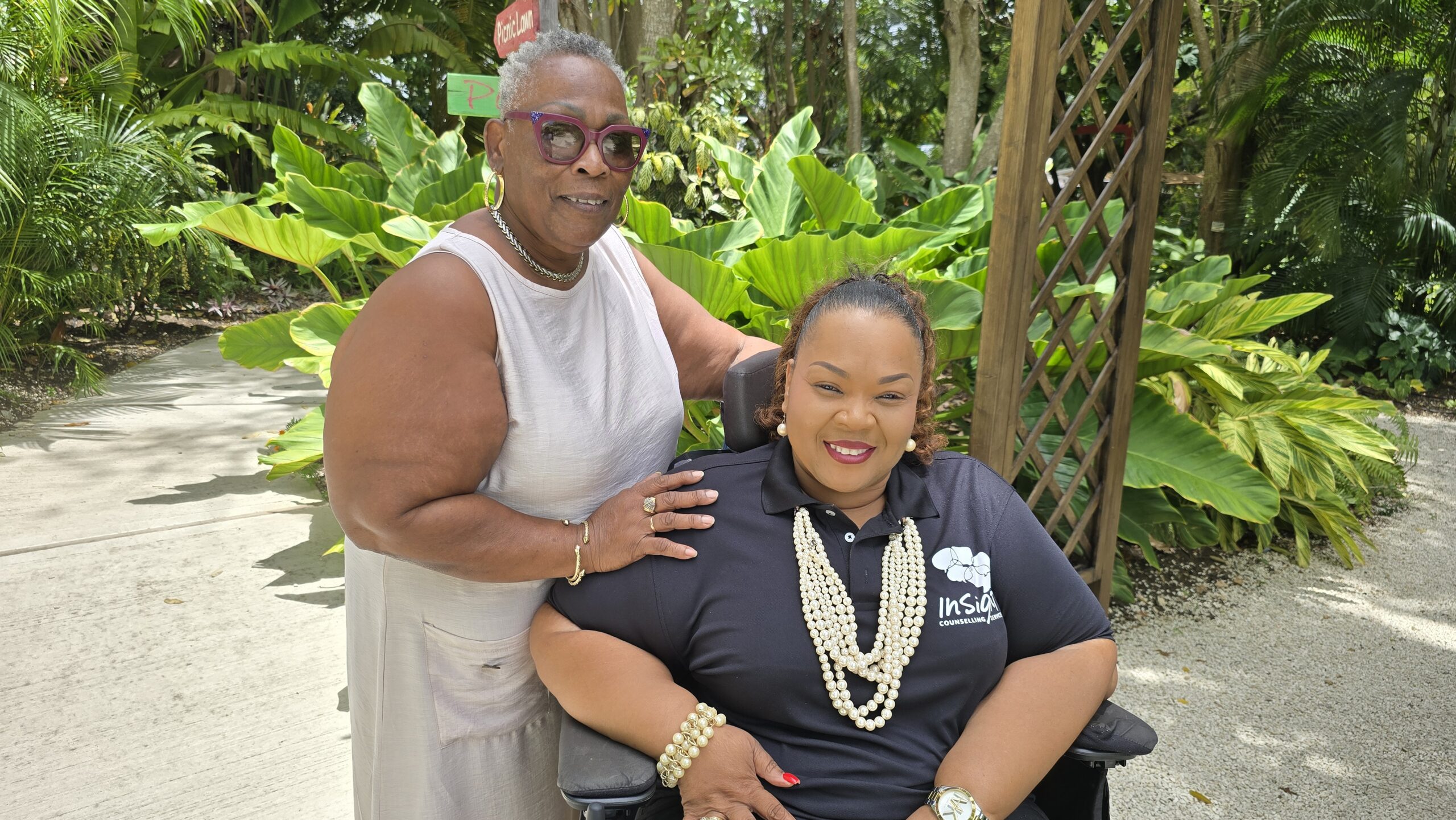
Caregiver mom, Joan Skinner-Graham and her daughter Janelle Skinner, counselling psychologist. (Photo Credit: Lourianne Graham/Barbados TODAY)
Skinner, who is also a paraplegic, pointed to the importance of these types of exercises for caregivers.
“Caregiving can be emotionally, it can be physically, and it can be mentally draining, and there is something called caregiver burnout, and many persons do experience that.”
Skinner explained that caregivers, too, need a break from their role.
“Where they can disconnect from the caregiving role so that someone else or another system can do that, at least even if it’s for a few hours to give them that time away from that role because sometimes caregivers are living in survival mode,” she disclosed.
She remarked that caregivers frequently focus on those under their care while neglecting their own needs.
“We don’t think about what happens if something happens to me, and so it is very, very important that we create that space where the caregiver can also be cared for.”
Pointing to her own mother, who is her caregiver, Skinner said she is able to recognise when burnout begins to set in.
“I know when my mother is tired. For me, as a person with a disability, I would try my best to do all the things within my capabilities that I can do, so I don’t have to rely on her, but there are some things that I can’t do, and I do have to rely on her, but it is being able to recognise when those signs of physical burnout are coming.”
The same also applies to caregivers themselves, who need to recognise when they are exhibiting signs of burnout.
“I am a counselling psychologist, and I have a therapist. There’s nothing wrong with being in therapy because it helps. Not only that, you need to have a support system, a support system sometimes that you can talk to.
“It doesn’t only help mentally, but that also helps physically because then you have individuals, a pool of individuals that you can rely on that can step into that caregiving role, and you know that you need to take a break, you need to take a step back, and you need to refocus.”
Mother Joan Skinner-Graham said the devastating news 26 years ago changed their lives forever.
“She was on holiday in New York, and I remember that morning when I got that call from my niece, and she said to me: ‘Joan, I don’t know how you’re going to take it, but I have some bad news.’ I said: ‘Just give me the news.’ She said: ‘J is in the hospital, and she’s paralysed.’”
The very next day she was on a flight to the US to be with her daughter, staying with her every day until she was discharged and returned home.
The mother said she always encouraged her daughter to remain positive and was proud when she chose a profession focused on helping others.
“For me, at her age, being 20 to come down with that, it wasn’t easy. Through the years, we try to live with it. Things get better, she got more positive.”
“She said: ‘Mommy, I want to be a psychologist. I want to help people.’ I said: ‘Whatever you want to do, I got your back.’”
Skinner-Graham said it is important, even as a caregiver, to avoid making loved ones or wards feel like a burden.
“When you have a person with a disability, never ever let them see that anger in you, because it’s not good for that person because they can say within their mind, ‘She’s getting tired of me.’”
She advised caregivers to step away briefly when the pressure becomes overwhelming.
“If you feel that you’re exhausted, sometimes you take a deep breath. You step out and you come back fresh, but never ever let them see because you don’t ever want them to think that they are a burden to you. That puts a step back for them. They’re going to be worried. They’re gonna say within their mind, ‘Mommy’s getting frustrated with me. What am I going to do? She’s the only person that I have there.’ These are things that you have to take into consideration.”
As a mother and caregiver, she admitted she sometimes worries about the future, especially as she grows older.
“Many nights, I asked God to just give me strength. Let me be there because she would always say: ‘Mom, if something happened to me, I don’t know if I can make it.’ I said: ‘Don’t say that. Don’t you ever say that.’”
Now retired, Skinner-Graham said it is often caregivers who pass away because of stress.
“It’s not everybody who can deal with stress, and sometimes when it hits them, instead of opening up and speaking to someone, they bottle it inside of them, and when they do that, they get ill, and then there’s no one to really care for that caregiver.”
The mother hopes more counselling can be provided for caregivers to help them manage the mental load.
“Give them some counselling, talk to them, help them to be able to communicate better. You’re not sitting down and bottling everything…. They keep it all inside, and then you hear the stress kill them. They’re not speaking out as they should.”
When asked how she balances caregiving with everyday responsibilities, she replied: “I plan my work, and I work my plan. I get up on mornings, I deal with her because she works from home. She goes to her computer desk, and she does what she has to do. I make her breakfast. If I have to do my laundry, the cleaning of the house, I have someone who comes in and do that, then I have to cook because my husband is out working and we all have to eat.”
But when she feels overwhelmed and needs a break: “I always say to her: ‘Give mommy a break. I’m gonna sit, I go on my phone, and I go to play my game. Don’t say nothing to me. This is my time. Let me sit and relax. When I’m ready, I’ll come to you. Time out.’”
President of the Barbados Council for the Disabled, Patricia Padmore-Blackman, also stressed the importance of taking time for yourself. Padmore-Blackman, who is blind and has a disabled son, said it can be overwhelming at times.
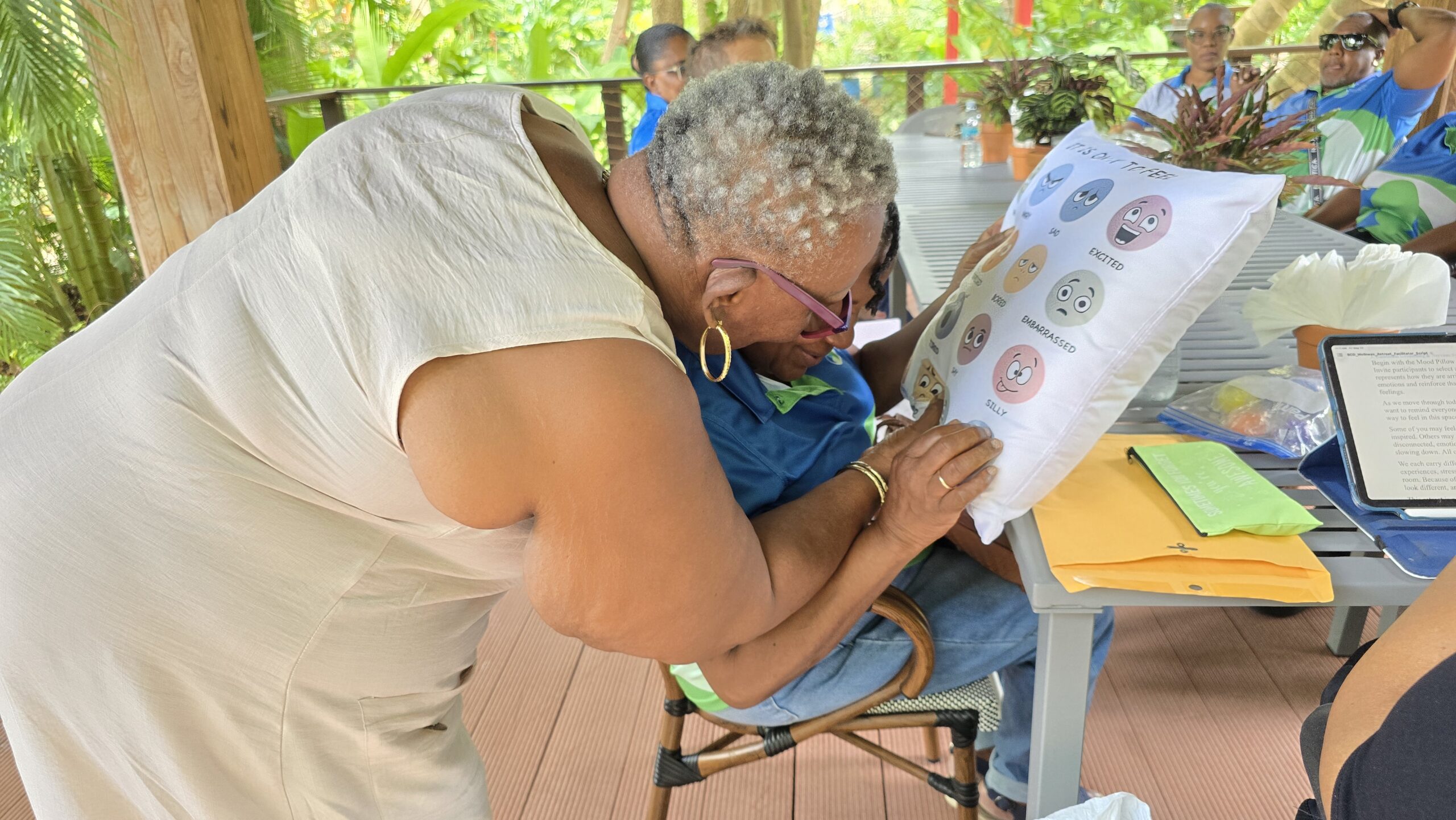
Joan Skinner-Graham, caregiver, helps the president of the BCD, Patricia Padmore-Blackman. (Photo Credit: Lourianne Graham/Barbados TODAY)
“From the time he was born, he is with me. So that tells you that it may seem as though I don’t have a break. Yes, I do need a break at times.”
She expressed gratitude for the support she has received over the years.
“I had support along the way, and that’s one of the areas that is so important for us as caregivers or as parents with children with disabilities. We need that time. Who do we look to at most times? We look at family, we look at friends, we look at persons in the professional capacity. That is my lived experience.”
For Roseanna Tudor, BCD operations manager, Friday’s activity sought to deal with the mental and emotional wellbeing of frontline workers dealing with stressful situations involving persons with disabilities.
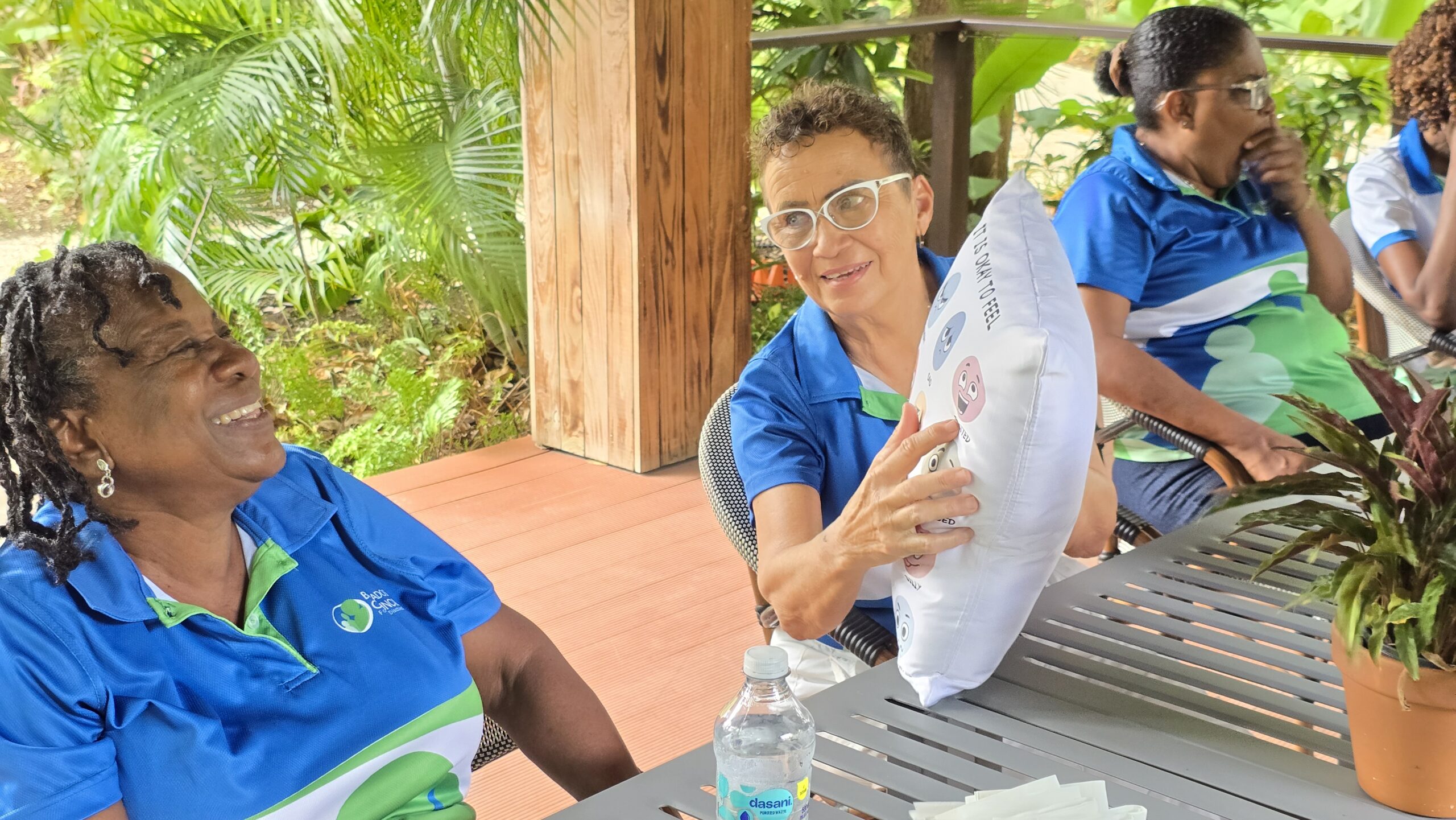
Patricia Padmore-Blackman, president of the BCD, and operations manager Roseanna Tudor share a light moment. (Photo Credit: Lourianne Graham/Barbados TODAY)
This wellness event, she said, was meant to “reduce emotional fatigue, strengthen staff connection and psychological safety, all of which promote reflective well-being practices, encourage self-awareness, appreciation and collective purpose and reinforces staff wellbeing, which directly impacts service delivery and as you know, we are frontline workers per se, and we do deal with stressful issues of persons with disabilities every day. So it’s critical to create a workplace that has our well-being environment”.
She also encouraged other organisations to host similar wellness activities for their employees.
(LG)
The post Who cares for the carers? BCD wellness event may give answer appeared first on Barbados Today.