
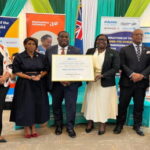
The World Health Organization (WHO) and the Pan American Health Organization (PAHO) Wednesday congratulated the Turks and Caicos Islands (TCI) on being certified for the elimination of mother-to-child transmission of HIV and hepatitis B. The two United Nations bodies said that this milestone reflects the British Overseas Territory’s strong commitment to protecting the health of women, children, and families.
The TCI is the first territory in the Americas to validate the elimination of mother-to-child transmission of hepatitis B, marking a significant achievement for the region.
“This certification demonstrates that eliminating mother-to-child transmission of HIV and hepatitis B is achievable with sustained political commitment, strong health systems, and equitable access to care,” said Dr. Tedros Adhanom Ghebreyesus, WHO Director-General. PAHO Director, Dr. Jarbas Barbosa, said that the Turks and Caicos Islands are setting an example for countries of the Caribbean and beyond.
“This achievement reflects years of dedicated work to ensure that every pregnant woman and every child have access to timely, quality health services. It shows the power of integrated primary health care and the importance of leaving no one behind, including the most vulnerable populations,” he added.
The UN bodies said that the TCI achieved this milestone thanks to its resilient and integrated health system, where maternal and child health services are widely accessible and the public and private facilities work in close coordination.
Antenatal care is available across all primary care facilities and is free to all women, regardless of nationality or legal status. Routine, opt-out screening for HIV, syphilis, and hepatitis B is conducted for pregnant women, supported by rapid testing, confirmatory diagnostics, and timely treatment.
High coverage of essential interventions has also been critical to success. More than 95 per cent of pregnant women attend antenatal care and are screened for infections, while over 90% of infants receive timely hepatitis B vaccination, including the birth dose within 24 hours. All infants exposed to HIV receive appropriate follow-up and testing, and comprehensive care is provided to mothers and newborns through integrated services.
The TCI has also ensured uninterrupted access to diagnostics and treatment, underpinned by strong surveillance systems and coordinated engagement across the public and private sectors.
Targeted efforts to reach migrant populations – through multilingual outreach and community-based services – are complemented by continuous monitoring to ensure timely access to care for highly mobile groups.
“This recognition means that our health system is strong and capable. It shows we are serious about protecting our families and investing in the future of our children,” said Kyle Knowles, the Minister of Health and Human Services for the Turks and Caicos Islands.
“But we know that it doesn’t stop here. We are continuing to improve on how we track and follow up with babies and mothers, making sure that these services are easily accessed.”
To receive WHO certification, countries must prove they have reduced the mother-to-child transmission rate of HIV to less than two per cent, achieve fewer than five new pediatric HIV infections per 1,000 live births as well as maintaining 95 per cent or higher coverage for antenatal care, HIV testing, and treatment for pregnant women.
In addition, sustaining elimination will require ongoing investment, vigilance, and a strong focus on equity.
Robust monitoring and evaluation are essential to maintaining certification, ensuring that high-quality antenatal services remain accessible, and that HIV positive mothers and exposed infants receive timely and consistent follow-up care.
“This achievement is truly momentous. It represents a major milestone for public health and for the global HIV response, marking an important step towards our shared goal of ending AIDS among children by 2030,” said Anurita Bains, Associate Director HIV/AIDS at UNICEF.
“This achievement reflects strong political will and steady investment in primary health care. It also recognizes the dedication of health teams and of people living with and most effected by HIV who work every day to ensure babies are born free of preventable infections,” added Luisa Cabal, Regional Director, UNAIDS.
The Turks and Caicos Islands join a growing number of countries and territories in the Americas that have achieved this important public health milestone, contributing to the regional goal of ending mother-to-child transmission of HIV, syphilis, and hepatitis B. (CMC)
The post WHO certifies Turks and Caicos for eliminating mother-to-child transmission of HIV and hepatitis B appeared first on nationnews.com.