Motorists navigating Barbados’ roads have grown increasingly vocal about the worsening conditions, with potholes emerging as one of the most persistent and visible concerns. At the same time, questions about the pace and progress of roadworks continue to mount.
In response, the Ministry of Transport and Works (MTW) has begun outlining a more structured approach to repairs while intensifying efforts to assess conditions and projects on the ground.
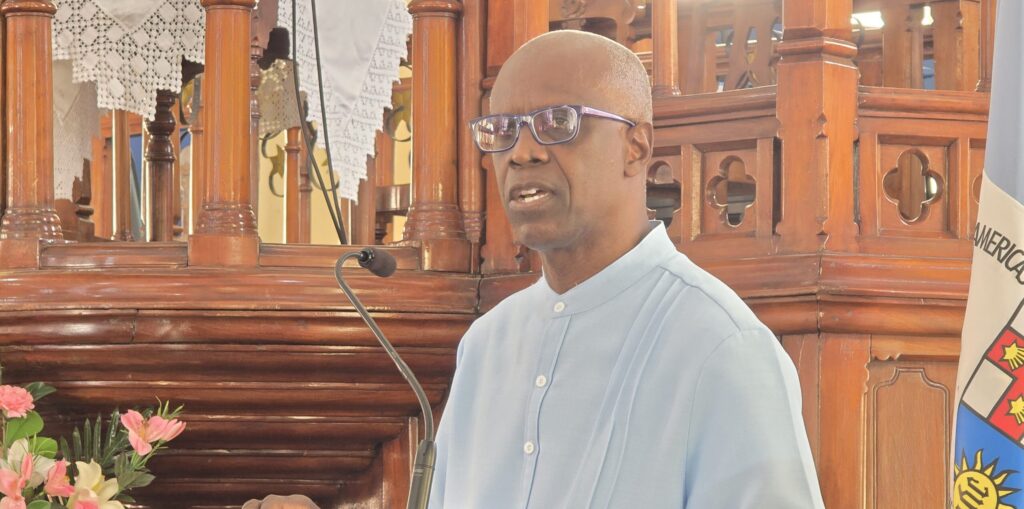
New Minister of Transport and Works (MTW), Kirk Humphrey, has acknowledged the frustration being experienced daily by drivers, stressing that the issue goes beyond large-scale infrastructure and speaks directly to quality of life.
“I think anybody that’s driving in Barbados now would experience the potholes and for me that’s one of the major concerns. It’s okay for us to do the big things, but the day-to-day problems that people experience are with potholes,” he said.
Humphrey has given the assurance that a national plan to address this issue is being developed as his technical team conducted a multi-day islandwide tour to assess road conditions firsthand and check on the progress of ongoing projects.
According to Humphrey, the groundwork for that plan is already underway, with teams identifying problem areas and moving toward a more strategic response.
“So the team is very well aware of where most of the potholes are. They’ve been able to identify them. I think we need a system of one, two, three, four grading the ones that we must respond to.”
Resources
The proposed system will prioritise repairs while allowing the ministry to deploy resources more efficiently, focusing on specific areas to produce quicker, more noticeable results.
“And I think what we’ve decided to get as a team is that we’re going to move all of our resources in particular areas. So that with that kind of scale, we’ll be able to address the problem at source, but then people will be able to see within a week or two weeks that the area was addressed.”
The minister also underscored the importance of transparency and public involvement, indicating that the plan will be shared and supported by community feedback.
“I want to give Barbados the assurance that we do have a plan for the potholes and that we’re going to identify that plan publicly.”
Grace
Digital tools are already being incorporated into the process to help track and prioritise complaints.
“We’ve already started using Waze. Romel [Minister of State in the Ministry, Dr Romel Springer luses it all the time, for people to identify where they come into contact [with potholes] and then prioritise that as well. So l ask the public for a little grace, but also to have the comfort that we have a plan.”
The development of the pothole plan is happening alongside a deliberate effort by the minister and his team to see the issues up close. Through a series of consultations and site visits, the ministry has been gathering both public input and technical insight.
“We started the traffic consultations. I believe that it’s very important to hear from people where their issues are, also to communicate what some of our strategies are for improvement.”
However, Humphrey made it clear that listening alone is not enough.
“I really wanted to hear the concerns and see them for myself and to be able to at least get a first-hand experience. That’s the best way to be able to understand people’s problems.”
Major works
The tour, which spanned several days and locations, allowed the team to examine longstanding problem areas as well as completed and ongoing works. “We took to the road. We’ve divided it four days, going to the north and going to the south and looking at some of the major works that we would have done as well over time.”
Among the locations reviewed were key traffic points and corridors frequently highlighted by the public.
“Then looking at some of the problems that have been identified through the course of the consultation, for example, the roundabout at Lears, any traffic along Highway 2A and so on.”
He suggested that solutions may not necessarily require external intervention but could come from within the ministry’s own ranks.
“So it’s just to get that experience for the team to be able to come and use their collective brains and resources, because they believe a lot of the solutions to the problems don’t require necessarily outside engineers, but the experience of the men who’ve been doing the work.”
Footpath
The tour also included a stop in St Joseph, where progress is being made on the Melvin Hill Bridge, a key project expected to ease pressure on surrounding areas.
Consultant George Holder explained that preliminary work was necessary before full reconstruction could begin.
“This road failed and in order to get the work started, there were some temporary works which we had to put in place… such as pedestrian footpaths, secure footpath, lights for the occupants because this is a village really and residents need to get between both sides of the bridge and also temporary utility work, removing the power poles, removing the existing water line, moving it away from the construction area.”
Demolition
With demolition already underway, the project is now transitioning into its next phase.
“Demolition has started. I’m in the process now of moving to the construction phase for the structure.”
Holder noted that the timeline for completion is estimated at four to five months. “In the end we’ll have this road back up and running and relieve some of the pressure from the other areas which are under pressure at the moment.”
“Long coming for the residents, but at last we’re here to get some stuff done.” (NS)
The post Govt to develop pothole plan appeared first on nationnews.com.