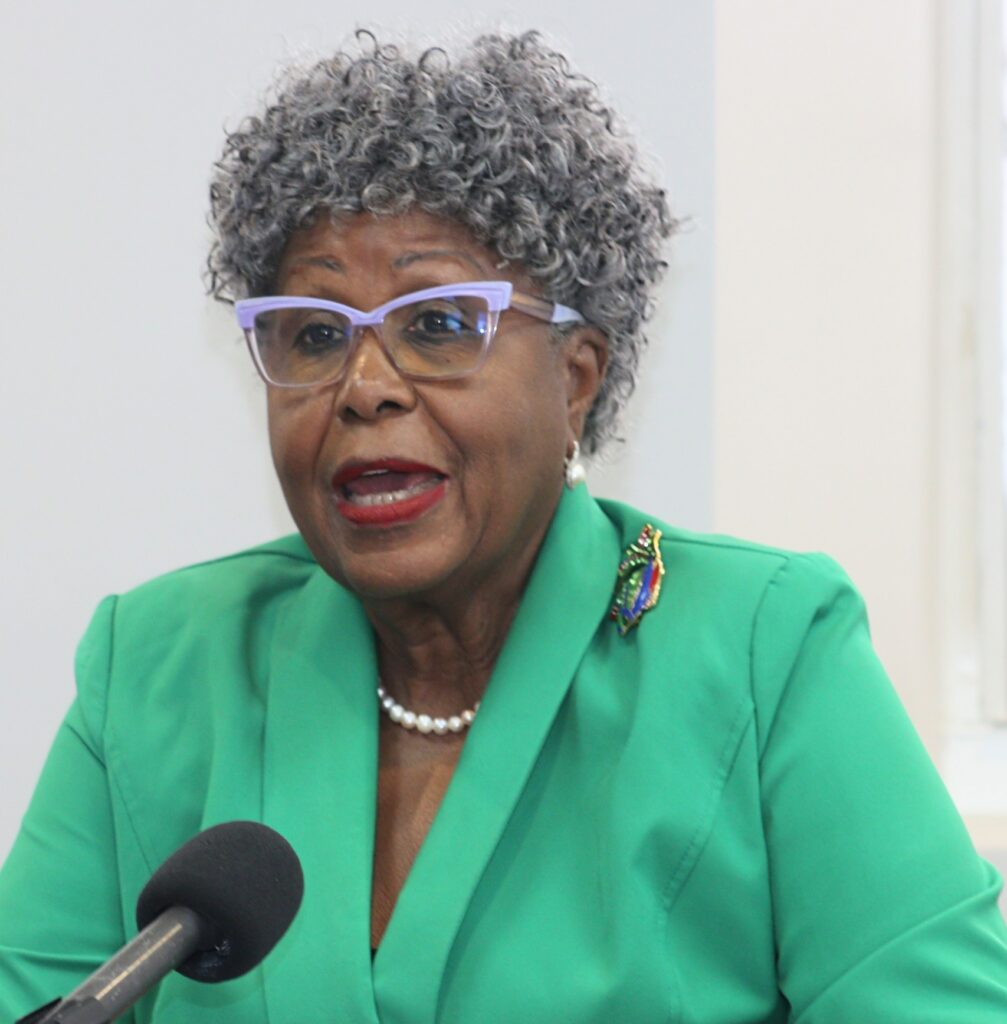
Farmers seeking government support could soon face tougher accountability requirements, as Agriculture Minister Dr Shantal Munro-Knight moves to reshape the relationship between the State and the farming community by tying public investment to performance.
Her announcement received immediate backing from the chief executive of the country’s oldest farming organisation, the Barbados Agricultural Society (BAS).
Outlining one of the central pillars of her vision for farming during a breakfast colloquium hosted by the Ministry of Agriculture and Food and Nutritional Security on Monday, Dr Munro-Knight made clear that while the government would continue investing in agriculture, it could no longer afford a system in which land, equipment and other publicly funded resources failed to translate into production.
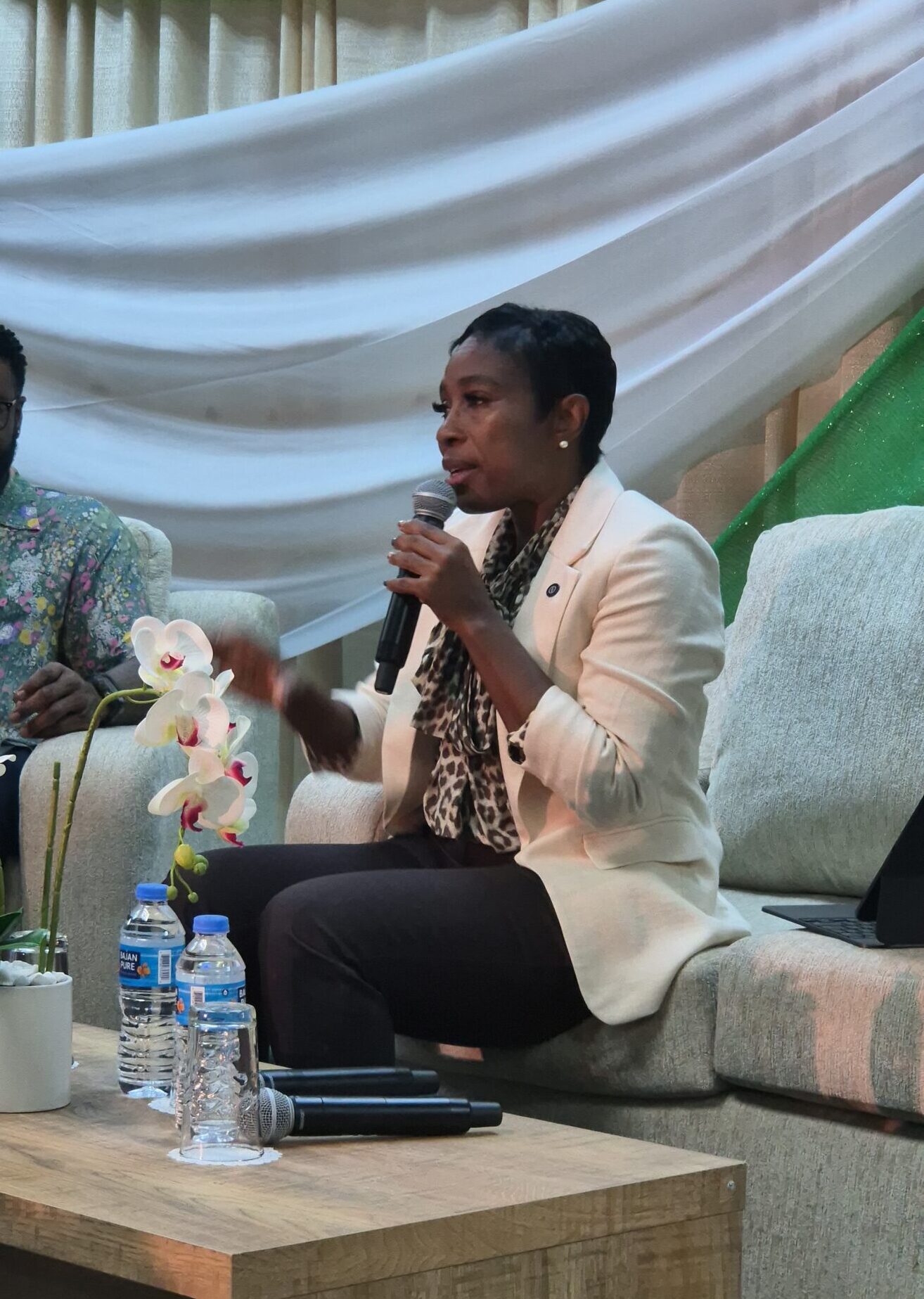
Agriculture Minister Dr Shantal Munro-Knight. (Photo Credit: Shanna Moore/Barbados TODAY)
The minister revealed that new policy and regulatory frameworks were being drafted to strengthen accountability, improve planning and ensure taxpayers received greater value from investments in agriculture.
“We are also looking at how we establish frameworks for what I am going to call ensuring that when farmers and others access resources from the ministry, that we can also, in turn, get what we need,” she said.
She highlighted instances of government-allocated farmland remaining idle months after being assigned and climate-smart farming inputs left unused after projects ended:
“We have farmers that we have given land to that have walked away, don’t use the land [for] six and nine months.
“Other people want land, but I can’t give up the land just because your name is on a piece of paper that’s there.”
She also disclosed that a ministry project had supplied some farmers with climate-smart inputs intended to improve efficiency, only for the initiative to end before the equipment was ever put into use.
“The project ended… no implementation on the ground. None of those inputs have been put on farms.”
Dr Munro-Knight argued that better stewardship of public resources must be matched by better information from the farming community, saying the ministry’s ability to plan production remained hampered by gaps in basic data:
“We are trying to establish an information portal, but I have heard from my technical staff that we don’t get the information from the farmers when we come to them.
“Farmers don’t want to tell us what are their yields, what they’re growing, and when they’re going to be harvested. How are we to plan strategically if we don’t have the information?”
While expressing a preference for voluntary cooperation, the minister indicated that legislative or policy changes could become necessary if the ministry continued to face resistance.
“If you want something from me, I need something from you.”
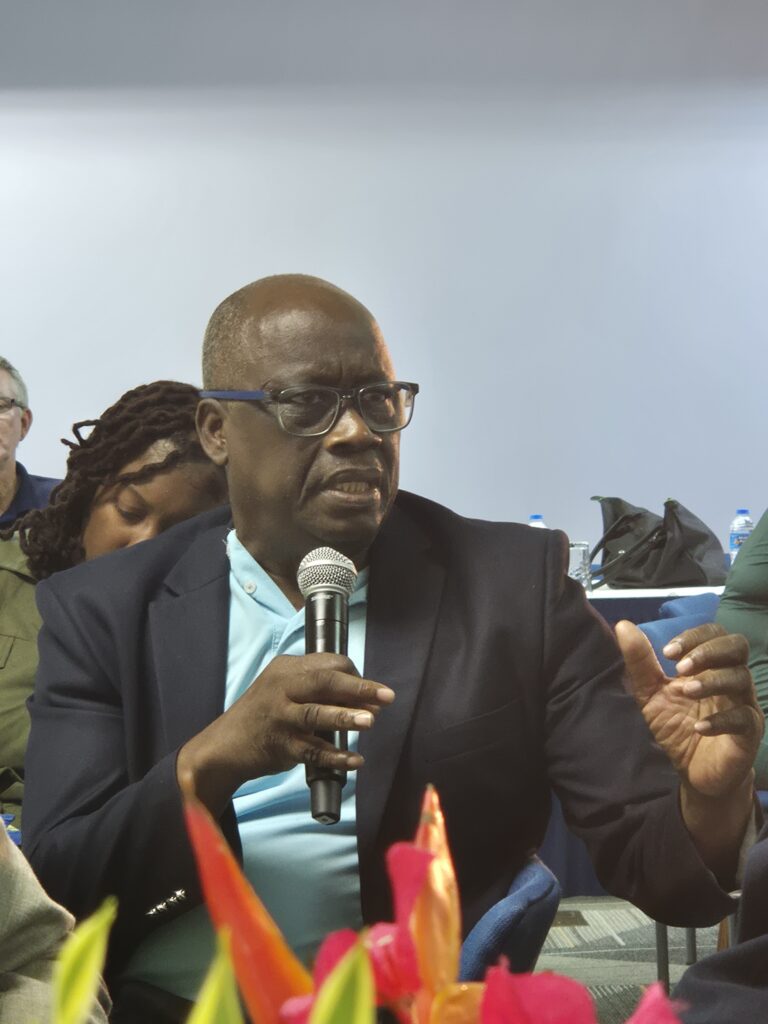
The direction outlined by the farm minister received immediate backing from Barbados Agricultural Society chief James Paul during the question-and-answer session that followed.
Paul declared that the country had reached the point where incentive programmes should be accompanied by clearer performance expectations.
“The Government of Barbados provides a tremendous amount of incentives to the agricultural sector.
“The question that needs to be asked is, is the Government insisting enough on performance, because that is an issue.”
The farming spokesman, who was a former Democratic Labour Party backbencher, cited the poultry industry, where production has declined despite continued incentives, arguing that government support should be accompanied by measurable outcomes.
“I think sometimes we need to tie the granting of incentives to also the provision of certain things at the same time because you can’t have it both ways.”
But before he finished speaking, Dr Munro-Knight interjected to underline that the ministry was already heading in that direction.
“I just want the record to note very, very clearly what you said,” she told him.
“So that when the ministry does it, then I can say that there’s agreement from BAS for it to be done because it’s one of the critical pillars for me.
“I’m very glad to hear that we are in perfect alignment, that incentives then should be very much tied to performance.”
Paul maintained that incentives remained an important policy tool but said stronger oversight could produce better returns, noting increased cattle production following state support for livestock imports:
“You have seen, as a result, this year an increase in overall production happening.
“So you can see that some incentives being given, something’s happening, but I think it needs to be tighter.”
(SM)
The post Govt mulls results-based farm funding appeared first on Barbados Today.