
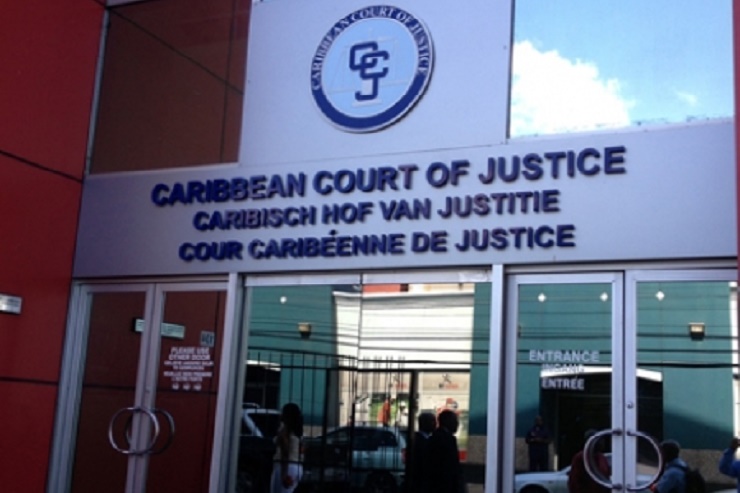
A landmark ruling by the Caribbean Court of Justice has set a higher bar for jailing offenders in minor cannabis cases, overturning a three-month sentence and signalling a shift towards non-custodial penalties in Barbados.
The country’s final appellate tribunal on Tuesday unanimously quashed a jail sentence imposed by the lower courts on convicted drug offender Danny Lamar Husbands, ruling that the custodial penalty was unjustified given the circumstances of the offence.
The judges ruled: “Having considered the statutory framework, the circumstances of the offence, and the relatively small quantity of cannabis involved, the court was not satisfied that the offence crossed the custodial threshold. We therefore held that the custodial sentence was unjustified and allowed the appeal.”
“The court quashed the sentence and substituted it with a non-custodial sentence, by ordering that the appellant be placed on a bond to be of good behaviour, for a period of six months. In default of compliance with the bond, he shall pay a fine of $675 within 14 days.”
Husbands was charged with unlawful trafficking of a small quantity of cannabis. He pleaded guilty and was sentenced to three months’ imprisonment.
In deciding the sentence, the magistrate took into account Husbands’s four previous convictions, including being fined for drug possession and cultivation of cannabis. The CCJ said the magistrate found it fit to impose a custodial sentence as the previous convictions failed to deter the applicant, and that there was an escalation in the nature of the offences.
Husbands unsuccessfully appealed to the Court of Appeal, arguing that the sentence was excessive. He then applied for, and was granted, special leave by the CCJ to challenge, among other things, the Court of Appeal’s decision.
The CCJ noted that the appeal principally concerned whether the Court of Appeal erred in upholding the custodial sentence, particularly whether the sentence complied with Section 35(2) of the Penal System Reform Act (PSR). That law provides that a custodial sentence must be imposed where the offence is so serious that only such a sentence can be justified.
The court also considered whether the lower courts improperly treated the appellant’s previous convictions and failure to respond to earlier sentences as increasing the seriousness of the offence, contrary to Section 4 of the PSR Act. It further examined whether the Court of Appeal had regard to sentencing practices in Barbados relating to small quantities of cannabis offences, whether it contravened established principles of horizontal stare decisis, and whether it erred in failing to obtain and consider a pre-sentence report.
The court also considered the legislative purpose of the PSR Act and concluded that it was enacted as part of a broader penal reform initiative designed to expand non-custodial sentencing options.
Reviewing Barbadian and comparative jurisprudence, the CCJ emphasised that Section 35(2) of the PSR Act establishes a high threshold for imprisonment and requires a court to determine whether a custodial sentence is absolutely necessary.
The regional tribunal noted that, for cannabis-related offences in Barbados, courts generally favour non-custodial sanctions where small quantities are involved, and that imprisonment in such cases has been comparatively rare.
While recognising those trends, the CCJ stressed that sentencing must remain case-specific and declined to create any inflexible rule that small-scale cannabis trafficking should always attract a non-custodial penalty.
The court concluded that both the magistrate and the Court of Appeal erred in their application of the PSR Act. It found that neither court undertook the analysis required by Section 35(2), namely whether the offence was so serious that only a custodial sentence could be justified. Instead, the lower courts focused principally on deterrence and the appellant’s previous convictions.
In relation to Husbands’ previous convictions, the CCJ held that Section 40(1) expressly prohibits treating an offence as more serious because of an offender’s previous convictions. The panel also referenced Barbadian jurisprudence indicating that a defendant’s failure to respond to previous offences must not be regarded as rendering a new offence more serious.
But the justices said that, under the law, a court may take previous convictions into account where they reveal a relevant aggravating factor related to the offence.
It concluded that the magistrate and the Court of Appeal erred in accepting that the appellant’s previous convictions justified a custodial sentence.
Further, under Section 37(4) of the PSR Act, where no pre-sentence report is obtained at first instance for a hybrid offence, an appellate court hearing an appeal against a custodial sentence is required to obtain and consider such a report.
The CCJ therefore held that the Court of Appeal erred by failing to obtain and consider a pre-sentencing report.
Husbands is being represented by Andrew Pilgrim SC and Martie Garnes, while Deputy Director of Public Prosecutions Krystal Delaney appeared in association with acting Principal State Counsel Kevin Forde. State Counsel Rico Yearwood appeared as a ‘friend of the court’ on behalf of the Attorney General.
(EJ)
The post Judges set limits on using prior convictions, urge pre-sentence reports appeared first on Barbados Today.