Government is moving ahead with 125 megawatts of battery storage as it seeks to stabilise the electricity grid, unlock 33.1 megawatts of constrained solar capacity and meet its 50 per cent renewable energy target by December 2027.
Minister of Energy Kerrie Symmonds said 60 megawatts of storage had already been secured through tenders and was expected to be installed by mid-2027, while another 65 megawatts is planned.
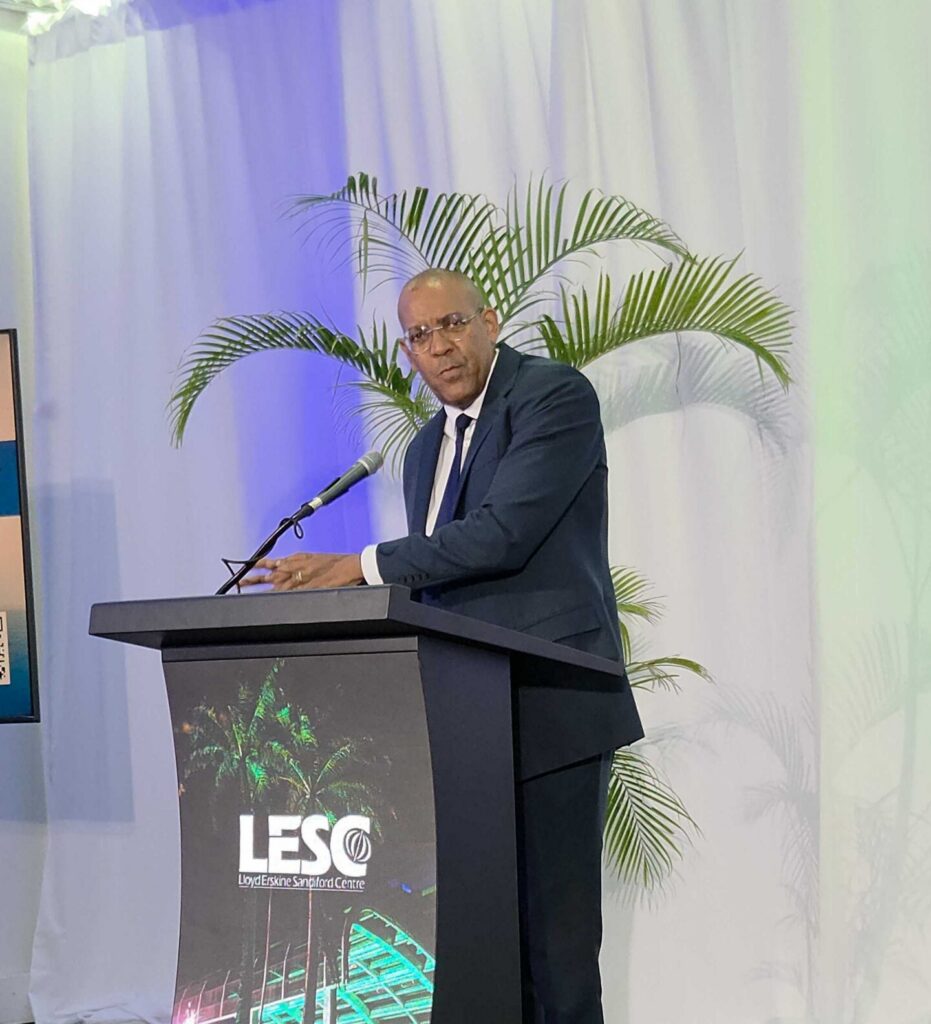
Speaking at the State of the Energy Sector event, Symmonds said Barbados would not be able to achieve its renewable energy ambitions without addressing technical, regulatory, financial and institutional challenges affecting the sector.
“We wouldn’t be able to meet the ambitions of the Government with respect to placing renewable energy on the national grid unless we were able to look specifically at some of the technical challenges which the country was facing, some of the regulatory challenges which the country has been facing, some of the financial and institutional issues which we have been looking facing, and which are all acting as challenges towards the ambition of getting to where we need to get with respect to renewable energy in Barbados.”
About 33.1 megawatts of licensed solar capacity is either restricted to half its output or remains unconnected to the grid.
Symmonds said Government had established a transparent and trackable priority queue to address the backlog, with solar licence holders willing to add battery storage to be given priority in the connection process.
Their systems are expected to be brought online under an eight-month schedule with set milestones.
“I want these licensees to know now, in the clearest possible terms, that they have not been forgotten and that a structured, prioritised, and time-bound process will now be followed in order to bring their investments fully online,” the minister said.
Symmonds described the grid challenges as a consequence of Barbados becoming a “victim of our own success”, as the expansion of solar generation outpaced the grid’s ability to accommodate it.
He said addressing those constraints was also critical to reducing Barbados’ exposure to international energy shocks, given the country’s heavy dependence on imported fossil fuels.
“As a country that imports virtually all of its fossil fuels, we simply cannot control developments in the international markets, but we must take the deliberate steps available to us to reduce our vulnerability to their consequences,” Symmonds said.
Government is pursuing a hybrid electricity grid combining renewable energy, natural gas and energy storage as part of that strategy.
Symmonds also outlined plans to give Barbadians a greater financial stake in the energy transition through the proposed Barbados Energy Special Purpose Vehicle.
Under the proposed structure, local credit unions, pension funds, insurance companies and individuals would be able to acquire up to 49 per cent of new energy storage projects, while principal sponsors would initially retain 51 per cent.
“This approach will allow Barbadians not only to build storage infrastructure required to strengthen the national grid, but also it will create economic opportunity for every Barbadian to participate economically in the country’s energy transition,” he said.
Government is also introducing statutory guidelines aimed at streamlining ministerial exemption powers under the Utility Regulation Act while maintaining the Fair Trading Commission’s independent oversight and consumer protections.
With Barbados targeting 70 per cent renewable energy by December 2029, the Barbados Light & Power Company has also been instructed to update its integrated resource and resilience plan.
The revised approach is expected to consider wind, biomass, hydrogen, waste-to-energy and marine technologies, alongside demand-side management and conservation measures, as Government seeks to build a more resilient and affordable electricity system.
(RR)
The post Battery plan to unlock stalled solar appeared first on Barbados Today.