
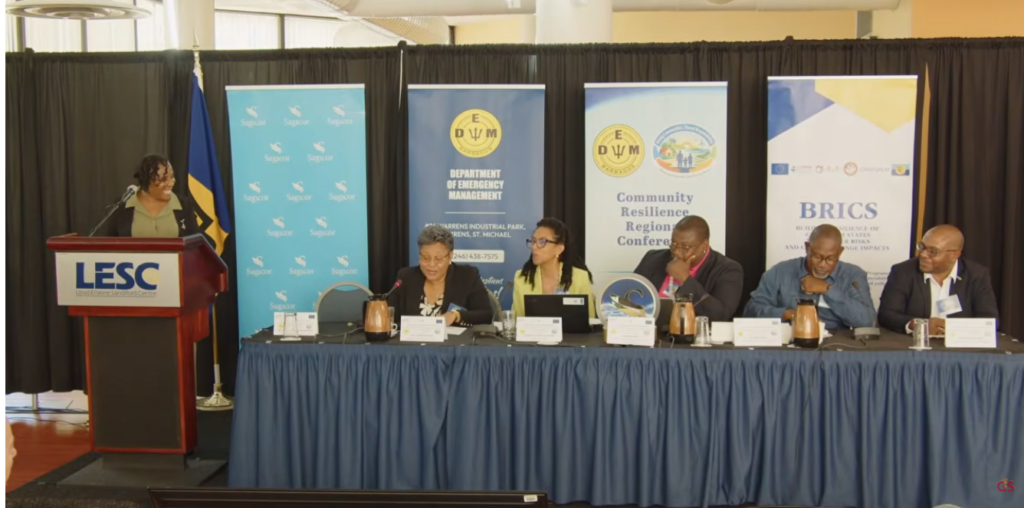
Caribbean governments and communities must urgently rethink how they prepare for increasingly complex and compounding climate threats, with a shift towards anticipatory risk management that places people at the centre of development, the Caribbean Disaster Emergency Management Agency (CDEMA) has urged.
CDEMA’s Executive director Elizabeth Riley told an annual conference on Comprehensive Disaster Management that traditional disaster management models are no longer sufficient. Amid a rapidly changing regional landscape, the agency urged a shift from reactive disaster response to proactive, anticipatory risk management that puts local populations at the absolute centre of development.
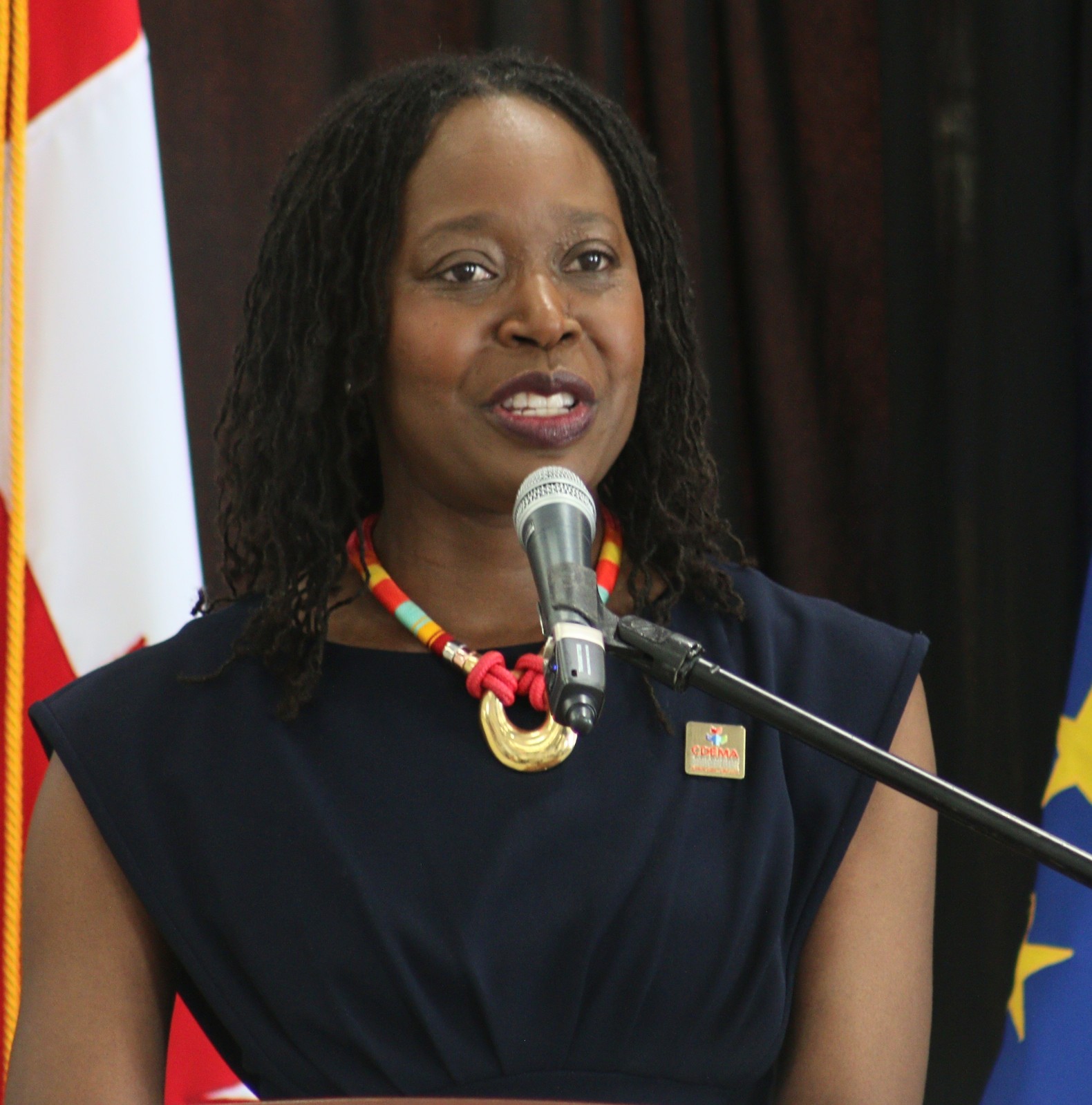
Executive Director CDEMA Elizabeth Riley. (File Photo)
“The Caribbean is one of the most disaster-prone regions in the world; we are a real laboratory for hazards in our space,” Riley observed, highlighting the US$12.2bn ($24.4bn) in damages and losses caused by Hurricane Melissa in Jamaica as a stark reminder of this vulnerability.
“However, the Caribbean has also long been recognised as a global leader in disaster risk management. We understood very early that to protect our people, safeguard our livelihoods, and preserve our development gains, we had to pivot from a posture of managing disasters and their aftermath to managing risk ahead of those impacts.”
This philosophy birthed the region’s comprehensive disaster management (CDM) strategy. Celebrating its silver anniversary in 2026, the CDM framework champions a “whole-of-society” approach, said Riley, asserting that resilient communities form the bedrock of resilient states.
Yet the CDEMA head warned that both Caribbean communities and the threats they face have transformed dramatically over the last quarter of a century. Demographic shifts are rapidly altering the social fabric, with the United Nations Economic Commission for Latin America and the Caribbean (ECLAC) projecting that one in four Caribbean citizens will be aged 60 or older by 2050. Rising crime, migration and geopolitical influences are introducing complex new vulnerabilities.
Simultaneously, climate-induced hazards are no longer occurring in isolation but are instead cascading and compounding.
“We are no longer responding to hazards in isolation,” Riley said. “Our understanding of community resilience must evolve, not only with these changes, but importantly in anticipation of them. It must encompass the capacity to adapt to uncertainty, sustain livelihoods, maintain social cohesion, and continue progressing despite interconnected risks.”
Recent events have exposed the limitations of historical data in preparing for modern crises. During Hurricane Melissa, pre-impact hazard maps failed to anticipate the multi-hazard convergence of a 14-foot storm surge and more than 20 inches of intense, simultaneous rainfall.
Riley also pointed to Hurricane Beryl, the earliest Category 5 hurricane on record in the Atlantic, which shattered previous assumptions about disaster preparedness timelines.
“Beryl challenged our assumptions about seasonality and the timing of community preparedness,” they noted. “We always believed we could take our time after the season starts in June, as long as we were ready for the peak in September. Beryl told us something entirely different, forcing us to look at community preparedness with absolute urgency.”
A key area of concern raised during the address was the disconnect between early warning dissemination and community action. Recalling the devastating impact of Hurricane Dorian in the Bahamas, Riley highlighted that despite flawless forecasting and clear evacuation notices from the Bahamas Meteorological Service, many residents chose not to evacuate.
“We need to get a better understanding of behavioural science,” she urged. “Why do people make the decisions they do? What is their perception of risk? If our communication is not triggering the appropriate survival actions, then we must re-evaluate our approach.”
To address these challenges, the CDEMA boss is advocating a structural rethink of community governance. The speech questioned whether the region can continue to rely solely on traditional volunteer-led frameworks, such as Barbados’ district emergency organisations (DEOs).
“Governance needs a revisit. Has the time come for us to integrate community resilience arrangements into the paid, structured mechanisms of government?” Riley asked, acknowledging that the assumptions of volunteerism often falter under catastrophic, prolonged stress. “Volunteers are the glue of the system, and they must be tangibly supported and recognised.”
She highlighted the role of cutting-edge technology, including geospatial analytics and “digital twins”—virtual models of countries that simulate future climate scenarios at community scales. Funded in part by the European Union, these tools, alongside the Caribbean Community Risk Information Tool (CCRIT), will be vital in mapping emerging hazards such as extreme, prolonged heatwaves.
The CDEMA chief issued a charge to delegates: “If we leave this conference having challenged our assumptions about what community resilience is and what it must become—with a renewed commitment to shared responsibility and a determination to place people at the centre of resilience building—then we will have taken a monumental step toward shaping the Caribbean of tomorrow.”
(RR)
The post Community resilience must evolve as climate threats intensify, CDEMA warns appeared first on Barbados Today.