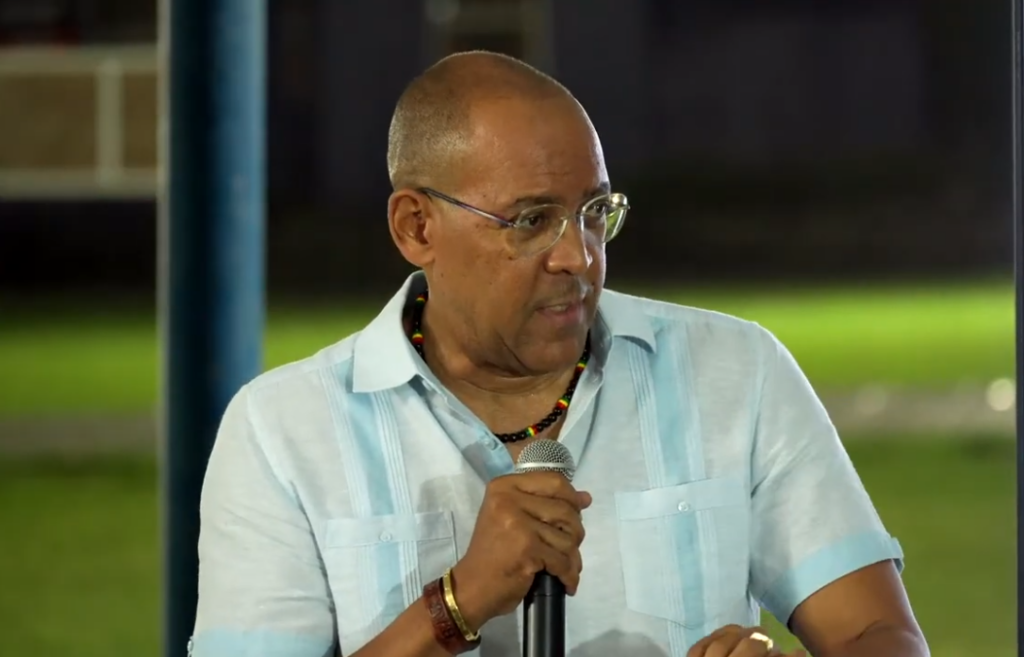
Government interventions are holding down fuel and electricity costs for households, with motorists paying about 50 cents a litre less at the pump than market rates would otherwise dictate, Minister of Energy Business Development and Commerce Kerrie Symmonds has said.
The measures, introduced in this year’s Budget, have kept petrol prices below what they would otherwise have been, said the energy minister.
The government continues to absorb 50 per cent of the fuel clause adjustment and cap value added tax (VAT) at 7.5 per cent on the first 250 kilowatt-hours of electricity.
Symmonds said: “In the context of shielding consumers, let me say to you that right now, you are paying $4.01 at the petrol pump for gasoline. Ideally, if it weren’t for the budgetary interventions in March, you would be paying $4.57 cents at the petrol pump, and had the technical advisors of the ministry had their way when we had to do the increase from $3.87 a couple months ago.
“We have not increased it during the course of the last two months, you would have noticed people don’t talk about that — it would have been $4.20 as opposed to the $4.01 that is now being paid. So the government of Barbados is really absorbing a substantial amount of what would otherwise have to be paid by every consumer who’s putting gasoline or diesel in his or her car.
“In addition to that, we have absorbed 50 percent of the increase in electricity in the fuel clause adjustment, and that translates into an average of $16 for every household, as opposed to $32, which the average would be had it not been for government’s intervention.
“And equally, we’ve capped the VAT on the first 250 kilowatts of electricity at 7.5 per cent as opposed to it being VAT at 15 per cent. So when in your house and you’re burning your light and you leave the light on all night or whatever, remember that there is a cap on the value-added tax that has been put there so as to enable it to be easier for the average Barbadian to have their light bill managed.”
(JB)
The post Symmonds: Petrol could be far higher without fuel subsidies appeared first on Barbados Today.