
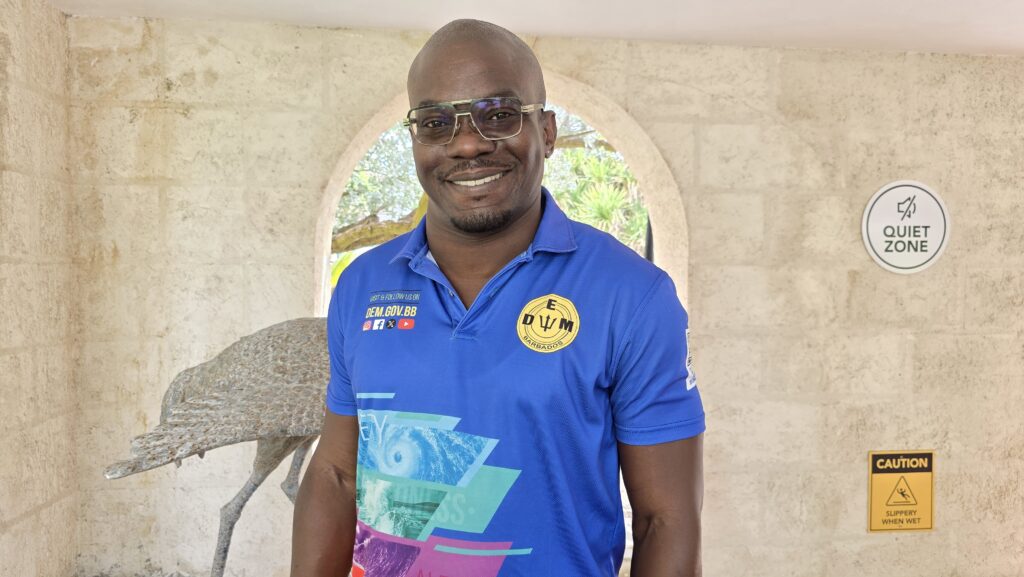
The tourism industry is being urged to strengthen its preparedness and security measures beyond hurricanes and floods, as the island heads into the 2026 hurricane season with growing awareness of new and emerging risks.
While preparations are often focused on natural hazards, the accommodation industry must also plan for other types of incidents, the Department of Emergency Management’s (DEM) Simon Alleyne told reporters as the Barbados Hotel and Tourism Association (BHTA) launched its 2026 Emergency Management Workshop at The Crane Resort, St Philip.
Alleyne said: “It’s also important to understand that in this society that we’re in, it’s not only about the impact of natural hazards; we could also have a situation where you might have armed intruders trying to get onto a property. So, along with doing evacuation and exercises, it’s also important to do lockdown procedures. How would you lock down your hotel and protect your guests and your staff from an armed assailant trying to cause damage?”
Barbados faces a range of multi-hazard risks that require the hospitality industry to have proper systems in place, he stressed. “Barbados goes into the hurricane season from June to November, but during that time, there’s also the possibility of other hazards occurring, whether it’s volcanic eruption, tsunamis, earthquakes. So it’s important that our sector, a very critical sector to our economy, the tourism sector, is ready.”
The DEM programme officer underscored the importance of preparedness within the tourism industry, particularly through planning, training, and collaboration.
“My presentation is basically on emergency preparedness for the hotel sector to remind them of the importance of having emergency plans, to remind them of the importance of testing, doing a small drill or evacuation exercise at the hotel or property, and, more importantly, to use the public awareness mechanism within the BHTA to share information. I think that there’s a lot that hotels can learn from each other, even in terms of how they go about planning for emergency preparedness.”
Alleyne also pointed to advancements in technology being used by the Barbados Meteorological Services to improve forecasting and response:
“[BMS] have really improved their equipment, their radar, and of course, the access to information that we can respond faster to hurricane alerts or any information regarding earthquakes or even tsunamis. So one of the things that is also very important is the use of drones, for example, to conduct or to assist in damage assessment. That’s very important, where you can get an aerial view and a mapping of a particular area that will be impacted by a major storm surge, flooding, or even a hurricane. So I think that the technology, it is very important.”
He further highlighted the role of the BMS’s national multi-hazard early warning system in strengthening preparedness and improving how alerts are delivered to the public:
“Bajans will get warnings on particular hazards on their phones, via radio, as well as the television, [so] that they can receive that message. If the person is hearing impaired, if they’re watching TV, they would see the message come up in text or there may be somebody on the screen doing sign language, and it is important that we consider the disabled in all that we do.”
Alleyne commended hotels for incorporating accessibility considerations into their emergency planning.
“I think that most of the hotels have pathways, walkways, and ramps, but it is also important to ascertain if the person that is the guest at the hotel may be more amenable to staying on a bottom floor as opposed to the top floor because that’s a simple thing that can be done. And if they do use the top floor, they would have to understand that during an emergency situation, the elevators may not be functioning, so they will need someone to help them get down the stairs.”
Caregivers and accommodation providers must work closely to ensure persons with disabilities are not left behind during emergencies, he suggested.
He also urged all Barbadians to take proactive steps to prepare for disasters.
“It is very important that the clean-ups in our community should happen now. The clearing of drains, the bushing, weeding… clearing drains and gutters, having a tarp at home, and not just stocking up on the canned goods as usual, but also having hammers, nails.”
He further urged households to go beyond basic supplies by ensuring they have bottled water, battery packs, and cash on hand. He also encouraged families to prepare emergency “grab bags” for all household members, including children, the elderly, and pets.
Alleyne also stressed the importance of having home and property insurance in place.
(LG)
The post DEM: Be prepared for more than natural disasters appeared first on Barbados Today.