
A discovery of three novel microbes in sargassum seaweed could reposition Barbados from battling an environmental nuisance to building a high-value biotechnology industry, with the head of the state export promotion agency urging rapid protection of intellectual property and investment to anchor the work here
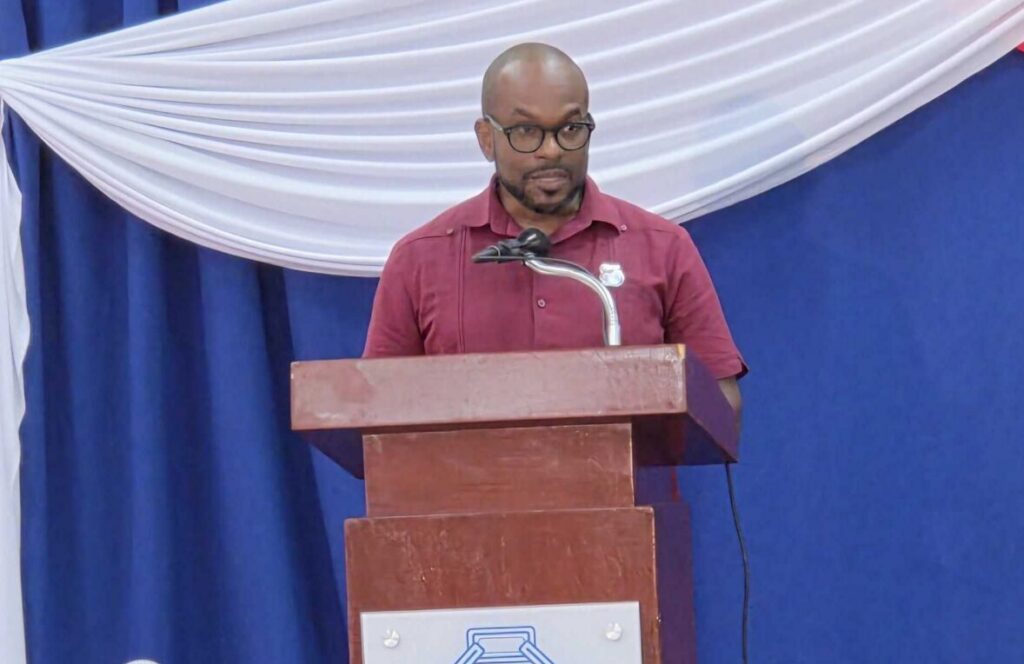
On the heels of the groundbreaking findings of Dr Bidyut Mohapatra and his UWI research team, Mark Hill, the chief executive officer of Export Barbados (BIDC), characterised the discovery as a total game-changer that shifts the conversation from environmental crisis to industrial goldmine.
The CEO’s enthusiastic endorsement comes as the island seeks to transition towards what he calls “intelligent industrialisation”, leveraging the power of biology to fuel a high-value export economy.
“My thoughts on this, this is phenomenal, and this is the type of activities that Export Barbados will continue to support and champion,” Hill told Barbados TODAY.
Microbiologist Dr Mohapatra has identified three new species of microorganisms in decomposing sargassum seaweed, marking a first for the island and gaining international scientific recognition. Validated by global research bodies, the discovery includes Streptomyces sargassi, a microbe with potential applications in antibiotic production, plastic degradation and sustainable biofuel development.
The work, funded over a decade by Dr Mohapatra himself, has attracted international interest but is being steered towards building a domestic biotechnology industry, with ambitions to begin commercialisation by August despite current infrastructural constraints.
Hill noted that for over a decade, the influx of sargassum was viewed primarily as a coastal nuisance, but the persistent work of Dr Mohapatra has finally unlocked the seaweed’s hidden biological potential.
Hill indicated that Export Barbados is prepared to move beyond mere praise and into active partnership.
“One of the things we’re going to do is come alongside the scientists and see how we can provide the necessary support that they need to scale and to help further secure the intellectual property as they move towards the commercialisation strategy,” Hill said.
The breakthrough involves the identification of unique microbial strains that thrive within the sargassum environment. These microbes are not just scientific curiosities; they possess specific biotechnological capabilities that could revolutionise multiple industries. According to Hill, the intellectual property associated with these microbes represents a massive opportunity for Barbados to assert itself on the global stage.
“This is a phenomenal breakthrough to find and identify a unique microbe within the Barbadian context that has so much capabilities from a biotechnology perspective,” Hill said.
He believes that the true value lies in the ownership of these biological blueprints: “So that intellectual property we invested in Barbados can open up a tremendous degree of industrial opportunities that are owned by Barbadians and that can be deployed by Barbadians and Barbados IP across the globe.”
Hill was particularly vocal about the need for the national narrative to pivot towards these kinds of success stories. He lamented that while the news cycle is often dominated by economic fluctuations or social issues, the “hot topic” should be the nation’s scientific prowess.
“I was excited about it,” he said. “Very often the news reports about crime, the news reports about things that are, you know, economics, hot topic stuff, but this is hot topic stuff. This is a big breakthrough for us. We celebrate the scientists, we celebrate the support infrastructure, we celebrate University of the West Indies for this. This is, to me, one of the biggest achievements that we’ve made in the scientific community in Barbados for the longest time.”
The CEO also detailed how this discovery fits into the broader “GIGA” programme, a strategic initiative by Export Barbados centred on science-based industrialisation. The programme aims to move the island away from traditional, low-margin exports and towards a future defined by “intelligence industrialisation”. Hill described a vision where physics, biology and computational power converge to create wealth.
“We call it intelligence industrialisation, where we are leveraging physics, we’re leveraging biology, and therefore what that means is that we’re looking at delivering for Barbadians in industry the lowest-costing electron, creating high-value molecules, and, compute and bytes and tokens in terms of how we use compute to really begin to create new levels of value for the economy.”
International corporations and research institutions in the United States are already showing interest in Dr Mohapatra’s work but Hill remained confident but cautious. He acknowledged that the opportunity is “way bigger than Barbados” and that a global environment is necessary for the discovery to reach its full potential. But he was adamant that the island must remain the primary beneficiary and the central hub for its development.
“The global community circling is a positive thing for us,” Hill said. “What I would say is that Barbados can also serve as the home for those persons who want to explore and drill down into this intellectual property. The microbes seem to have a unique relationship with Barbados from what I gather so far.”
To ensure that the intellectual property remains in Barbadian hands while still attracting foreign direct investment, Hill pointed to the existing legislative and tax frameworks designed to foster innovation. He highlighted the “patent box” tax framework, which can reduce corporate taxes from nine per cent to as low as four-and-a-half per cent for companies engaged in research and development and IP development on the island.
“Barbados has been developing the ecosystem for the last few years,” he said. He also cited the Ministry of Innovation, Science and Technology’s recent collaborations with international bodies such as the University of Waterloo and the United Nations Industrial Development Organisation (UNIDO)as proof that Barbados is becoming a “magnet for global scientific industrial players”.
One of the most promising aspects of the discovery is its potential to address the long-standing issue of “brain drain”. Hill argued that by creating a high-tech biochemistry and engineering sector around these microbes, Barbados can provide the high-paying, intellectually stimulating jobs that young scientists currently seek abroad.
“Intellectual property like this being retained in Barbados creates a new biochemistry engineering door that can slow down brain drain and reverse brain drain,” Hill said. He pointed out that Barbadian scientists are often looking for compensation that is highly competitive locally but still affordable for global research firms. “From a scientist, we’ve got decent jobs that are still affordable for the global community.”
The commercial applications for the microbes are vast, ranging from the production of new antibiotics to the environmental remediation of plastics. Hill described the discovery as a “platform” that requires a unified national effort.
“What he’s discovered for us is a platform that we need to rally around, get behind, get the private sector, not just the government, to put money behind him,” he urged. “Barbados just rally behind Barbados around a certain set of molecules, fat and oils. Now we need to put some capital around this intellectual property and begin to rally around the microbes and biotechnology opportunity that these scientists and scientific communities just created for us.”
Hill extended an open invitation to the global scientific community to participate in the Barbadian “Life Economy”, emphasising the island’s unique logistical advantages, such as its robust airlift capacity. He envisioned a future where the cargo holds of planes leaving the Grantley Adams International Airport were filled not just with traditional goods, but with high-value scientific breakthroughs.
“These breakthroughs are just the beginning,” Hill concluded. “We celebrate with them in this breakthrough. This is good news, and we in the scientific and industrial community, we’re celebrating with them.”
(RR)
The post Export promoter hails sargassum microbe discovery as potential economic breakthrough appeared first on Barbados Today.