Food production could come under growing pressure as a new climate report warns that Barbados may face moderate to severe drought for up to four months each year by mid-century, adding to the water shortages, heat damage and falling crop yields already confronting farmers.
Producers told Barbados TODAY that conditions on the ground are already matching the report’s projections.
The study, titled Child-Centred Climate Analysis for Building Resilience, was commissioned by the UNICEF Eastern Caribbean Area Office and conducted by consultancy firm Meru Labs across Barbados and five other Eastern Caribbean islands.
The findings revealed that moderate to severe drought conditions could occur for three to four months each year on average by mid-century — up from a baseline of 21 per cent — with Barbados and Grenada highlighted as being exceptionally vulnerable.
The implications for the country’s agricultural output and broader resilience are serious. The report highlights research demonstrating that major drought events can slash food production by 20 to 40 per cent, posing a direct threat to regional food security. Experts further warn that repeated climate shocks risk triggering long-term consequences for children, including malnutrition and disruptions to education due to affected school sanitation systems.
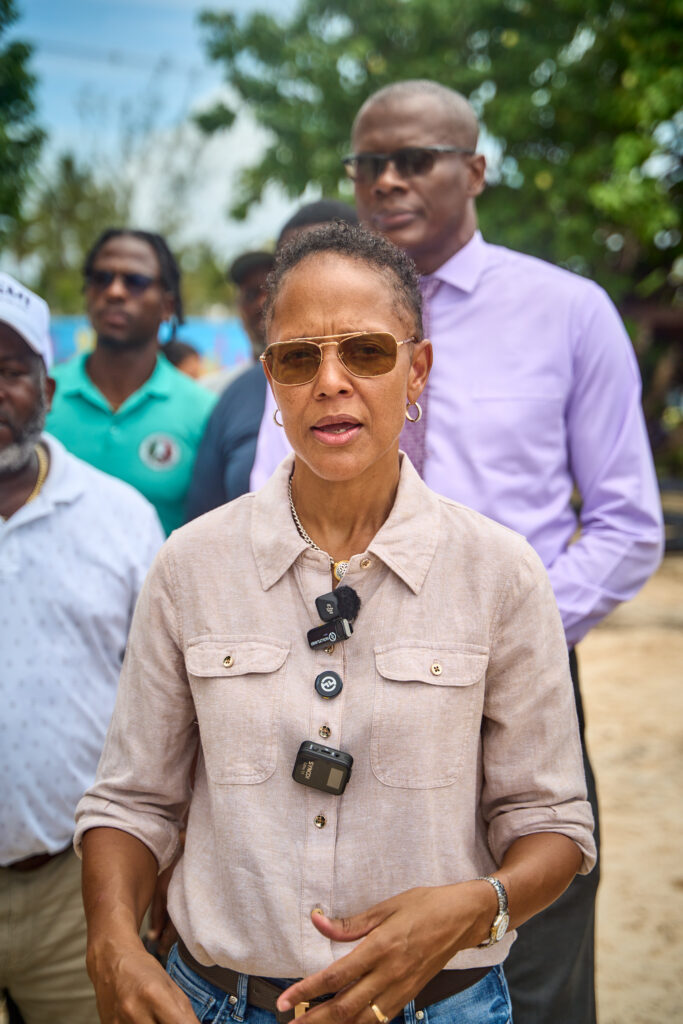
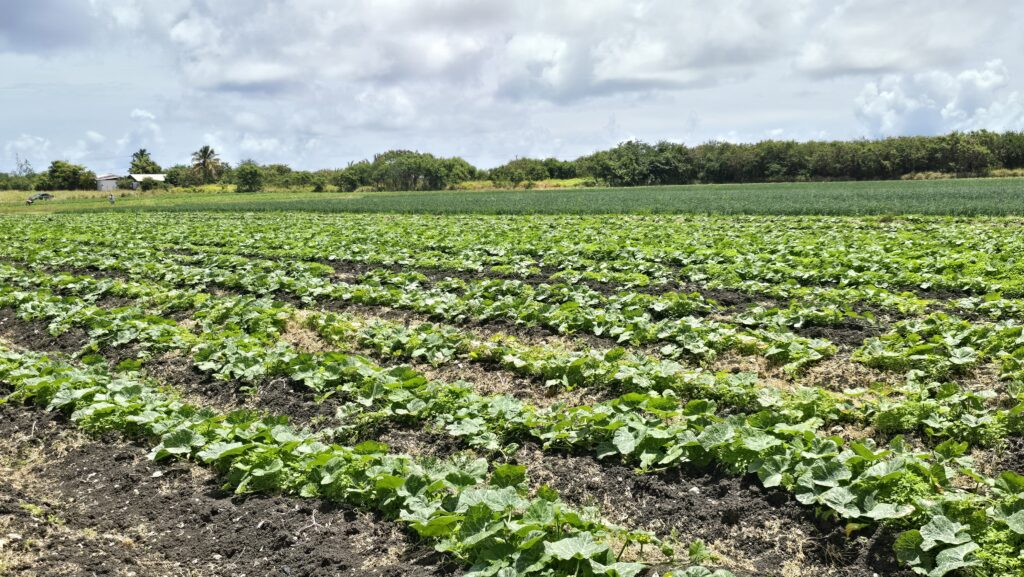
Ronald Moore, secretary of the St George Farmers Cooperative, said members were suffering marked drops in output as intense heat stress and patchy rainfall took a heavy toll on crops.
He said: “Production has clearly reduced. There’s a big difference between groundwater and rainwater. From the time the rain falls, you see the plants perform way better, the growth is faster, and you get a more solid structured fruit or vegetable. We are seeing smaller yields for sure, and in some cases, you are getting a lot of heat damage.”
Moore said that even when farmers apply continuous groundwater through irrigation, extreme atmospheric temperatures remain severe. “No matter how you water, it is just the humidity that you’re experiencing that causes the plants to wither and sometimes cook.”
He recalled a fellow grower who planted nearly two acres of tomatoes, only to see the crop fail entirely. “They were strung up and at a mature stage where they should be flowering, but I haven’t seen any fruiting whatsoever. It is mainly because of heat stress; the heat above ground is just so much that flowering just will not take place.”
The environmental conditions have forced many growers to alter their cropping plans and abandon high-water vegetables altogether. “Root crops are definitely down, tremendously down,” Moore added. “Things like beets and carrots are, to some extent, almost non-existent because carrots especially need a lot of water. A lot of people are not planting carrots at all.”
Smallholders who rely exclusively on rainfall are being pushed to the brink. While sporadic downpours offer temporary relief, Moore said they were insufficient to sustain crops over time.
“The downpours we’re getting don’t last for very long and aren’t consistent,” he said. “Even if you get a heavy downpour for a few hours and then get periods of days afterwards with little to no rain, it puts the plant in a lot of stress, and you’re not getting the yield that you want.”
For other producers, operational challenges have compounded the difficulty of managing the harsh weather. Hamilton Corbin, who trades as Samuel Corbin by His Precious Hands, said that while irrigation costs naturally rise during dry periods, growers must adopt long-term moisture-retention methods to cope with unpredictable weather patterns.
“When temperatures increase, we have to try to look at doing a bit more mulching,” Corbin said. He expressed frustration at the reactive nature of responses to seasonal dry spells. “We usually wait till we have these drier conditions to try to put things in place to mitigate it. When we have good rains, we usually forget about droughts. I think we’ve got to be a little bit more proactive and show more urgency about this matter.”
Corbin called for authorities to accelerate plans for agricultural catchment systems discussed in previous years, warning that without reliable infrastructure, growers remain entirely at the mercy of nature. “The real harsh reality of it is that it just would not be what you want. Some things you can’t do anything about because it’s a force of nature, and until that changes, we have to deal with the onslaught of it.”
Other farming leaders acknowledged that government action would be crucial to sustaining agriculture in the face of the projected four-month annual droughts.
Peter Alleyne, president of the Fruit and Vegetable Division at the Barbados Agricultural Society (BAS), said access to consistent water remained the main concern among producers in farming districts such as St Lucy, St Philip and Gibbons, Christ Church.
“The farmers are crying out for more water,” Alleyne said. “The government is doing what it has to do to help farmers, but the wells can only give so much water at present. If they have a desalination plant, they could be pumping water from the sea, or using brackish water for irrigation.”
Addressing measures growers can adopt immediately, Alleyne pointed to the need for protective farming practices.
“Farmers need to do a lot more mulching with grass and leaves. It keeps the earth from heating up so you can get good germination and plant growth,” he noted, adding that recent sporadic rains, while welcome for recharging aquifers, are quickly neutralised by extreme sunshine.
“The sun comes out double hot afterwards and dries out the earth really, really fast.”
With the Barbados Water Authority and the Ministry of Agriculture exploring long-term reclaimed-water initiatives, farmers face an uncertain outlook.
As Moore observed, if water supplies tighten further under prolonged climate stress, national priorities will inevitably lean towards human consumption over crops. “Domestic use is going to be looked after first because it’s all about people’s survival,” Moore reflected. “Something will have to give, and we have to wait and see how it plays out.”
(RR)
The post Farmers feel the heat as drought threat grows appeared first on Barbados Today.