
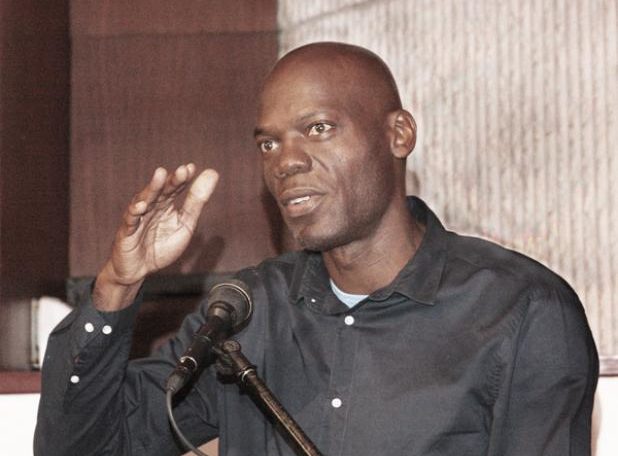
Barbados’ economy may be stable on paper, but deeper structural weaknesses remain, according to economist Professor Don D. Marshall.
Responding to the Central Bank’s first quarter 2026 report released earlier this week, the Professor of International Political Economy and Development Studies acknowledged that the statistics represent a “remarkable stabilisation” following years of adjustment, but argued that the current trajectory does not yet amount to meaningful economic transformation.
The Central Bank report, delivered by Governor Kevin Greenidge, showed that the economy grew by 1.7 per cent in the first quarter, extending a run of 20 consecutive quarters of expansion, with tourism, construction and services driving activity.
Inflation remains low, unemployment has declined, and international reserves stand at about $3 billion.
Marshall said these indicators highlight successful macroeconomic management, crediting policymakers for restoring credibility and stability after successive global shocks and an IMF-supported reform programme.
However, he cautioned that stabilisation should not be mistaken for transformation.
“Measured against the deeper question of transformation… the report also exposes persistent structural limits that cannot be resolved through technocratic metrics alone,” he wrote.
Marshall argued that growth continues to be concentrated in tourism, construction and services, with most private investment still tied to real estate and tourism-related activity.
“This is not diversification in any meaningful developmental sense. It is sectoral deepening within an already narrow structure,” he said, warning that Barbados remains heavily dependent on external demand.
He noted that while there have been modest gains in agriculture, including several consecutive quarters of expansion, these remain small relative to the country’s reliance on imported food and do not yet signal a fundamental shift toward food security or agro-industrial development.
The professor also raised concerns about fiscal constraints, despite strong headline figures.
While the Government has maintained a primary surplus and reduced its debt-to-GDP ratio, he noted that debt remains high and financing needs are increasing.
Marshall questioned whether current investment patterns are sufficiently transformative, warning that fiscal discipline alone could reinforce existing economic structures if not paired with strategic diversification.
Marshall further highlighted what he described as a disconnect between strong external indicators and the lived experiences of many Barbadians.
Although inflation remains relatively low on average, he pointed to expenses that directly affect households such as rising costs in key areas such as food, transport, education and healthcare.
He also questioned the quality of employment being generated, despite an unemployment rate of 7.2 per cent at the end of 2025, suggesting that many jobs remain insecure or insufficient to keep pace with rising living costs.
“The technocratic language of labour market indicators underplays the social consequences of narrow growth,” Marshall said.
While the Central Bank stressed the strength of Barbados’ external position, including healthy foreign reserves and sustained economic expansion, the professor argued that development should be assessed beyond traditional macroeconomic indicators.
He said economic policy must also consider how growth is distributed, the types of opportunities being created, and whether the current model is expanding economic mobility and resilience.
“Stabilisation was necessary; it was not sufficient,” he said.
Marshall suggested that Barbados now faces a critical choice, that is, whether to continue operating within its existing economic model or pursue a more deliberate strategy aimed at diversification and long-term resilience.
“….The deeper challenge remains unresolved. Without confronting limited diversification, constrained fiscal sovereignty, and the lived dissonance between macro success and everyday hardship, economic management risks becoming an exercise in maintaining stability within inherited limits,” he said.
“The task is not merely to manage the economy well, but to remake it on terms that serve Barbadians more fully and more freely.”
The post Growth strong, but transformation lacking – Marshall appeared first on Barbados Today.