Silence by the media industry and the “offensive” lack of a unified, sustained voice have made it easy for policymakers to delay fundamental changes to laws for Press freedom.
That was the assessment of executive director of the regulatory Broadcasting Commission of Jamaica, Cordel Green as he took part in yesterday’s Caribbean Broadcasting Union’s (CBU) webinar Navigating Change: Protecting Press Freedom to mark World Press Freedom Day 2026.
Green said in this age the public did not need more information as it was drowning in it.
“What is urgently needed, even if not yet recognised and spoken about openly, is a reliable anchor of verified, objectivelypresented facts, a fixed reference point against which the torrent of social media noise, AI (artificial intelligence)generated fabrication and weaponised disinformation can be measured and assessed,” he stated.
What was not being discussed sufficiently, he noted, was the deliberate structural conflation of news reporting with opinion presentation.
“On too many news platforms, the anchor desk has become an opinion platform. The reporter has become a commentator. The news presenter and the expert analyst are now professionally indistinguishable. They are blended seamlessly into a single media experience . . . . The consequences are professionally catastrophic,” he added.
Agenda
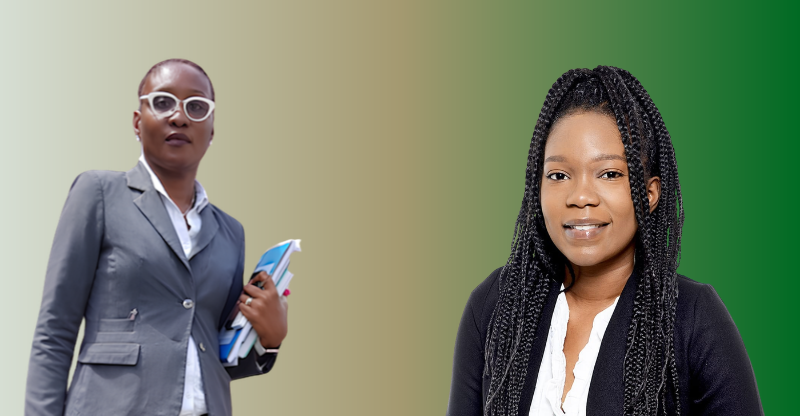
The webinar brought together several resource personnel, including senior lecturer at the Caribbean Institute of Media and Communication Dr Livingstone White; past president of CARICHAM (the Network of Caribbean Chambers of Commerce) Petipha Lewis, chief executive officer of Media InSite Allison Demas; Eric Falt, director of UNESCO Caribbean, and veteran journalist Denis Scott Chabrol, with former CBU president Dr Claire Grant moderating. CBU president Anthony Greene and its secretary general Dr Sonia Gill also took part.
Green said he believed the news anchor expressing visceral political opinion in the same news broadcast would lead the reasonable viewer, listener and reader to be “entirely justified in asking where does the reporting end and the agenda begin”.
“If journalists are publicly and consistently expressing strong personal opinions across broadcasts, social media, public appearances, the reasonable person cannot be expected to quarantine those opinions from their assessment of that journalist’s news reporting. They are whole people, credibility indivisible. So the profession cannot have it both ways,” he said.
He used the example of United States President Donald Trump’s “reprehensible” conduct of open contempt for journalists and weaponising of government machinery against media institutions and practitioners, saying it deserved “unequivocal condemnation”.
“And yet, his label, fake news, fake media, resonates with many, not because it is accurate as a blanket charge – and there are other explanations – but I’m convinced that there is fertile ground because enough people have watched enough broadcasters that wear their political sympathies openly to find the charge at least partially plausible. This is not victim-blaming.
“Journalists targeted by state power deserve solidarity regardless of their editorial positions. But the industry must ask, and do so honestly,
why the president’s framing has found such fertile ground and have the courage to act on the answer,” he told those online.
Admitting that speaking such thoughts made people uncomfortable, Green added he believed regulators must be concerned that if the public could not see themselves reflected in impartial media, they would retreat into digital silos and become even more vulnerable to manipulation.
Social media
In her presentation, Lewis contended that the traditional critical supporting revenue models based on advertising and subscriptions have been cut, with businesses preferring social media to market directly to their target audience.
Digital platforms, she added, now captured the majority of ads as evident in a previous television webinar on traditional versus social media.
Lewis said that while Caribbean businesses and governments were still advertising to reach their audiences, the economic flows from that investment were largely being directed outside of the region to major technology platforms, resulting in a loss for local media houses and a net loss to the local economy which relied on that capital remaining in the country.
“As a consequence of the shifting economics of media production and publication, we have seen over the past two years the closing . . . of some key media houses, some of them after 32 years of service.
“Now, this closure represents a deep structural crisis in Caribbean media, significantly impacting the regional media landscape. This closure of legacy Caribbean newsrooms creates new deserts, which fundamentally alter how information flows into and out of the region. When local gatekeepers disappear, the remaining narrative space is often filled by international agencies that may lack the cultural nuances and regional priorities necessary for balanced reporting,” she reasoned.
She said shorter attention span and the demand for immediacy was overtaking the desire for depth of analysis, creating a dangerous gap with a preference for speed over accuracy.
“We are fully into the digital age. Social media has officially become the primary news gateway for most people, reaching a transformational tipping point globally in 2025. This shift from online-first websites to social-first apps is now the established normal, particularly among the younger audiences. The evidence is clear. Audiences are shifting to shortform content like TikToks, Reels, YouTube Shorts.”
(AC)
The post Media urged to be objective appeared first on nationnews.com.