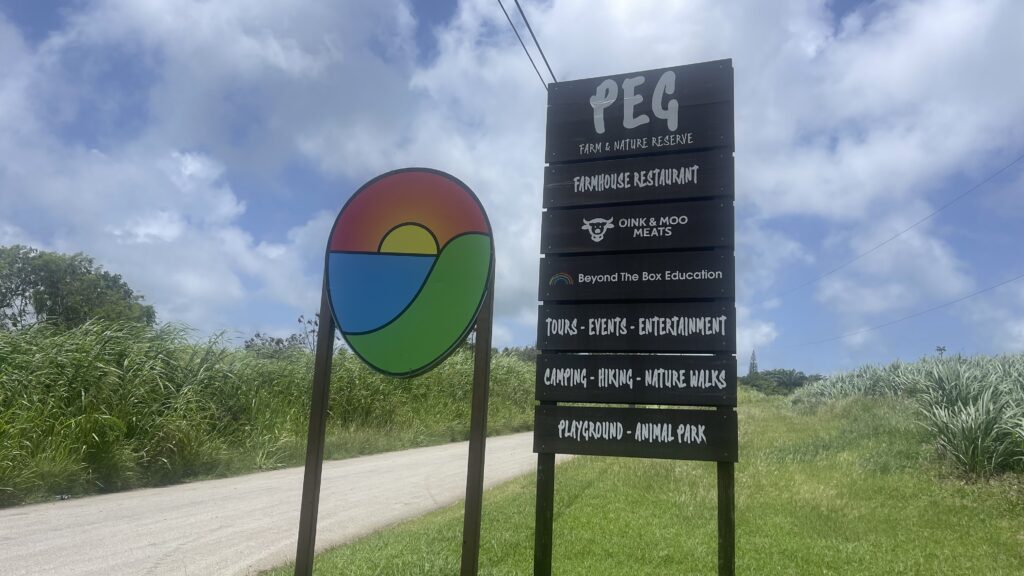
PEG Farm in Easy Hall, St Joseph, is growing into more than a place for agriculture, with farming, education, food and community life all coming together on the property.
The 90-acre farm is part of Easy Hall Plantation and was created from the vision of the late Paul Bourne. Its name, PEG, stands for People, Environment and Growth, the core principles behind the project.
Ianique Jeanie Collymore, who lives and works at PEG Farm, told Barbados TODAY Bourne hoped the property would become a community where young farmers could live, grow food and sell their produce.
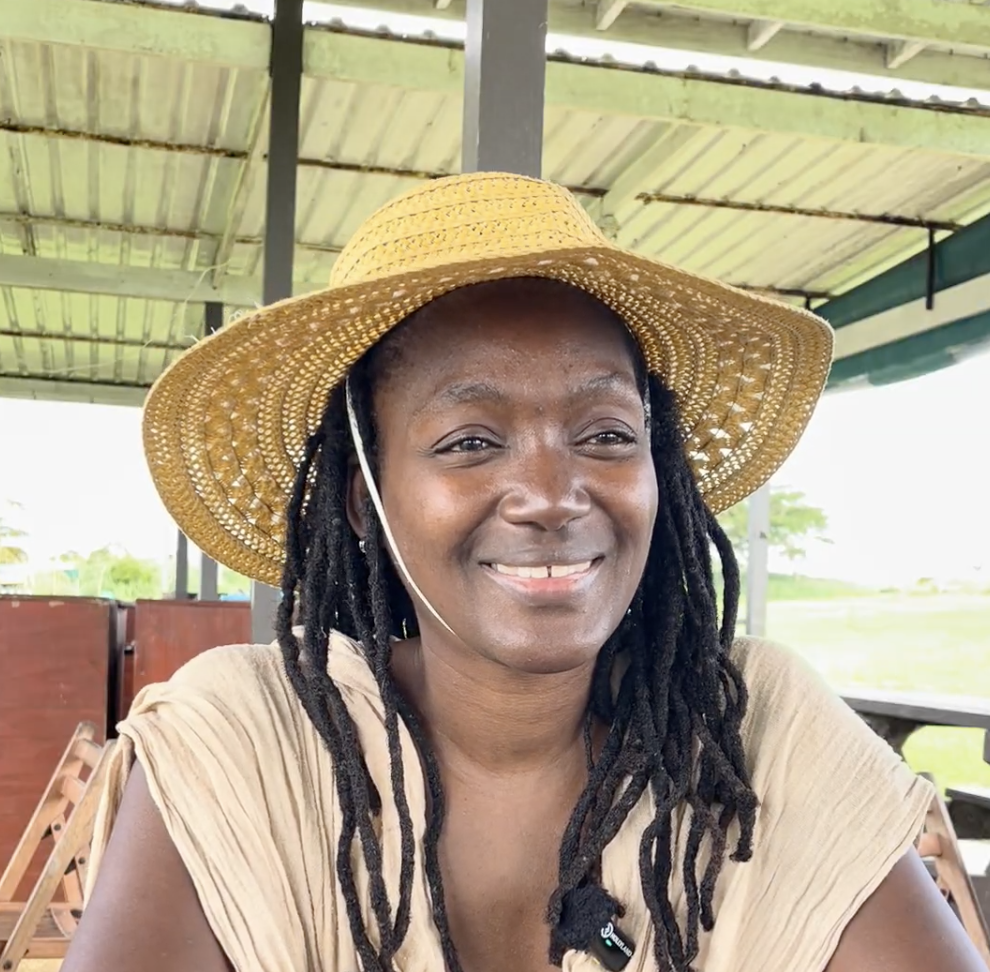
Ianique Collymore (Photo credit: Lauryn Escamilla / Barbados TODAY)
“He wanted to start a community of young farmers where they’d come, grow food, and be able to live, sell their produce, and so forth,” she said. “But that never came to pass.”
Although the original vision has evolved, Collymore said the farm still demonstrates how agriculture can be incorporated into everyday life.
PEG Farm has a kitchen garden producing plantains, bananas, okra, lettuce, peppers, yams, cassava and lemongrass, with much of the produce used by The Farmhouse Restaurant or people who live on the property.
The farm also practises several forms of sustainable agriculture. Rainwater is collected for flushing toilets, watering fields and providing water for animals, while food scraps from the restaurant and households are fed to pigs.
The pigs eating scraps (Photo credit: Lauryn Escamilla / Barbados TODAY)
“We collect all the food, all the scraps and so on from the restaurant for feeding the pigs,” Collymore explained. “They do not get any sort of commercial feed. It is solely from scraps from the restaurant and household.”
Besides pigs, the farm has cattle, peacocks, guinea fowl and a local dog named Murphy, who often joins people on tours around the grounds.
One of the farm’s standout features is its medicinal garden, which Collymore described as “a natural museum” and “a green, if you will, library”.
The garden contains herbs including cerasee, rosemary, wonder-of-the-world, gully root, leaf of life, Cure-for-All, pop-ganda, moringa, turmeric, wild ginger and dambiana.
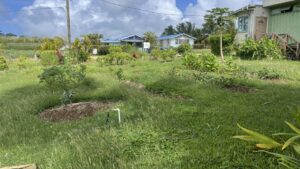
The PEG Farm garden that the restaurant uses (Photo credit: Lauryn Escamilla / Barbados TODAY)
“That to me is like a natural museum. It’s like a library… live library,” she said. “As long as we maintain it, it will be there for every generation to come and learn, take advantage of.”
The farm is also linked to Beyond the Box Education, a school founded by Gabrielle Logan.
The school began as a learning centre in Warrens ten years ago and officially became a school in 2018 after moving to PEG Farm. It currently has about 30 students, ranging from three to 18 years old.
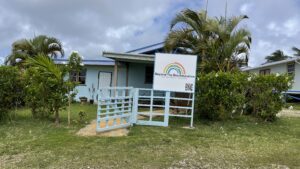
Beyond The Box Education school on PEG Farm (Photo credit: Lauryn Escamilla / Barbados TODAY)
Logan said the farm was a natural fit for the school’s approach to education, which emphasises real-world experiences and learning through students’ interests.
“We also really believed in the connection to nature,” she said. “We were looking for a space that would really embody that and allow that to thrive within the school and become part of the community.”
Students experience the farm directly, including working with food and animals and participating in activities connected to the property.
“The restaurant feeds them throughout the week, and they work in the cafe, and they help to grow the food that’s growing on the farm,” Logan said.
“So there have been so many ways that they were connected to it, not just the farm, but the people that live on the street and the way that it’s managed and run.”
The Farmhouse Restaurant is another major part of the PEG Farm community.
Chef and co-owner Rebecca Waldron said she first joined as head chef. Later, Bourne encouraged entrepreneurs to take charge of different parts of the operation.
“He wanted to encourage entrepreneurs to own their own businesses, in terms of agriculture and farming,” she said.
Waldron and her partner eventually took over the restaurant, which now sources ingredients from local farmers, the PEG Farm garden and their own home garden in St Peter.
That reliance on local produce means the menu can change frequently.
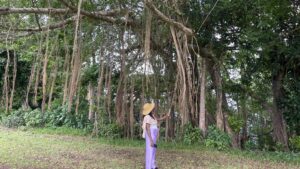
(Photo credit: Lauryn Escamilla / Barbados TODAY)
“You have to always be thinking on your feet,” Waldron said, explaining that the restaurant cannot simply turn to imported produce when a local supplier runs out of an ingredient.
She said this flexibility is now part of what makes the restaurant special.
The restaurant can seat up to 50 people and is also used to develop young culinary talent. Waldron said the business is looking for young chefs and has found success developing employees from entry-level positions.
“Some of the best chefs that we’ve had here at the farmhouse have come up from the potwash and have come straight from school, culinary school,” she said.
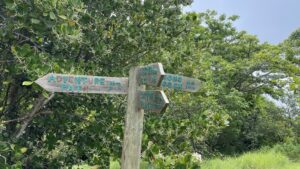
(Photo credit: Lauryn Escamilla / Barbados TODAY)
For Collymore, PEG Farm’s future is tied not only to commercial agriculture but also to making farming more accessible to ordinary households and communities.
She believes Barbados could benefit from bringing subsistence farming back on a larger scale, allowing people to grow more of what they eat and, where possible, live closer to the land they farm.
“I would make subsistence farming more, how should I say this? I would macro,” she said. “I would try to take subsistence farming from a micro concept to a macro concept.”
She argued that smaller agricultural communities could also help address challenges such as access to land and praedial larceny.
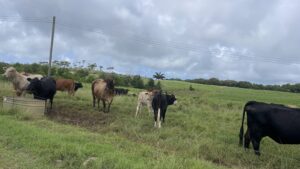
(Photo credit: Lauryn Escamilla / Barbados TODAY)
Collymore also wants to see more green spaces incorporated into developing communities, pointing to Coverley as one area where she believes trees and productive green spaces could make a difference.
“It doesn’t have to be 99 acres. It can be an acre. It can be two. It can be five acres,” she said.
Weather has also shaped PEG Farm’s agricultural journey, although Collymore said the property’s tree cover has helped shield crops from high winds. She recalled that Hurricane Beryl stripped trees and affected the fruiting season, while the dry conditions that followed caused some crops in the ground to wither despite efforts to water them.
“As much as we would water, it would not be adequate to keep the things that were in the ground at the time,” she said.
The experience taught her an important lesson about farming: to work with nature and its seasons rather than trying to fight them.
“I’ve had to learn to be flexible and also to work with nature’s timetable,” she said. “It has its seasons. This is the time for this and, you know, work with that.”
PEG Farm also offers camping, hiking and event spaces, further extending Bourne’s original vision of a property where agriculture, enterprise and community could exist side by side. (LE)
The post PEG Farm blends farming, food, education in St Joseph community appeared first on Barbados Today.