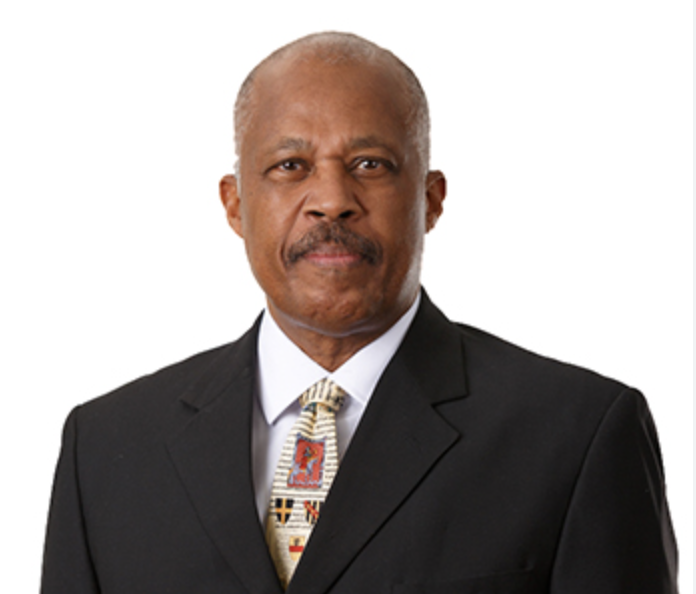
Britain is ready to hold structured talks with its former colonies in the Caribbean on reparations for chattel slavery, the chairman of the CARICOM Reparations Commission, historian Professor Sir Hilary Beckles, has said.
“The British government is now prepared to have a structured conversation with the Caribbean in respect of reparations,” Sir Hilary said ahead of the Commonwealth Heads of Government Meeting (CHOGM) which opens on Tuesday in Antigua and Barbuda.
But while London was open to making an apology, it remained hesitant about financial compensation, said the prominent historian, a leading authority on slavery in the British West Indies and UWI vice-chancellor.
His comments coincided with Sunday’s arrival of King Charles III and British Prime Minister Andy Burnham for the summit of the 56-nation grouping, almost all of which are former territories of its predecessor, the British Empire.
The king remains head of state of Antigua and Barbuda, among 15 other Commonwealth realms, eight of them in the Caribbean. Barbados, where the model of chattel slavery was pioneered in the 1600s and exported throughout the West Indies and the American colonies, is the youngest of 36 republics in the bloc.
“We know that chattel slavery was invented by the British. This was their concept,” Sir Hilary said. “The world had never seen any kind of slavery like this. The British enslavers in the Caribbean, beginning in Barbados, created this concept of human beings as chattel — property, real estate — no different from any other kind of property. You could buy us, sell us, lease us, mortgage us, use us as currency, and pay taxes on us.”
Sir Hilary welcomed the prospect of formal dialogue after decades of rejection by successive British governments. He praised Burnham for departing from his predecessors’ position.
He described the willingness to hold structured talks as an unprecedented step forward.
The summit takes place eight months after the United Nations formally declared the transatlantic slave trade to have been the gravest crime against humanity.
Britain benefited from more than 200 years of unpaid labour by more than 10 million African men, women and children, the historian said. The capital generated fuelled Britain’s commercial and industrial revolution, establishing it as the world’s first industrial power.
When the British Parliament passed the Slavery Abolition Act in 1833, it awarded £20m in compensation to slave owners for lost “property”. Sir Hilary noted that enslaved people received nothing and were instructed to remain silent and grateful for Emancipation.
Caribbean leaders and civil society groups have spent decades seeking what Sir Hilary calls a “dialogue of decency” based on human dignity.
He denounced previous British leaders who had rejected reparations discussions, citing both former Labour premier Tony Blair’s dismissal and the Conservative David Cameron’s advice during a visit to Jamaica that the Caribbean should “get over it”.
Sir Hilary said: “That is the racist diatribe that we have had to deal with in our intergenerational call and demand for reparatory justice.
“But Prime Minister Burnham has said: ‘I am willing to provide leadership on this matter. I’m open to an apology, and I’m willing to sit with the governments and people of the Caribbean to talk about this matter.’”
Responding to media reports that reparations were not on the official summit agenda, Sir Hilary said the issue extended beyond formal proceedings.
“Reparations is all around this conference. It’s on the streets, in the corridors, in the newspapers, on the radio, and on television. Everywhere there are people, reparations is on their lips and in their hearts. It will penetrate and dominate the environment of the conference.”
Caribbean governments, regional institutions, universities, religious organisations and grassroots movements were, for the first time in history, fully aligned in demanding reparatory justice, he said.
The CARICOM 10-Point Reparations Plan underpins the region’s negotiating position. It addresses public health, education, cultural restoration, debt cancellation and capital transfer.
Sir Hilary described it as a manifesto for human enlightenment in the 21st century.
“All of us who are speaking about reparatory justice are concerned about the future of humanity,” he urged. “We believe that reparatory justice that calls for human decency, equality, and justice for all is the philosophy that will hold us together as humanity going into this 21st century.”
He cited the votes of 123 nations, representing 80 per cent of the global population, that voted at the United Nations for resolutions declaring that the legacy of chattel slavery must be addressed through reparatory justice.
He said the framework extended beyond descendants of enslaved Africans to include Indigenous peoples who faced genocide, and indentured labourers brought from India and China.
Welcoming Burnham on behalf of the CARICOM Reparations Commission, Sir Hilary said the prime minister’s roots in the industrial north of England made him uniquely suited to lead Britain’s engagement.
Lancashire was Britain’s industrial heartland during the 19th-century Industrial Revolution. Caribbean sugar was processed, and slave-grown American cotton was spun there. The North was also home to Liverpool, a major port in the triangular trade of British goods, African slaves, and Caribbean sugar and rum.
“You, sir, represent all of that context and history,” Sir Hilary said. “In this spirit, it is my pleasure on behalf of the CARICOM Reparations Commission to welcome you to the Caribbean and wish for you a discourse of enlightenment.”
(RR)
The post UK ready for reparations talks, says Sir Hilary appeared first on Barbados Today.