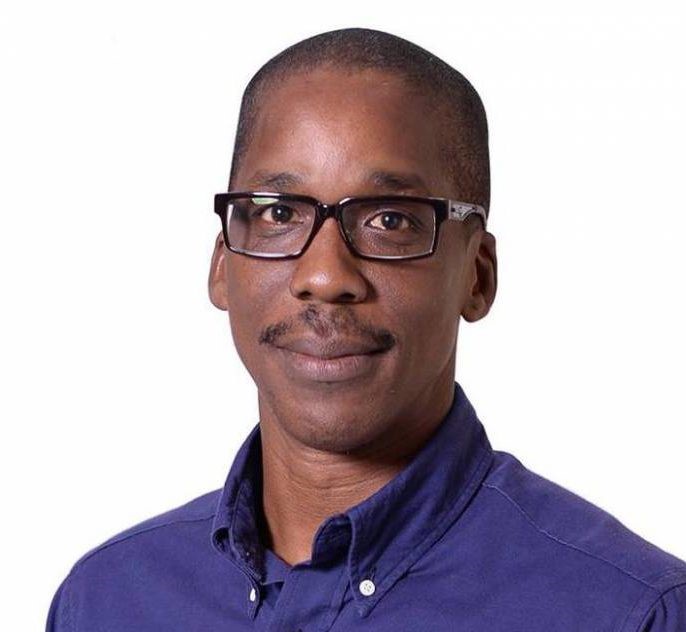
As the Mia Mottley-led administration crosses the 100-day milestone of its latest term in office, political analyst and pollster Peter Wickham has cautioned against placing too much emphasis on the arbitrary timeline, while pointing to persistent global and domestic pressures that continue to challenge government.
Speaking to Barbados TODAY on the government’s overall performance, Wickham questioned the purpose of evaluating a long-standing administration within the strict parameters of a 100-day window.
He suggested that such benchmarks are far more meaningful when a country experiences a complete transition of power.
”The idea of measuring 100 days is somewhat artificial. I think that those kind of assessments are more relevant when you’ve had a change of government.
“And the fact is that this government has now won two elections, so the idea of assessing the first 100 days in office to me is kind of artificial. And certainly, it wouldn’t be for me a significant milestone that I would want to look back and assess,” Wickham said.
Instead, the respected political scientist argued that the current conversations dominating the Barbadian landscape are rooted in complex, ongoing challenges rather than short-term political cycles.
He identified citizen security and economic strain as the two dominant pressures confronting the electorate.
”Look, there’s some issues on the table in terms of what’s going on in Barbados. Now, it’s clear that crime continues to be a problem for Barbadians. It’s clear that the cost of living is a problem, and would have been most recently affected by the price of oil,” Wickham said.
“My sense is that those are the issues that Barbadians would want to look at and see whether the government is grappling with those, and those are not within the context of 100 days. Those are in the context of what’s going on currently in the global political economy.”
On the issue of national security, the administration recently appointed a new minister to the portfolio – a move Wickham views as a strategic, structural attempt to adjust the national anti-crime strategy.
However, he noted that the public has yet to witness tangible results from this change.
”I think that we can agree that the nomination of Minister Lashley to the role of Justice Minister could be seen as an attempt to tackle crime from a slightly different perspective. And I think that we can equally agree that we haven’t really seen the benefits of that just yet… because I don’t know realistically whether we could see a response in such a short space of time [to] the problem of crime that has been developing over the years,” Wickham said.
Turning to the economy, Wickham highlighted the fiscal interventions implemented to shield citizens from the fallout of international conflicts and volatile global oil prices. Notably, the government enacted a tax cap on fuel prices to prevent rapid retail price inflation.
Wickham explained that consumers have not yet felt its full impact due to the specific timing mechanisms of the local energy sector.
”The government has capped tax on fuel, which would mean that fuel would not increase beyond a particular level,” Wickham explained. “There’s a reason why that has not kicked in, simply because we’re still buying fuel at previous rates based on the idea of buying futures that the Light and Power would have done. So, we haven’t really seen that yet, but the fact is that down the road it’s clear that we will probably be facing an increase in the cost of fuel.”
Wickham acknowledged that public dissatisfaction regarding inflation remains high, noting that a downward shift in the cost of living is historically rare.
”I don’t think that many Barbadians would agree that the cost of living has come down. I’ve always argued that there’s no evidence anywhere in the world that the cost of living ever does come down.
“I think that government has not persuaded people that it has done enough in relation to stopping it from going out further… but by and large, I think that they have been doing as much as any other government in the region in terms of trying to keep the cost of living down,” he pointed out.
With the main opposition party, the Democratic Labour Party (DLP) failing to secure elected seats in the House of Assembly during consecutive electoral cycles, questions have repeatedly been raised regarding the mechanisms of parliamentary accountability in Barbados.
Wickham pointed to the Senate as the primary chamber where the opposition has managed to establish a constructive, structured presence. He argued that the party is demonstrating a more stable post-election transition compared to previous sweeps.
”I believe that accountability has been coming from the Senate. The opposition has settled down, I think post-election, a bit more nicely than it has on previous occasions – the two previous occasions that they ended with no seats. For example, we’ve seen Ryan Walters landed successfully in the Senate, which I think is a benefit to the opposition Democratic Labour Party that they did not have on the two previous occasions because on the two previous occasions they proceeded without DLP representation,” he explained.
While noting that parliamentary oversight bodies like the Public Accounts Committee have yet to convene, Wickham viewed the delay as reasonable given the timeline. He stressed that the crucial moment for the opposition’s long-term trajectory will occur during its internal summer deliberations.
”The DLP needs to settle itself. I’m hopeful that August will be an interesting time for the Democratic Labour Party because that’s when they have their annual conference. We will know whether Ryan Walters is successful at becoming the president of the DLP and if he can consolidate power in relation to the parliamentary presence and also the presence outside of parliament.
“…I would say that the DLP hasn’t done badly. They’ve done better than they have done on previous occasions, but I’m looking to August to see when the leadership issue is fully settled,” Wickham said.
When questioned about the administration’s social mandate and its responsiveness toward protecting vulnerable communities amid broader administrative shuffles, Wickham defended the continuity of state social services. He observed that while key ministerial shifts occurred – such as Kirk Humphrey moving to the transport portfolio – the state’s core welfare initiatives have remained intact.
”I think as much as can be done [is being done],” Wickham asserted. “The initiatives that have been taken in relation to the Rural and Urban Development Commissions have continued. They have active programs in terms of dealing with the homeless in Bridgetown, and in terms of housing… I haven’t noticed an appreciable change, and I think that the commitment of this government to helping the needy and so on is pretty good.”
However, Wickham was distinctly critical regarding the pace of educational policy reform, pointing specifically to the ongoing debate surrounding the secondary school entrance examination, commonly known as the 11-Plus. He expressed deep regret that the disruptive years of the pandemic were not utilised to permanently dissolve the placement system.
”As far as education is concerned, my main issue is that I think that we’re still grappling with this 11-Plus. I think it’s unfortunate that four years after COVID, five years after COVID, that the opportunity to discontinue it was missed during COVID, and that to me is something that I lament.
“I am probably alone in that regard, but I continue to think that the absence of a decision on ending the 11-Plus finally is something that is a bit of a blot on this government’s reputation,” Wickham admitted.
(RR)
The post Wickham: 100-day window not fair grading tool to mark government appeared first on Barbados Today.