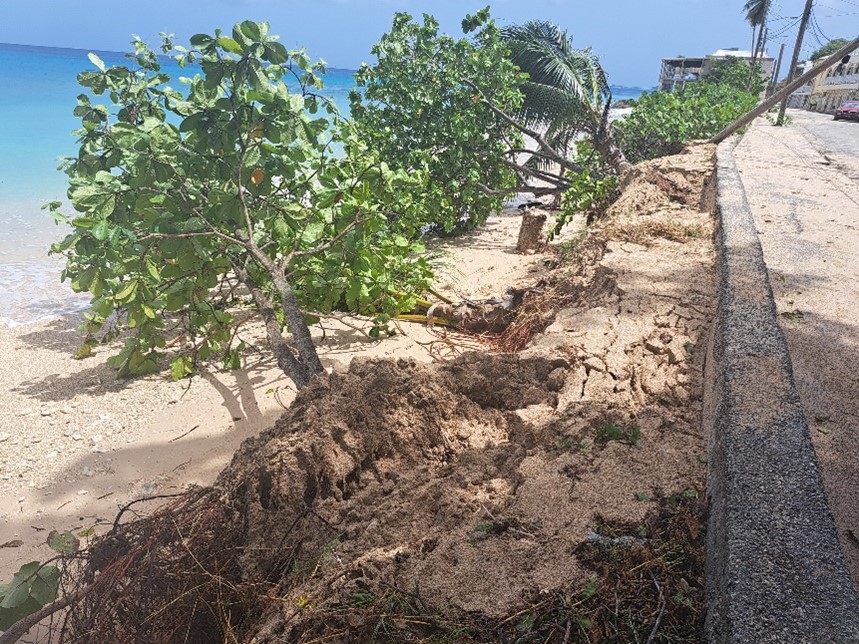
Unseasonal coastal erosion is intensifying along Barbados’ shores, with the country’s top coastal protection expert warning that unusual freshwater outflows from South America’s largest rivers are raising sea levels around the island at a time when beaches should be naturally rebuilding.
Rising sea levels are threatening the island’s famed shorelines during a time of year when they should normally be recovering, said the director of the Coastal Zone Management Unit, Dr Leo Brewster.

Dr Leo Brewster Director, Coastal Zone Management Unit. (Photo credit: Ricardo Roberts/Barbados TODAY)
He attributed the unusual phenomenon to massive pulses of freshwater from the South American mainland, compounding existing anxieties over climate change and controversial coastal development.
Over the last several weeks, residents and visitors have noticed an alarming retreat of the shoreline in areas like Worthing Beach. According to Dr Brewster, the primary driver is a massive influx of “green water” originating from the Amazon and Orinoco rivers.
This phenomenon, he said, has introduced a heavy pulse of fresh water that is literally sitting on top of the heavier seawater, artificially elevating water levels around the island. The timing of this event has caught experts off guard, as it directly contradicts the island’s natural seasonal beach-building cycles.
“The whole island is being impacted by what people will be seeing as out-of-season erosion,” Dr Brewster explained. “This is happening at a time when the beaches should actually be building now, after the Easter swell period and going into the hurricane season. Because of this excessive water, we’re getting more activity on the beach face and therefore greater penetration inland, and some areas have been hit very hard.”
While green water discharges are a known regional occurrence, they typically adhere to a strict seasonal timeline, making this current event highly irregular.
“Normally this sort of green water can occur in the early part of the year, like during some aspects of the rainy season, and we also get it in August going into September as well,” the expert noted. “But at this time of the year, when we’re normally trying to see the beaches building to the pre-hurricane season, this is abnormal for us. This is not normal.”
The environmental conditions follow recent public concern over “brown water” sightings at Carlisle Bay, which some reports have linked to runoff from the construction of the Fort Carlisle condominiums. The incident has reignited a fierce debate over whether luxury properties are being built too close to the island’s fragile shoreline.
When questioned about coastal construction policies and developers seeking exceptions, Dr Brewster clarified that while strict guidelines exist, the ultimate decisions often rest with higher planning authorities.
“Some properties, as part of their application process, ask for reduced setbacks,” the official said. “Of course, the coastal zone management unit has a policy for setback requirements and we try to adhere to those as best we can. Whatever happens after we have sent forward our recommendations is at a planning level.”
Further complicating coastal management is the aftermath of recent severe weather events like Hurricane Beryl. The storm left significant destruction in its wake, prompting a rush of shoreline property owners in areas like Payne’s Bay and Gibbs to erect makeshift boulder barricades.
This sudden influx of defensive structures has drawn complaints from the public, though authorities emphasise that homeowners are legally within their rights to defend their land.
“There is an emergency protection process within the legislation that allows property owners to protect their property if their sea walls break down,” Dr Brewster said, adding that authorities work hard to ensure structures are rebuilt in their original footprints. However, enforcement remains a challenge when dealing with the dynamic nature of the coast.
“What you may find is that some persons do try to come forward, or through the use of the boulders that they’re building, the actual base of the structure comes further seaward than it ought to,” the coastal management director warned.
“We try to correct that after it’s discovered, but sometimes they may be buried with sand through the natural recovery of the beach. It would only be then exposed again during rough seas, or they can become permanently exposed because the beach has not been able to recover due to the placement of the boulders.”
(RR)
The post Unseasonal erosion linked to South American freshwater surges appeared first on Barbados Today.